

Tasmanian Forests Agreement Act 2013
An Act to amend the Forestry Act 1920 in relation to continuing wood supply, and to enable certain land to be reserved, for the purposes of the Tasmanian Forests Intergovernmental Agreement entered into by the Commonwealth of Australia and the State of Tasmania dated 7 August 2011, to create reserves and to amend the Nature Conservation Act 2002 for the purposes of benefiting economically from the carbon in Tasmania's forests, and to amend certain other Acts
Be it enacted by His Excellency the Governor of Tasmania, by and with the advice and consent of the Legislative Council and House of Assembly, in Parliament assembled, as follows:
PART 1 - Preliminary
This Act may be cited as the Tasmanian Forests Agreement Act 2013 .
This Act commences on the day on which this Act receives the Royal Assent.
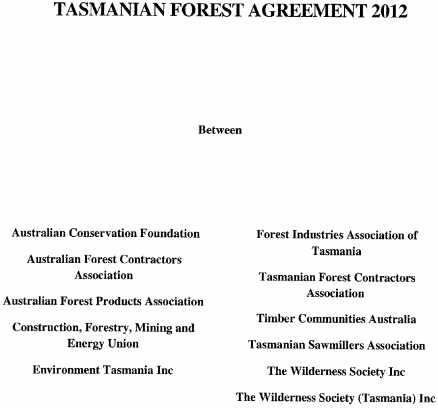
(1) In this Act, unless the contrary intention appears –certified forest practices plan has the same meaning as in the Forest Practices Act 1985 ;Crown land has the same meaning as in the Nature Conservation Act 2002 ;durability report means a durability report prepared by the Special Council;forest operations has the same meaning as in the Forestry Act 1920 ;Forestry Corporation has the same meaning as corporation in the Forestry Act 1920 ;forestry coupe has the same meaning as coupe in the Forest Practices Code as defined in the Forest Practices Act 1985 ;forestry covenant has the same meaning as in the Forestry Rights Registration Act 1990 ;forestry right has the same meaning as in the Forestry Rights Registration Act 1990 ;Government Business Enterprise means a statutory authority specified in Schedule 1 to the Government Business Enterprises Act 1995 ;initial proposed reserve order means the first proposed reserve order made under this Act;lease includes an agreement for a lease and a tenancy agreement;native forest harvesting means any harvesting of native forest that requires a certified forest practices plan under the Forest Practices Act 1985 , but excludes native forest harvesting that is associated with –(a) providing access roading to forestry coupes that are not within the future reserve land, or to forestry coupes that are within the future reserve land specified in a Lot referred to in column 1 of the table set out at the end of clause 2 of Schedule 1 for which native forest harvesting is not identified as a prohibited activity in column 5 of that table in relation to that Lot; or(b) installing cable harvesting infrastructure for harvesting of forestry coupes that are not within the future reserve land, or to forestry coupes that are within the future reserve land specified in a Lot referred to in column 1 of the table set out at the end of clause 2 of Schedule 1 for which native forest harvesting is not identified as a prohibited activity in column 5 of that table in relation to that Lot;Nature Conservation Minister means the Minister administering the Nature Conservation Act 2002 ;processing means pulping, chipping, peeling, slicing, cutting or sawing;proposed reserve order means an order under section 21 ;Register of Multiple Use Forest Land means –(a) before the commencement of Part 4, the Register of Multiple Use Forest Land within the meaning of section 4 of the Forestry Act 1920 ; and(b) on and after the commencement of Part 4, the Register of Permanent Timber Production Zone Land within the meaning of section 4 of the Forestry Act 1920 ;relevant date means the date on which the Bill for this Act was first tabled in Parliament;Reserves Management Minister means the Minister administering the National Parks and Reserves Management Act 2002 ;Special Council means the Special Council established by the Minister under section 17 ;State forest has the same meaning as in the Forestry Act 1920 ;State-owned company means a company incorporated under the Corporations Act that is controlled by –(a) the Crown; or(b) a Government Business Enterprise; or(c) a statutory authority; or(d) another company that is so controlled;State tax means any of the following if imposed by any Act or law of Tasmania:(a) a fee, including an application fee and registration fee;(b) a tax, including a duty;(c) a charge;statutory authority means a body or authority, whether incorporated or not, that is established or constituted by or under an Act or under the royal prerogative, being a body or authority which, or of which the governing authority, wholly or partly comprises a person or persons appointed by the Governor, a Minister or another statutory authority;substantial active protest means an activity that has a negative material impact on forest operations legally carried out or on any processing of timber legally carried out;substantial market disruption means an activity that has a negative material impact on the sale of legally harvested Tasmanian timber;Tasmanian Forest Agreement means the agreement entered into between the Australian Conservation Foundation, the Australian Forest Contractors Association, the Australian Forest Products Association, the Construction, Forestry, Mining and Energy Union, Environment Tasmania Inc, the Tasmanian Forest Contractors Association, the Forest Industries Association of Tasmania, the Tasmanian Sawmillers Association, The Wilderness Society Inc and The Wilderness Society (Tasmania) Inc and dated 22 November 2012, a copy of which is set out in Schedule 4 and includes any person who signs the agreement after that date;the future reserve land means the land described in column 2 of the table set out at the end of clause 2 of Schedule 1 ;timber has the same meaning as in the Forestry Act 1920 .(2) A reference in this Act to boundaries, values or purpose includes a reference to boundaries, values and purpose.
This Act binds the Crown in right of Tasmania and, so far as the legislative power of Parliament permits, in all its other capacities.
5. Inconsistency with other Acts
If any provisions of this Act are inconsistent with any provisions of the –the provisions of this Act prevail to the extent of the inconsistency.(a) Nature Conservation Act 2002 ; or(b) National Parks and Reserves Management Act 2002 ; or(c) Forestry Act 1920 ; or(d) Forest Practices Act 1985 ; or(e) Forestry Rights Registration Act 1990 ; or(f) Crown Lands Act 1976 ; or(g) Land Use Planning and Approvals Act 1993 ; or(h) Land Titles Act 1980 ; or(i) Local Government (Building and Miscellaneous Provisions) Act 1993 –
PART 2 - Continuing Wood Supply (Production Policy)
(1) The Forestry Act 1920 is amended by repealing section 22AA and substituting the following section:(1) Each year the corporation must make available –(a) for the veneer and sawmilling industries, a minimum aggregate quantity of eucalypt veneer logs and eucalypt sawlogs, from permanent timber production zone land, that meet the prescribed specifications that are in force immediately before the commencement of this section; and(b) for a prescribed industry, the prescribed quantity, prescribed type and prescribed specification of other prescribed timber.(2) In subsection (1)(a) –minimum aggregate quantity means –(a) 137 000 cubic metres; or(b) if another quantity is prescribed, the prescribed quantity.(3) The regulations may prescribe the time for which the quantity, type and specification of other timber is to be made available and the source of the other timber.(2) If Schedule 1 is repealed under section 21(11) or 22(5) , section 22AA(2)(a) of the Forestry Act 1920 is amended on 30 June in the financial year in which Schedule 1 is repealed by omitting "137 000" and substituting "300 000".
PART 3 - Compensation Arrangements
In this Part –forest product means any of the following:(a) sawn timber;(b) veneer products;(c) poles, piles or posts;(d) any other forest product but excluding –(i) woodchips that are to be further processed outside Tasmania; and(ii) whole logs that are to be further processed outside Tasmania; and(iii) any other product excluded by regulation, being a product not referred to in paragraph (a) , (b) or (c) ;wood supply contract means a contract made between the Forestry Corporation and a purchaser, the principal or a principal term of which is that the Forestry Corporation should make available to that purchaser over a period of not less than 2 years a supply of a quantity of logs in return for monetary or other consideration.
8. Forestry compensation certificate
(1) Subject to this Part, the Minister must issue a forestry compensation certificate to a purchaser under a wood supply contract at the request of the Forestry Corporation or the purchaser.(2) Before issuing a forestry compensation certificate the Minister –(a) must be satisfied that –(i) there is an enforceable wood supply contract; and(ii) the logs to be supplied under the wood supply contract will be processed in Tasmania into a forest product; and(iii) any requirements set out in regulations made under this Act that prescribe any economic or environmental requirement concerning the logs, the source of the logs or the processing of the logs, are met; and(b) must have received from the Forestry Corporation certification that, having regard to all other enforceable wood supply contracts, it is able to supply the quantities of logs specified in the wood supply contract in accordance with its terms.(3) The Forestry Corporation must issue certification if, having regard to all other enforceable wood supply contracts, it is able to supply the quantities of wood specified in the wood supply contract in accordance with its terms.
9. Contents of forestry compensation certificate
A forestry compensation certificate is to contain the following information:(a) the name of the person to whom the certificate is issued;(b) a description of the wood supply contract to which the certificate relates that is sufficient to enable that contract to be identified;(c) the annual quantity of logs to which the certificate relates;(d) the date on which the certificate ceases to have effect.
10. Transfer or assignment, &c., of forestry compensation certificate
(1) Subject to subsection (2) , the person to whom a forestry compensation certificate is issued may assign the rights and entitlements associated with that certificate in part or in full to a person to whom the purchaser's rights and entitlements under the wood supply contract to which the certificate relates are assigned.(2) The assignment of the rights and entitlements associated with the forestry compensation certificate must correspond with the assignment of the purchaser's rights and entitlements under the wood supply contract to which the certificate relates.(3) If the person to whom a forestry compensation certificate is issued assigns to another person the rights and entitlements associated with that certificate in part or in full in accordance with subsection (1) , the first-mentioned person is to –(a) provide evidence to the Minister that the assignments referred to in subsection (1) have been effected; and(b) deliver the certificate to the Minister; and(c) deliver a copy of the contract by which the rights and entitlements under the wood supply contract to which the certificate relates are assigned.(4) On receipt of the evidence, forestry compensation certificate and contract, the Minister, if satisfied that the assignments referred to in subsection (1) have been effected, is to –(a) issue to the assignee of the rights and entitlements under the forestry compensation certificate a new certificate to reflect the details of that assignment; and(b) if any rights and entitlements under the forestry compensation certificate were not assigned by the assignor, issue to the assignor a new certificate in respect of those rights and entitlements that were not assigned.(5) On the issue of any new forestry compensation certificate or certificates in accordance with subsection (4) , the forestry compensation certificate referred to in subsection (3) is cancelled.(6) The cancellation of a forestry compensation certificate in accordance with subsection (5) does not affect any claim to compensation under that certificate that accrued before its cancellation.
11. Effect of forestry compensation certificate
(1) A forestry compensation certificate entitles the holder of the certificate to receive compensation in accordance with this section.(2) The holder of a forestry compensation certificate is entitled to compensation if the Forestry Corporation certifies to the Minister that the Forestry Corporation is, when requested by the holder, prevented from supplying logs to the holder up to the quantities specified in the forestry compensation certificate and on the terms specified in the wood supply contract to which the certificate relates as a result of –that has the effect of diminishing the quantities of logs available to the Forestry Corporation for the supply of logs in accordance with the terms of the wood supply contract.(a) a change of the law of the State, including any change to section 22AA of the Forestry Act 1920 , that has the effect of diminishing the quantities of logs available to the Forestry Corporation for the supply of logs in accordance with the terms of the wood supply contract; or(b) a change of policy –(i) in relation to forest practices, within the meaning of the Forest Practices Act 1985 ; or(ii) solely or primarily in relation to the Tasmanian forest industry by the Tasmanian Government –(3) The Forestry Corporation must certify in accordance with subsection (2) if it is unable to supply logs in accordance with the terms of a wood supply contract.(4) Certification by the Forestry Corporation under subsection (2) must include –(a) the name of the holder of the forestry compensation certificate at the date of certification; and(b) a description of the wood supply contract to which the certificate relates that is sufficient to enable that contract to be identified; and(c) the annual quantity of logs to which the certificate relates; and(d) the annual quantity of logs requested from the Forestry Corporation by the holder of the certificate; and(e) the annual quantity of logs that the Forestry Corporation has made available, or can make available, to the holder of the certificate; and(f) having regard to paragraphs (c) , (d) and (e) , the annual quantity of logs that the Forestry Corporation is prevented from supplying to the holder as a result of the circumstances referred to in paragraph (a) or (b) of subsection (2) ; and(g) the period during which the Forestry Corporation is prevented from supplying to the holder of the certificate the quantity referred to in paragraph (f) .(5) For the purposes of calculating the annual quantity of logs that the Forestry Corporation has made available, or can make available, to the holder of a forestry compensation certificate under subsection (4)(e) , any quantity of logs supplied to the holder under any other wood supply contract, in respect of which a forestry compensation certificate has not been issued, is taken to have been supplied in full satisfaction or in part satisfaction, as the case may be, of the wood supply contract to which the certification by the Forestry Corporation under subsection (2) relates.
12. Entitlement to compensation
(1) On receipt of the Forestry Corporation's certification under section 11(2) , the Minister becomes liable to pay compensation to the holder of the forestry compensation certificate to which the certification relates in accordance with this Part.(2) Subject to subsections (3) and (4) , the amount of compensation referred to in subsection (1) is the amount of damages that would have been payable by the Forestry Corporation as if the non-supply of the quantity of logs referred to in section 11(4)(f) for the period referred to in section 11(4)(g) in accordance with the terms of the wood supply contract had constituted a breach of contract by the Forestry Corporation.(3) Subsection (2) applies only to the extent that the non-supply referred to in that subsection occurs as a result of the circumstances referred to in paragraph (a) or (b) of section 11(2) .(4) For the purposes of subsection (2) , the following matters are to be disregarded when calculating compensation:(a) any agreement between the holder of the forestry compensation certificate and the Forestry Corporation that limits the damages payable for a breach of the wood supply contract;(b) any agreement between the holder of the forestry compensation certificate and the Forestry Corporation to pay an agreed amount of damages for a breach of the wood supply contract.(5) A holder of a forestry compensation certificate entitled to compensation in accordance with this Part and the Forestry Corporation must take all reasonable steps to minimise the loss or damage referred to in subsection (2) .
13. Determination of compensation
(1) In this section –affected person means a person who is entitled to compensation in accordance with this Part.(2) Before agreeing an amount of compensation, the Minister must obtain the approval of the Solicitor-General to that amount.(3) If the affected person and the Minister agree the amount of compensation in writing, the compensation is that amount.(4) If the affected person and the Minister cannot agree the amount of compensation, the claim for compensation is to be determined in the same manner as a disputed claim for compensation under the Land Acquisition Act 1993 and, for that purpose –(a) the certification given by the Forestry Corporation is taken to be a notice of acquisition, within the meaning of that Act; and(b) the amount of compensation to be determined is the amount referred to in section 12(2) ; and(c) the Crown is the acquiring authority.(5) Any compensation that an affected person receives under this section extinguishes any claim that the affected person would otherwise have had against the Forestry Corporation in respect of the matters to which the compensation relates.(6) An affected person and the Forestry Corporation are taken to be discharged from the performance of their respective obligations under a wood supply contract to the extent that the non-performance of those obligations is taken into account in agreeing or determining the compensation payable to the affected person in accordance with this section.
14. Amendment of forestry compensation certificate
(1) If the Forestry Corporation and the holder of a forestry compensation certificate have agreed to vary the terms of the wood supply contract to which that certificate relates, the Forestry Corporation must advise the Minister within 14 days from the date on which the variation takes effect of the varied terms.(2) On receipt of advice from the Forestry Corporation under subsection (1) , the Minister must amend the forestry compensation certificate to which the wood supply contract relates to give effect to the variation.(3) Before amending a forestry compensation certificate, the Minister –(a) must be satisfied that there is an enforceable wood supply contract; and(b) must have received from the Forestry Corporation certification that, having regard to all other enforceable wood supply contracts, it is able to supply the quantities of wood specified in the wood supply contract in accordance with its terms.
PART 4 - Wood Supply (Amendments to Forestry Act 1920 )
15. Amendments to Forestry Act 1920
The Forestry Act 1920 is amended as follows:(a) by omitting the definition of multiple use forest land from section 4(1) and substituting the following definition in correct alphabetical order:permanent timber production zone land means land specified in the Register of Permanent Timber Production Zone Land;(b) by omitting the definition of Register of Multiple Use Forest Land from section 4(1) and substituting the following definition:Register of Permanent Timber Production Zone Land means the Register maintained by the corporation in accordance with section 17;(c) by omitting "Register of Multiple Use Forest Land" from paragraphs (c) and (d) of section 4B(1) and substituting "Register of Permanent Timber Production Zone Land";(d) by omitting "multiple use forest land" from paragraph (d) of section 8(1) and substituting "permanent timber production zone land";(e) by omitting "multiple use forest land" from subparagraph (vi) of section 10(1)(a) and substituting "permanent timber production zone land";(f) by omitting "Register of Multiple Use Forest Land" from paragraph (c) of section 10(1) and substituting "Register of Permanent Timber Production Zone Land";(g) by omitting "Register of Multiple Use Forest Land" from subsection (2) of section 17 and substituting "Register of Permanent Timber Production Zone Land";(h) by omitting "multiple use forest land" from paragraph (a) of section 17(12) and substituting "permanent timber production zone land";(i) by omitting "multiple use forest land" from paragraph (a) of section 17(13) and substituting "permanent timber production zone land";(j) by omitting "Multiple use forest land" from subsection (17) of section 17 and substituting "Permanent timber production zone land";(k) by omitting "multiple use forest land" from subsection (18) of section 17 and substituting "permanent timber production zone land";(l) by omitting "multiple use forest land" from subsection (19) of section 17 and substituting "permanent timber production zone land";(m) by omitting "multiple use forest land" from subsection (21) of section 17 and substituting "permanent timber production zone land";(n) by omitting "Register of Multiple Use Forest Land" from section 19 and substituting "Register of Permanent Timber Production Zone Land";(o) by omitting "multiple use forest land" from subsection (2) of section 20 and substituting "permanent timber production zone land";(p) by omitting "multiple use forest land" from subsection (2)(b) of section 20 and substituting "permanent timber production zone land";(q) by omitting "Register of Multiple Use Forest Land" from paragraph (b) of section 20(2) and substituting "Register of Permanent Timber Production Zone Land";(r) by omitting "multiple use forest land" from paragraph (a) of section 20AA(1) and substituting "permanent timber production zone land";(s) by omitting "multiple use forest land" from paragraph (c) of section 20A(1) and substituting "permanent timber production zone land".
16. Amendments to forest management plans
To the extent that existing forest management plans are inconsistent with clause 8 of the Tasmanian Forest Agreement, in relation to forest production management, including special craft and timber zone land, the Minister is to direct the Forestry Corporation to prepare and submit a proposed amendment to those forest management plans to remove that inconsistency within 12 months, or such other period as the Minister may determine, from the commencement of section 15 .
PART 5 - Special Council
(1) The Minister, after consulting the signatories to the Tasmanian Forest Agreement, by order, is to establish a Special Council for the purposes of –(a) preparing durability reports; and(b) promoting the vision referred to in the Tasmanian Forest Agreement; and(c) providing advice to the Minister concerning the implementation of the Tasmanian Forest Agreement; and(d) providing advice to the Minister on such matters in relation to the administration of this Act as are specified in the order; and(e) such other matters as may be specified in the order.(2) In preparing a durability report, the Special Council is to take into account the matters specified in clause 42 of the Tasmanian Forest Agreement.(3) The durability report is to contain advice as to whether there has been substantial active protests or substantial market disruption since the previous durability report or, if there is no previous durability report, since the commencement of this Act.(4) If the Minister has not in any year obtained from the Special Council a durability report pursuant to section 21(4) or 22(2) , the Special Council is to provide the Minister with a durability report before 30 November in that year.(5) The Minister is to cause the durability report referred to in subsection (4) to be tabled in each House of Parliament within 10 sitting-days of the receipt of the durability report.(6) The Special Council consists of –(a) a person to represent the Australian Conservation Foundation; and(b) a person to represent the Australian Forest Contractors Association; and(c) a person to represent the Australian Forest Products Association; and(d) a person to represent the Construction, Forestry, Mining and Energy Union; and(e) a person to represent Environment Tasmania Inc; and(f) a person to represent the Tasmanian Forest Contractors Association; and(g) a person to represent the Forest Industries Association of Tasmania; and(h) a person to represent the Tasmanian Sawmillers Association; and(i) a person to represent the Wilderness Society; and(j) a person to represent Timber Communities Australia; and(k) a person who represents the interests of the Tasmanian special species timber industry; and(l) any other person nominated by the Minister.(7) The Minister may appoint an alternate member for each body or person as specified in subsection (6) .(8) Appointments of alternate members are to be made –(a) when the Special Council is first established; and(b) if subsequently there is a vacancy in the office of member or alternate member.(9) Not later than 2 years after the establishment of the Special Council and at any time after that 2-year period, the Minister, in consultation with the Special Council –(a) is to review the membership that constitutes the Special Council; and(b) may change the membership that constitutes the Special Council.(10) If the membership that constitutes the Special Council is changed by the Minister under subsection (9) , the Minister, by order, is to specify the names of the members constituting the Special Council and such other matters relating to the Special Council as the Minister may determine.(11) Subject to this section, an order made under this section may contain provisions –(a) regulating the appointment of members of the Special Council; and(b) regulating the proceedings of the Special Council.(12) The members of the Special Council are appointed by the Minister and the Minister may appoint a member of the Special Council as its chairperson.(13) At a meeting of the Special Council, the chairperson or, if the chairperson is absent or there is no chairperson, another member present and chosen by the members present is to preside.(14) At a meeting of the Special Council, a quorum is constituted if a majority of the members of the Special Council are present.(15) Subject to this Act, the Minister may make arrangements to make available to the Special Council such accommodation and assistance as the Minister considers appropriate.(16) The members of the Special Council are to be paid such travelling and other allowances as the Minister determines.(17) An order under subsection (1) is not a statutory rule for the purposes of the Rules Publication Act 1953 .
PART 6 - Making of Proposed Reserves
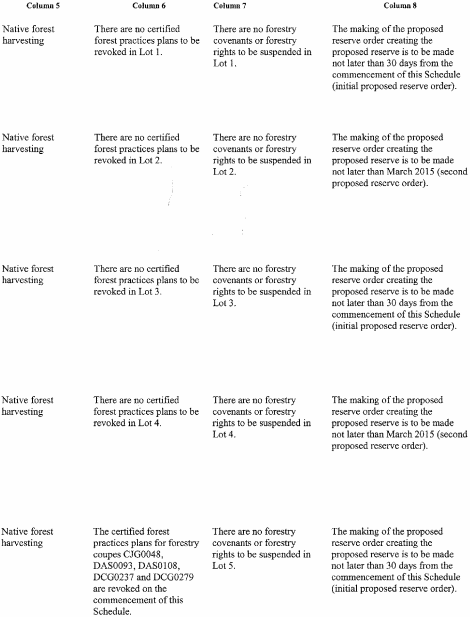
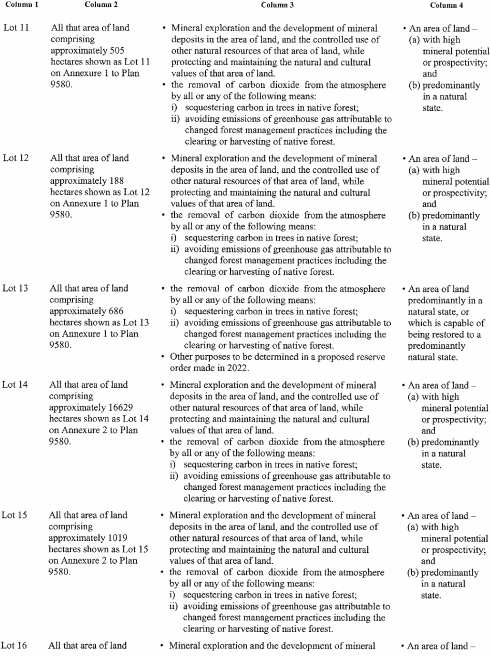
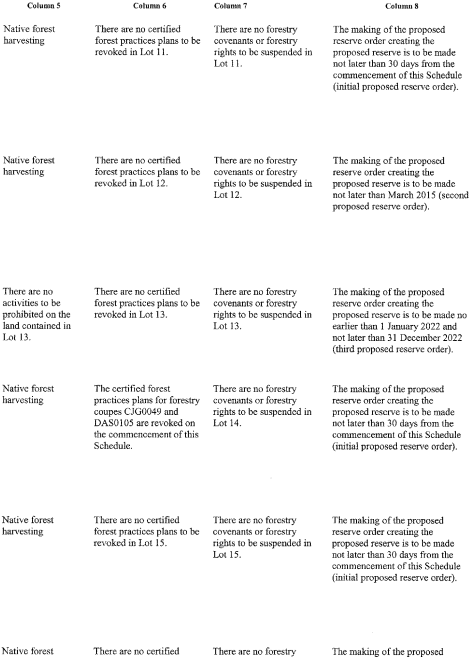
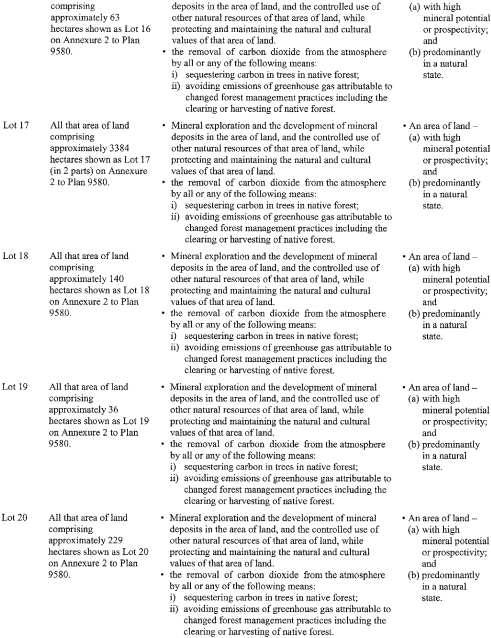
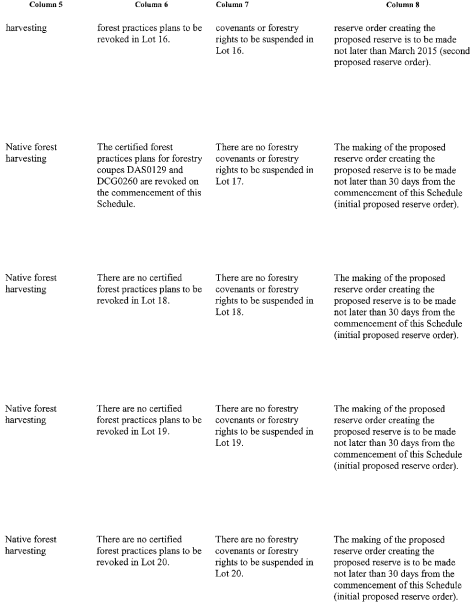
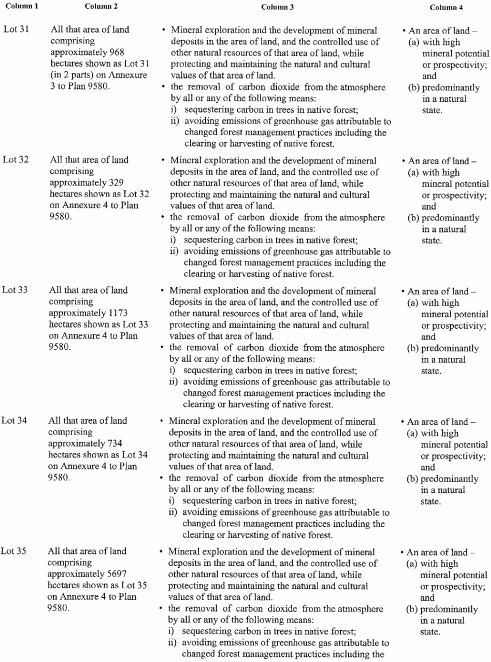
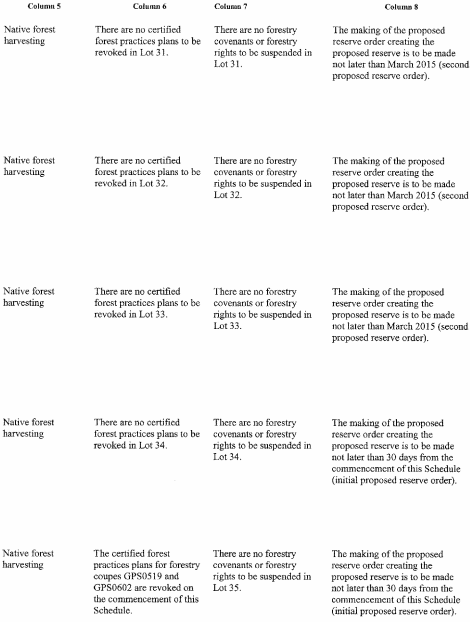
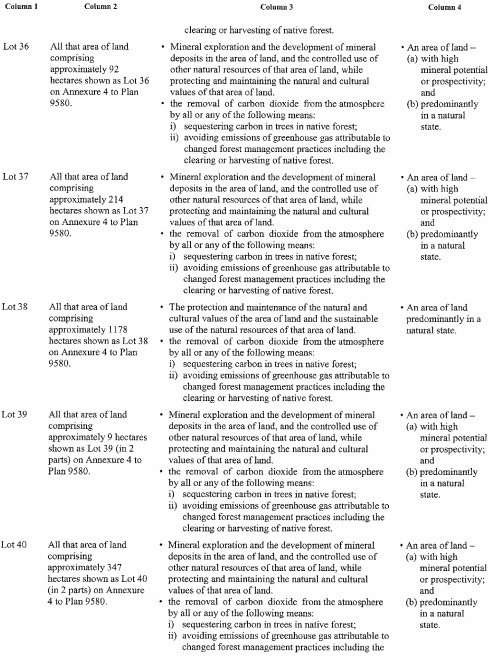
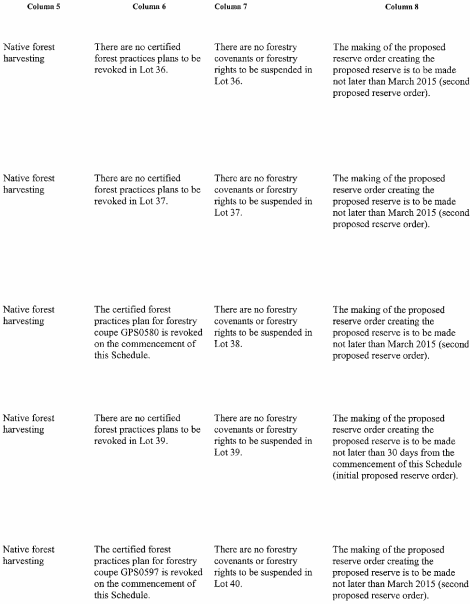
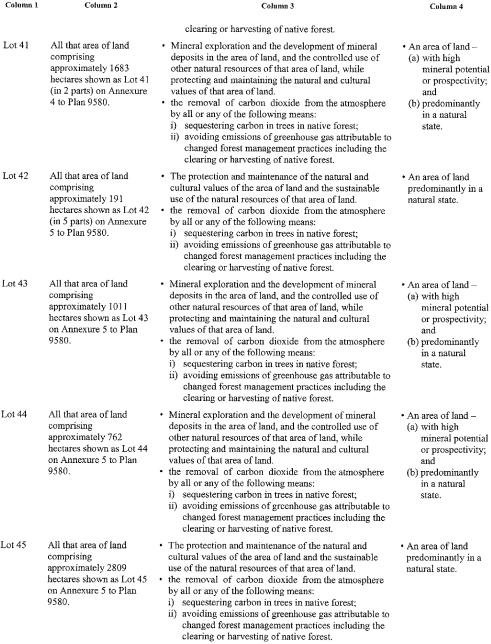
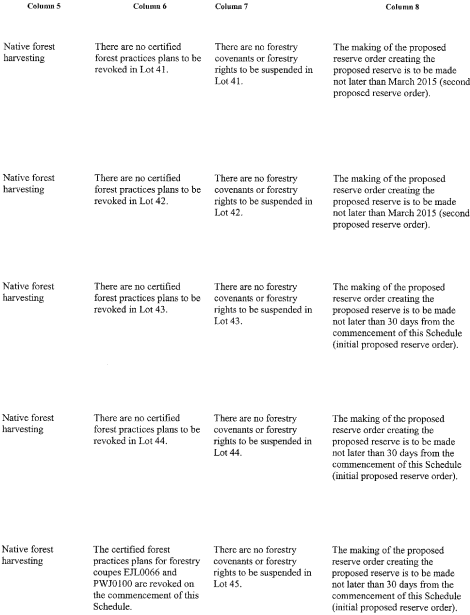
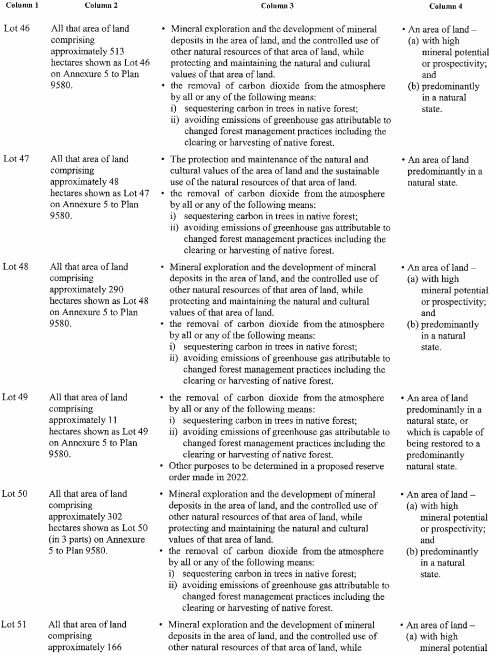
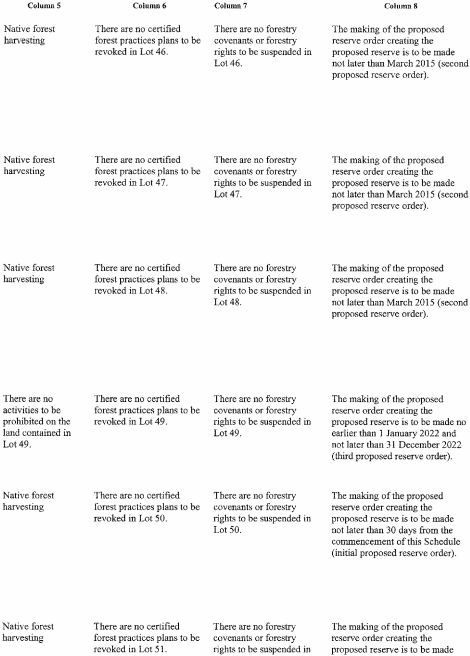
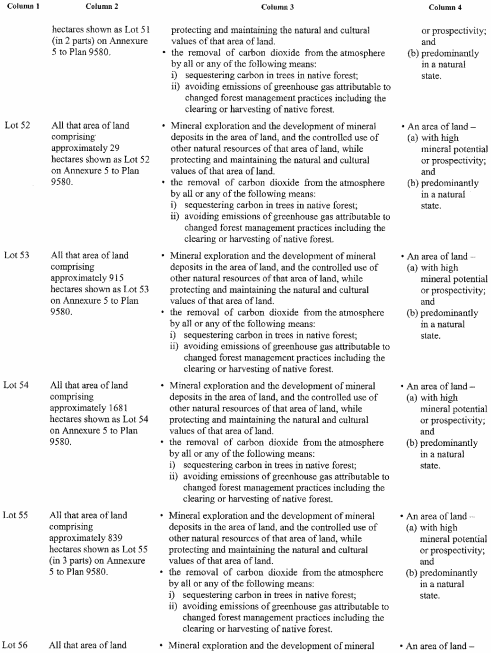
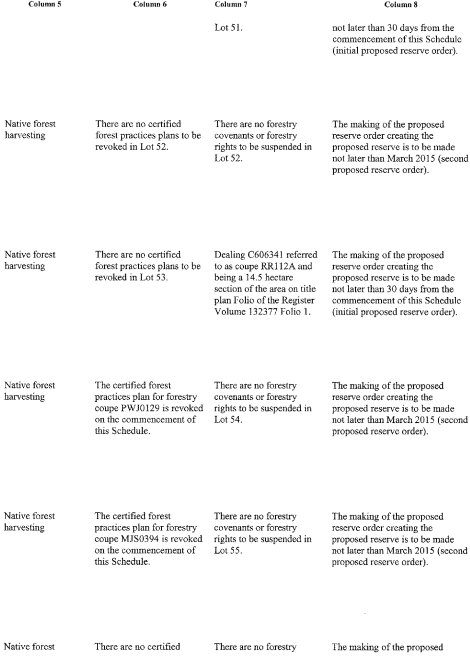
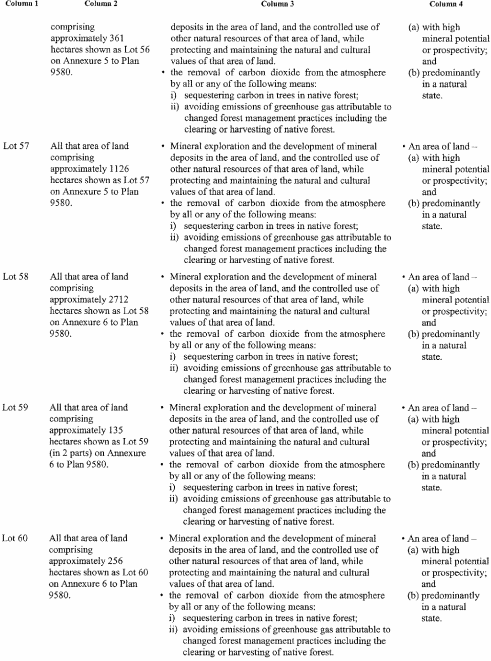
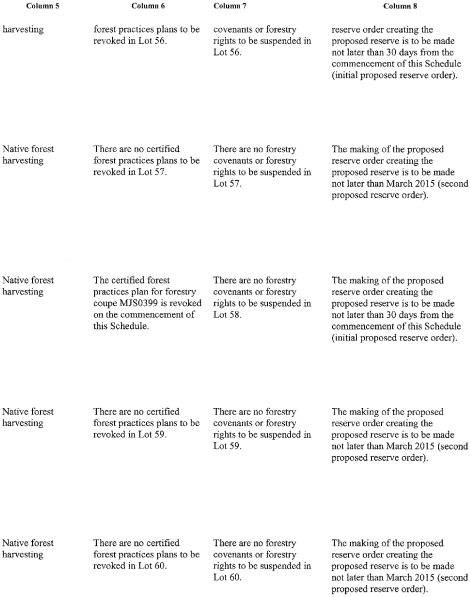
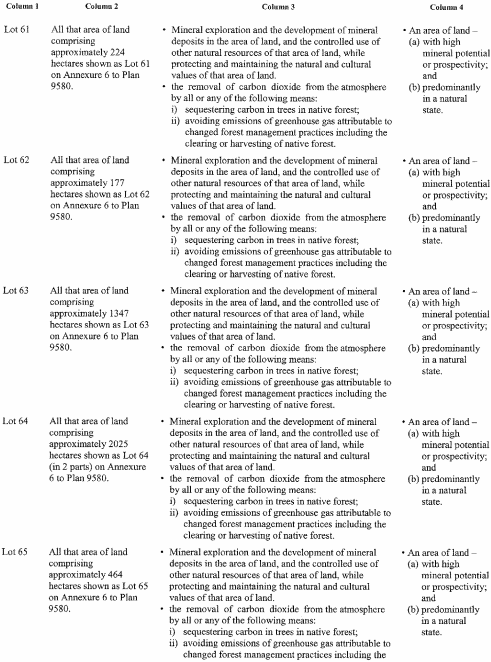
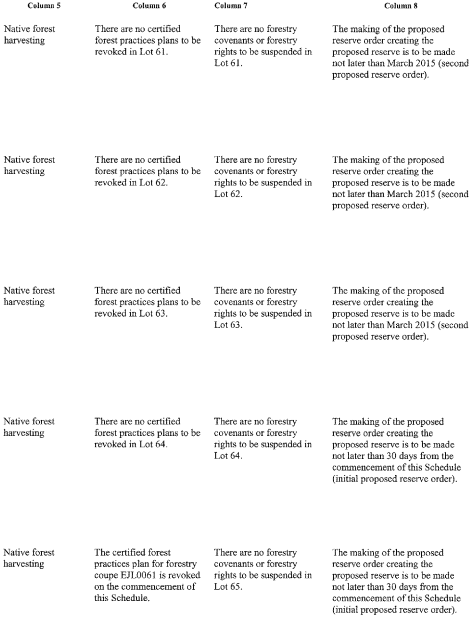
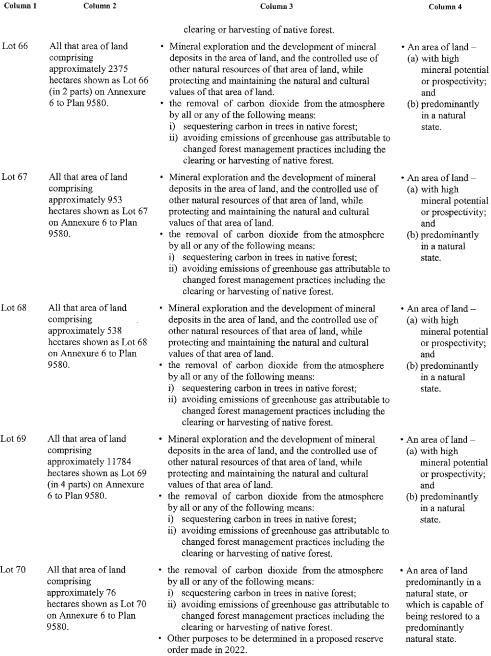
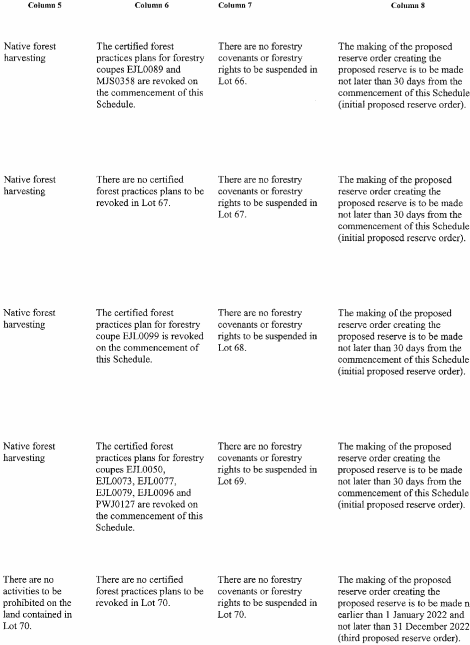
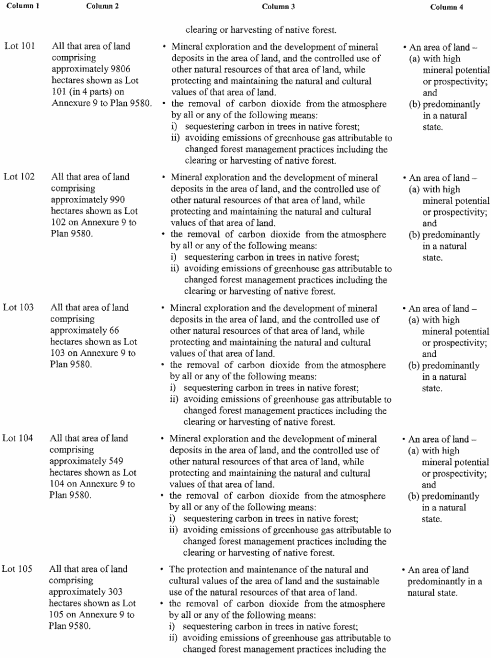
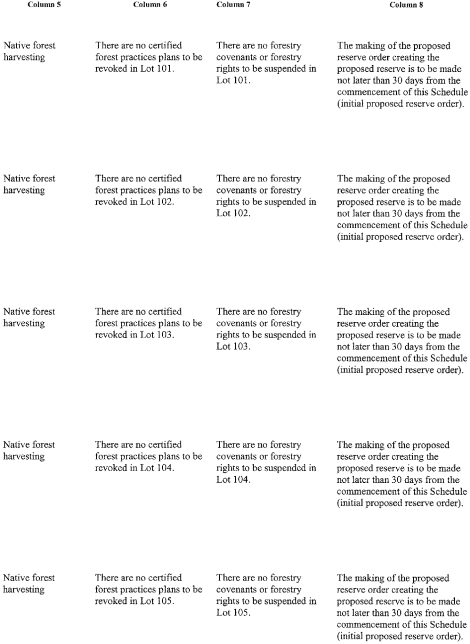
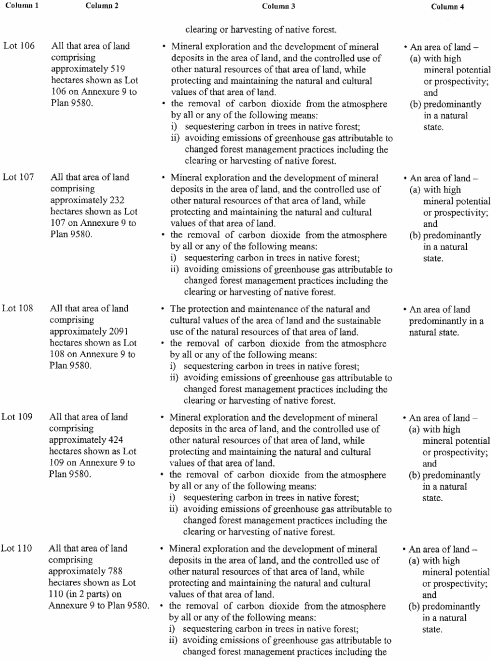
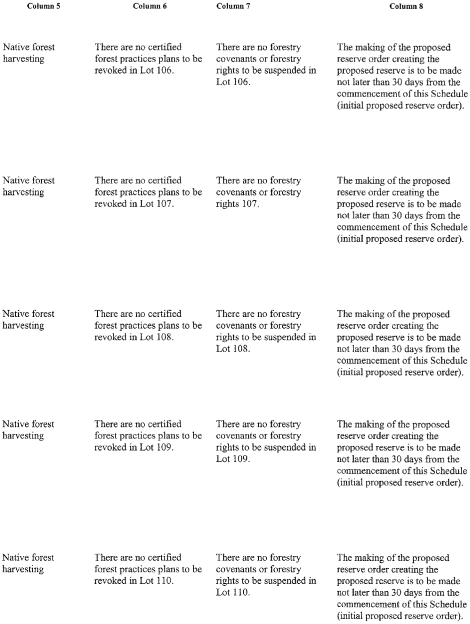
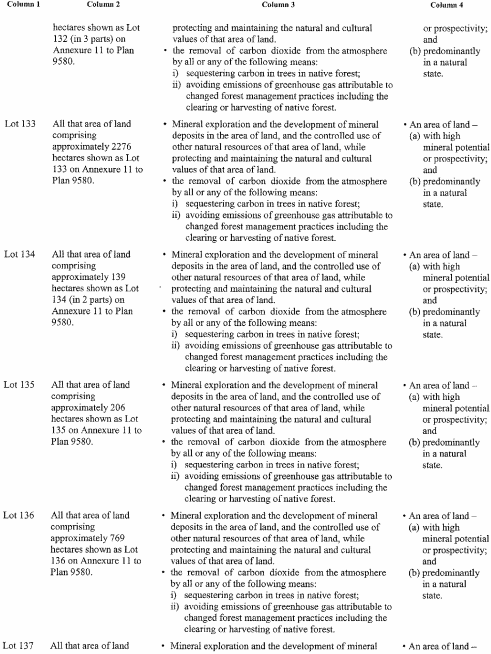
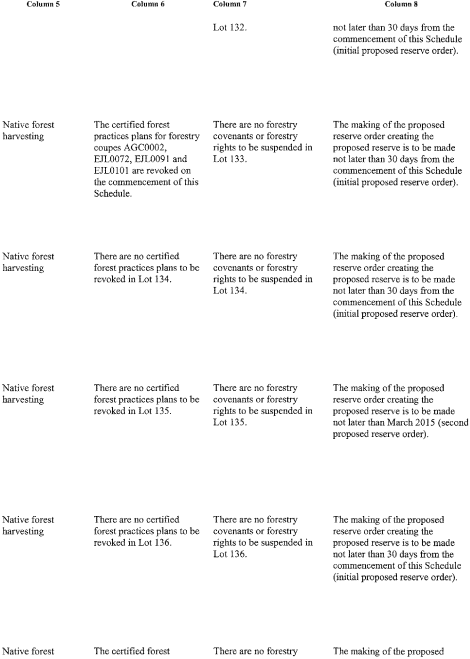
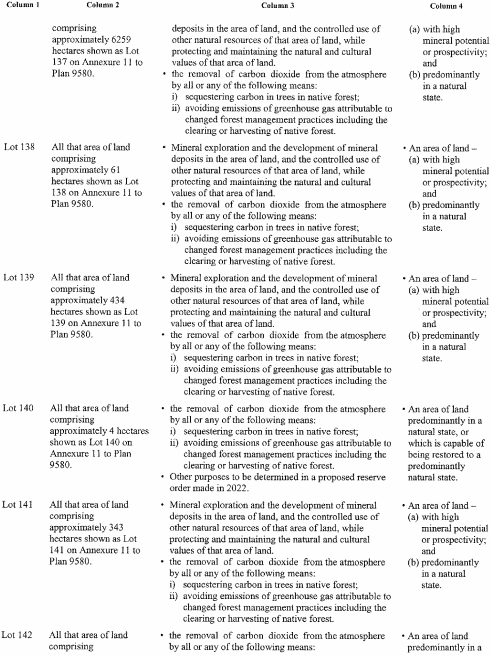
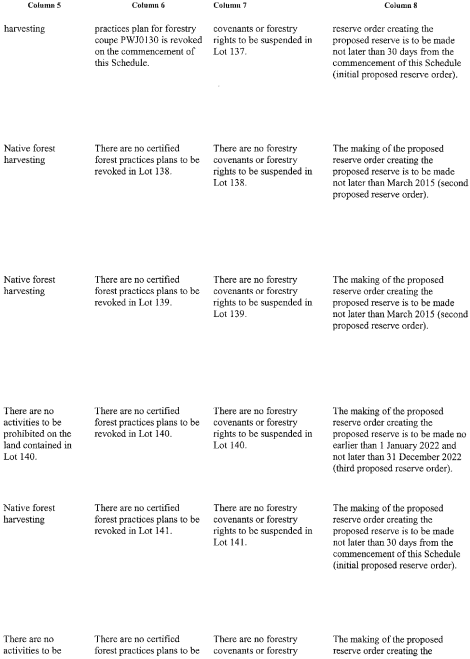
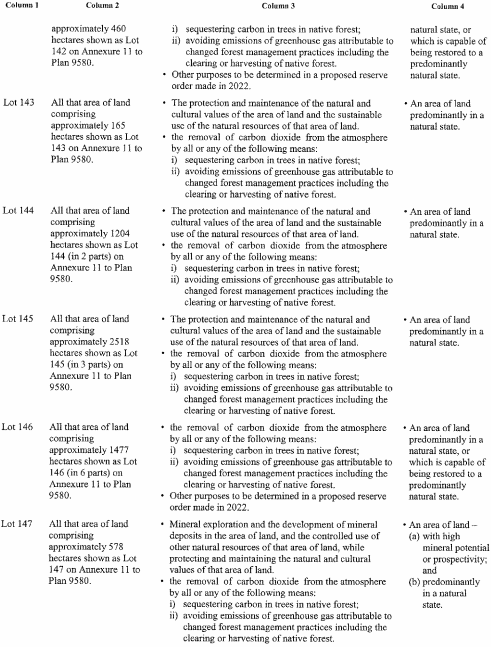
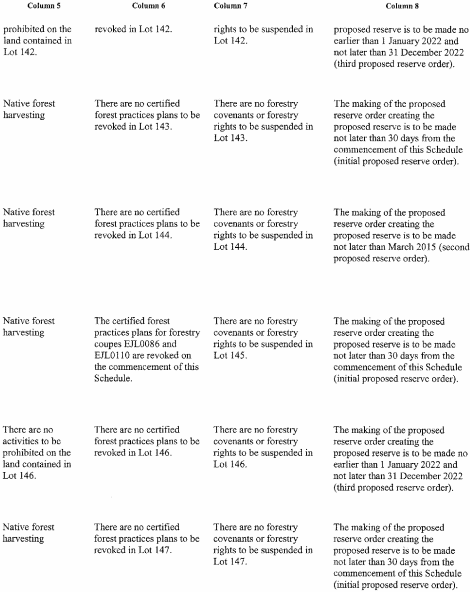
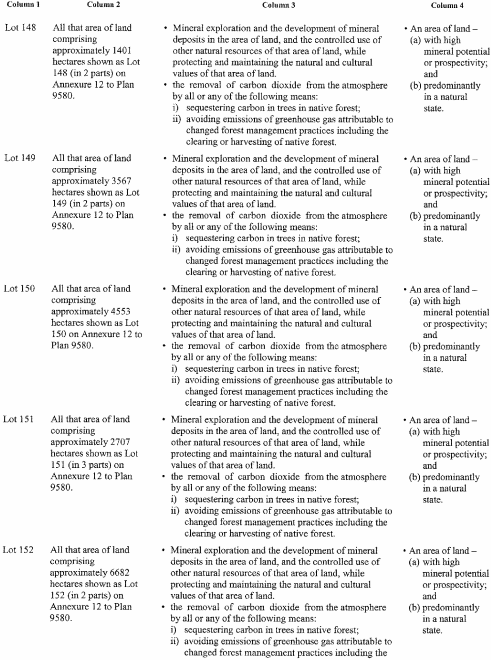
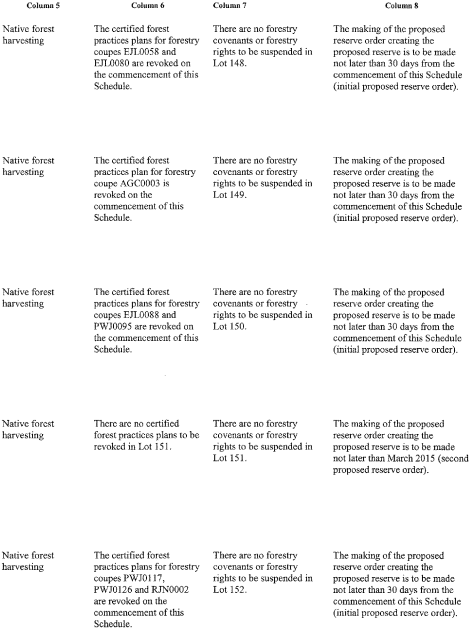
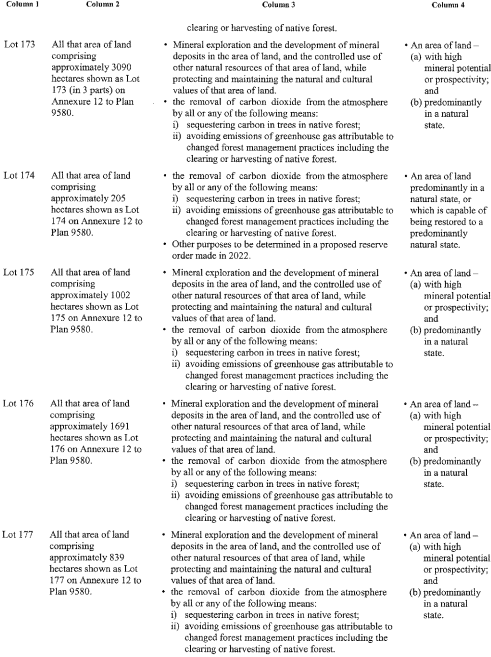
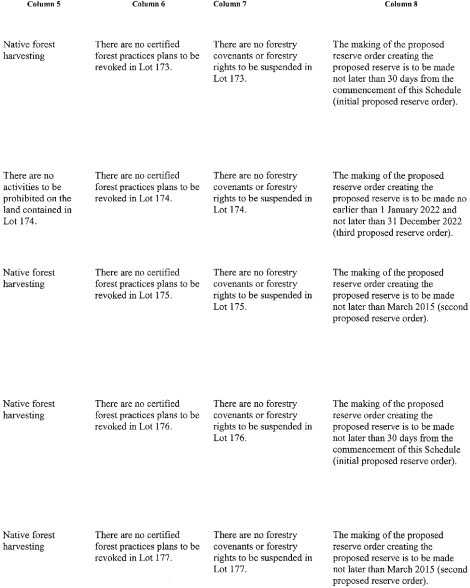
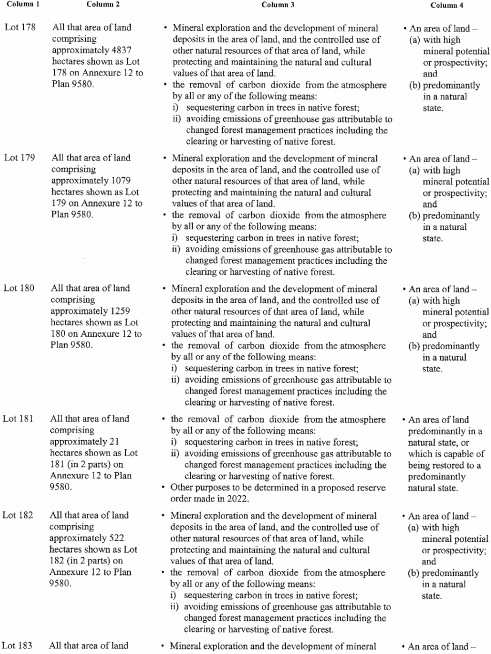
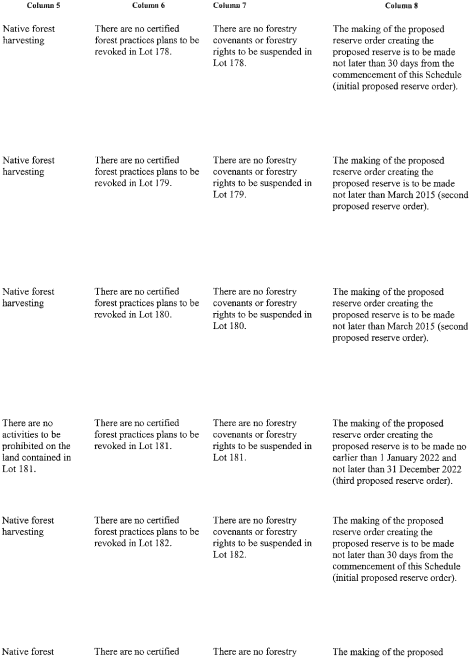
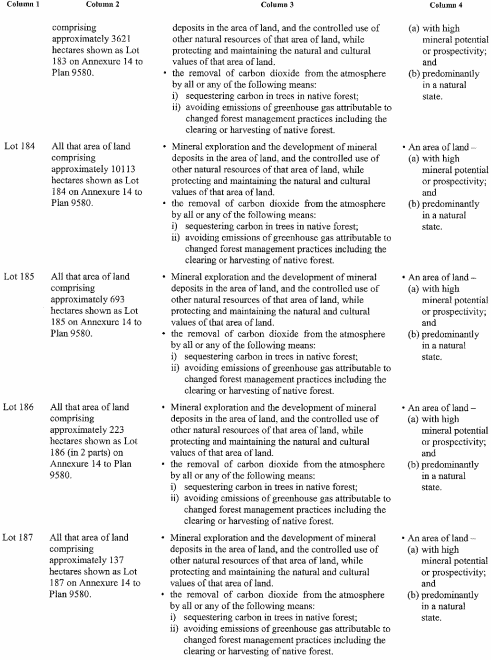
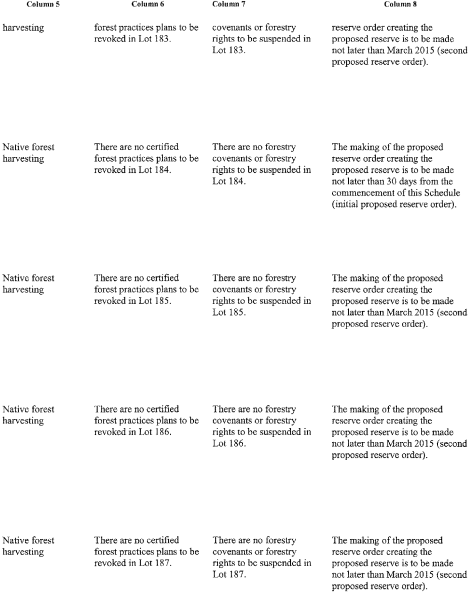
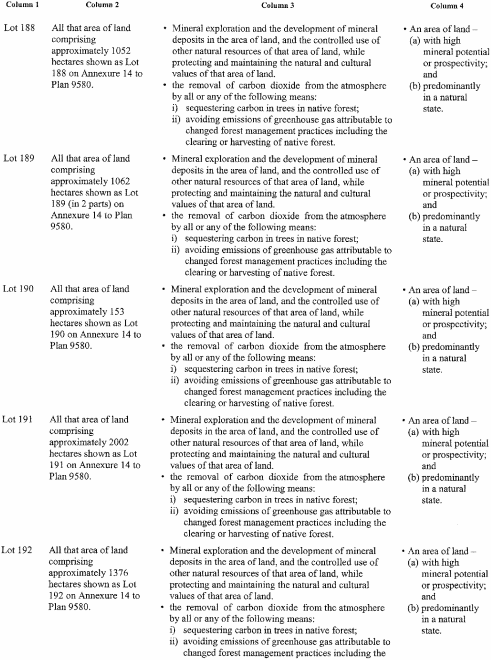
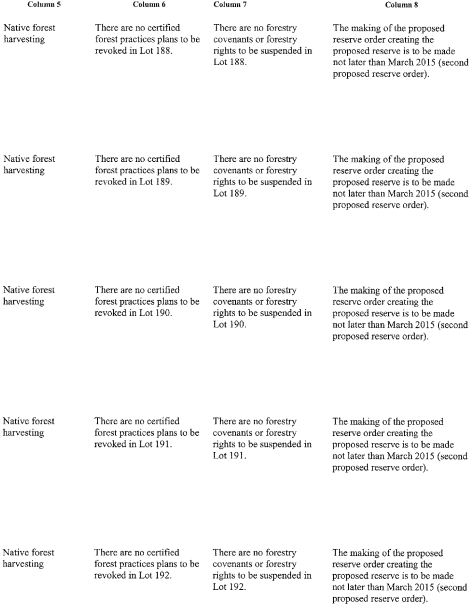
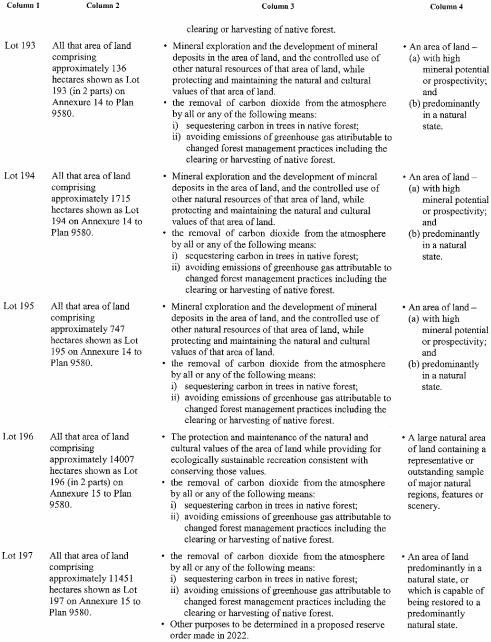
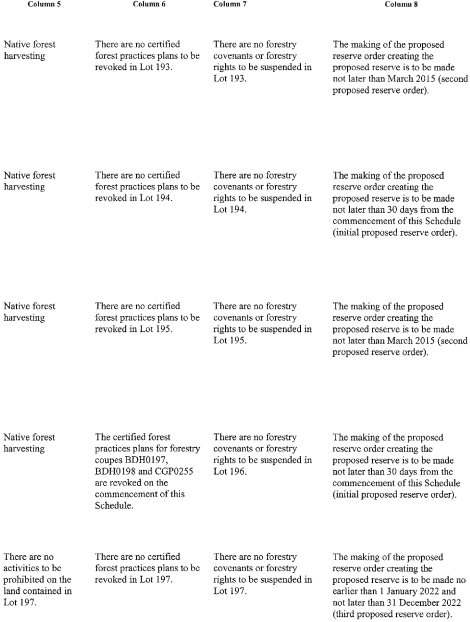
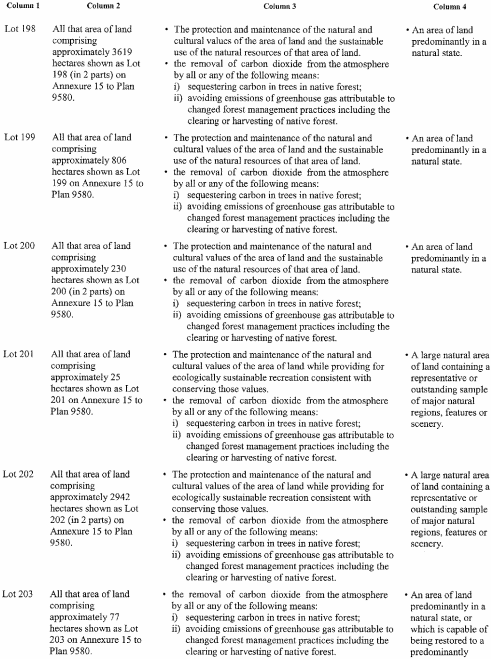
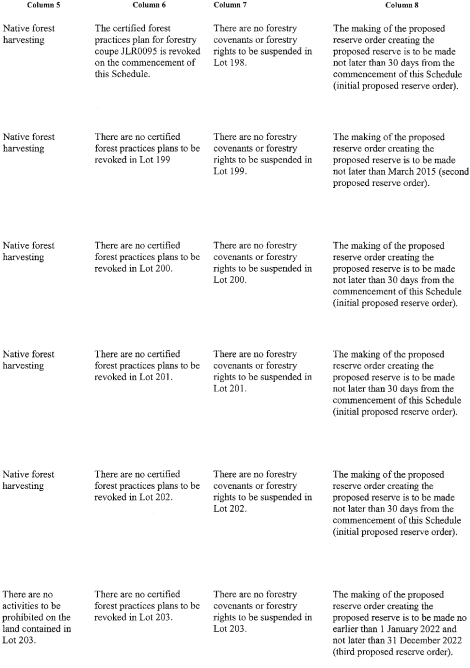
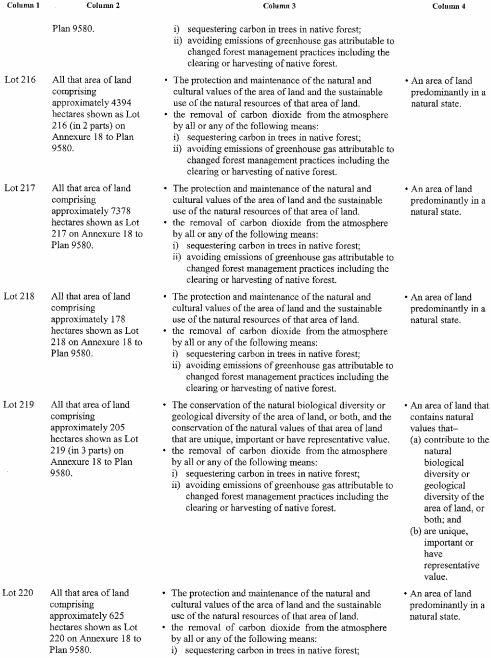
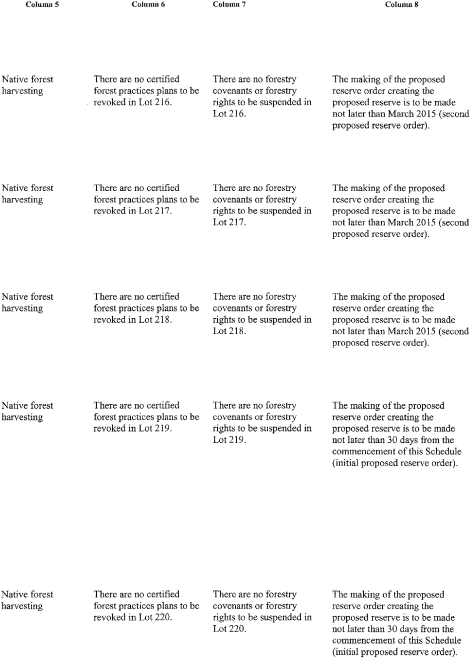
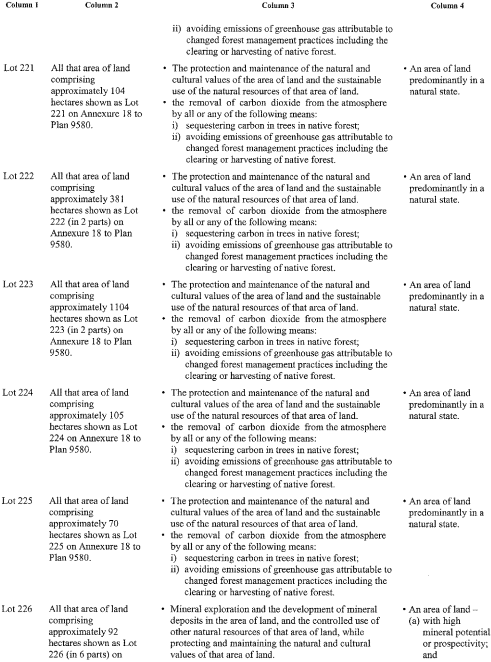
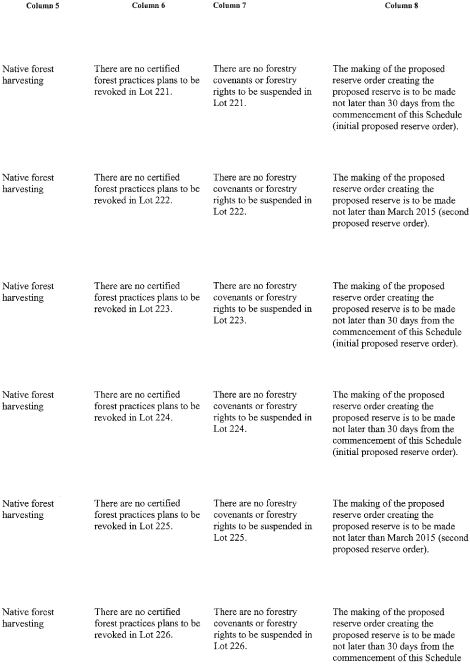
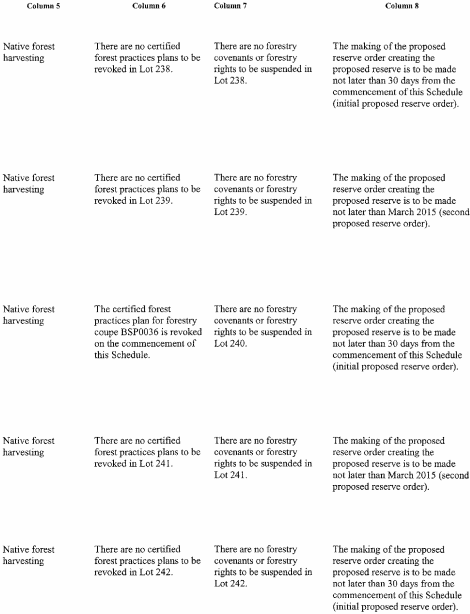
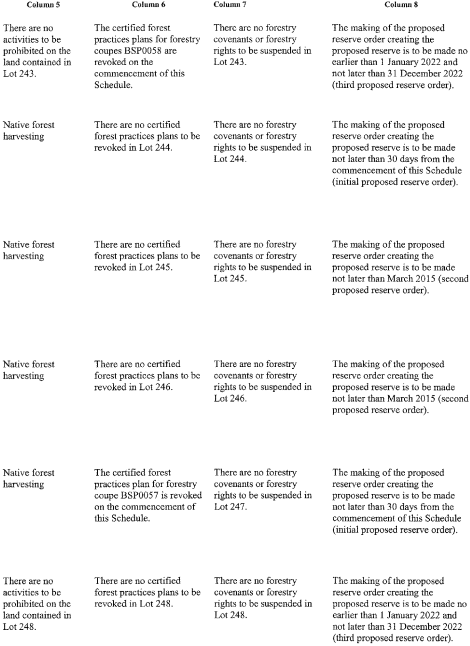
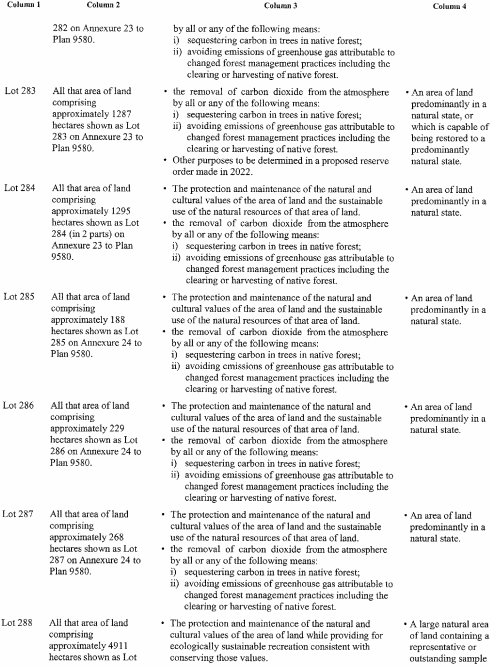
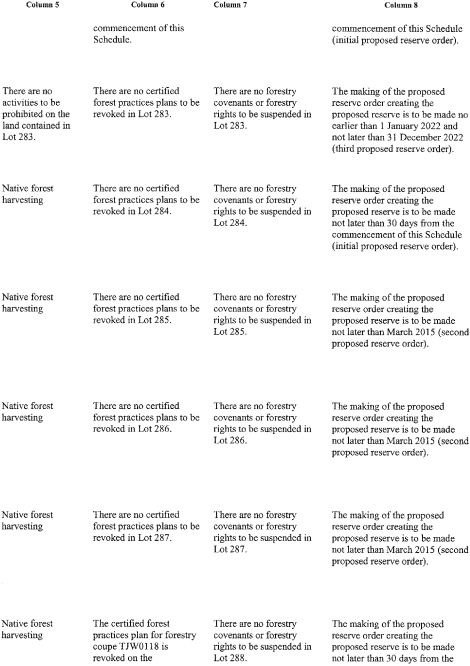
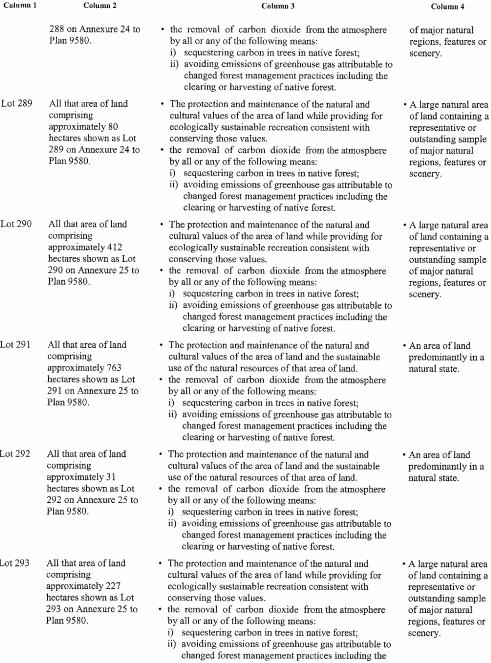
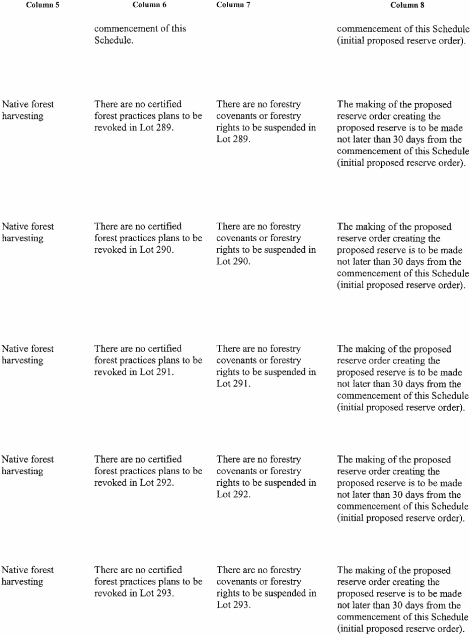
(1) The land described in column 2 of the table set out at the end of clause 2 of Schedule 1 –(a) can be proposed as reserves for the purposes of this Act; and(b) is to be known as "the future reserve land".(2) The following provisions apply to the future reserve land:(a) no activities referred to in column 5 of the table set out at the end of clause 2 of Schedule 1 can be authorised, approved or permitted by any person, pursuant to the performance or exercise of functions or powers under any written law, on the land described in column 2 of the table set out at the end of clause 2 of Schedule 1 from the commencement of this Schedule until Schedule 1 is repealed under section 21(11) or 22(5) or a proclamation is made under section 25(21) in relation to the land;(b) the certified forest practices plans specified in column 6 of the table set out at the end of clause 2 of Schedule 1 are revoked on the date referred to in that column;(c) the forestry covenants or forestry rights specified in column 7 of the table set out at the end of clause 2 of Schedule 1 are suspended and a person must not do anything required, authorised or permitted by those covenants or rights for so long as the land remains the future reserve land.(3) Except as provided in subsection (2) , subsection (2) does not extinguish or otherwise affect the right to commence or carry on any activity on the future reserve land authorised, approved or permitted before the commencement of this section.(4) Subject to subsection (2) , the managing entity of the future reserve land can continue to perform or exercise its functions or powers, or discharge its obligations, in relation to that land.(5) Notwithstanding subsection (4) , the managing entity of the future reserve land cannot, for so long as the land remains future reserve land, sell, transfer or convey that land to any other person.(6) Notwithstanding subsection (4) , the managing entity of the future reserve land cannot, for so long as the land remains future reserve land, grant or create a right or interest over that land for a period exceeding, or capable of exceeding, 12 months without the written permission of the Nature Conservation Minister or a person approved by that Minister.(7) For the purposes of this section –date means a given date, act or event or a day reckoned by a period of time from a given date, act or event;managing entity, in relation to the future reserve land, means the person in whom is vested the management or ownership of that land and includes the Crown.
19. Special species contingency areas
(1) In this section –special species timber includes the wood of the following species:(a) blackwood (Acacia melanoxylon);(b) myrtle (Nothofagus cunninghamii);(c) celery-top pine (Phyllocladus aspleniifolius);(d) sassafras (Atherosperma moschatum);(e) huon pine (Lagarostrobos franklinii);(f) silver wattle (Acacia dealbata);(g) any other timber that is prescribed by the regulations;special species timber harvesting means the native forest harvesting of special species timber in a manner that is consistent with the objectives (c), (d), (e) and (f) for the management of reserved land in the class of regional reserve as set out in Schedule 1 to the National Parks and Reserves Management Act 2002 and that is carried out in such a manner as to promote the health, safety and welfare of persons undertaking the harvesting.(2) On receipt of advice from the Special Council, the Minister must, consistently with that advice, and in respect of lands specified in that advice, by order published in the Gazette –(a) permit special species timber harvesting on any land described in Schedule 5 (Special Species Contingency Areas) or prescribed in the regulations for the purpose of this paragraph that is specified in the order; or(b) remove any land from Schedule 5 .(3) Before making an order in relation to any land prescribed in the regulations for the purpose of subsection (2)(a) , the Minister must have received advice from the Special Council that the permanent timber production zone land and the land described in Schedule 5 is not sufficient to provide the long term required yield of special species timber.(4) The Minister must cause an order made under subsection (2)(a) to be laid before each House of Parliament within the first 10 sitting-days after the order is published.(5) An order under subsection (2)(a) is of no effect unless it has been accepted by both Houses of Parliament.(6) For the purposes of subsection (5) , a House of Parliament is taken to have accepted an order if a copy of it has been laid on the table of that House and –(a) it is accepted by that House; or(b) at the expiration of 5 sitting-days after it was laid on the table of that House, no notice has been given of a motion to disallow it or, if such notice has been given, the notice has been withdrawn or the motion has been negatived; or(c) if any notice of a motion to disallow it is given during that period of 5 sitting-days, the notice is, after the expiration of that period, withdrawn or the motion is negatived.(7) An order under subsection (2) is not a statutory rule for the purposes of the Rules Publication Act 1953 .
No compensation is payable to any person in relation to any loss arising from land becoming future reserve land.
21. Making of proposed reserve order
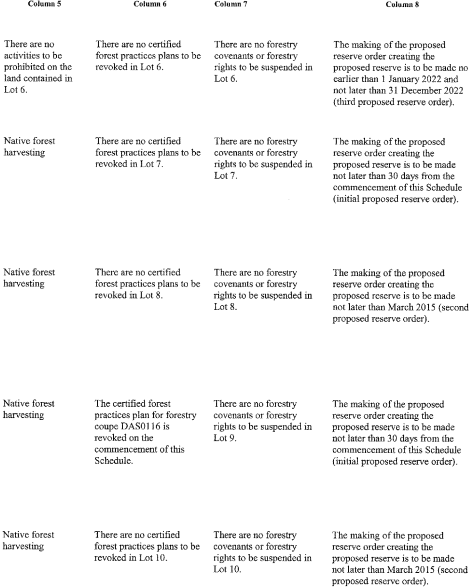
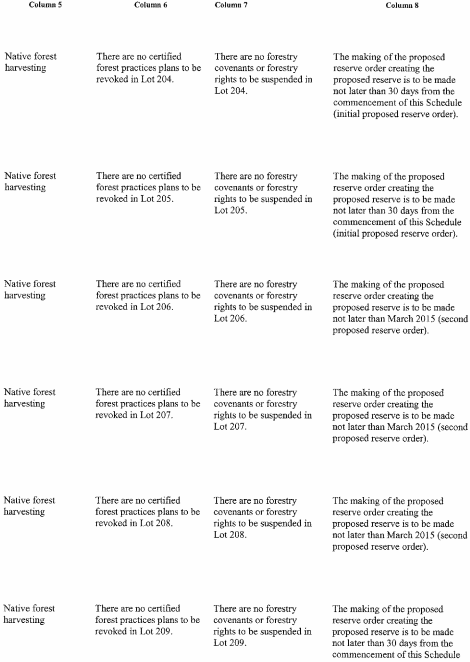
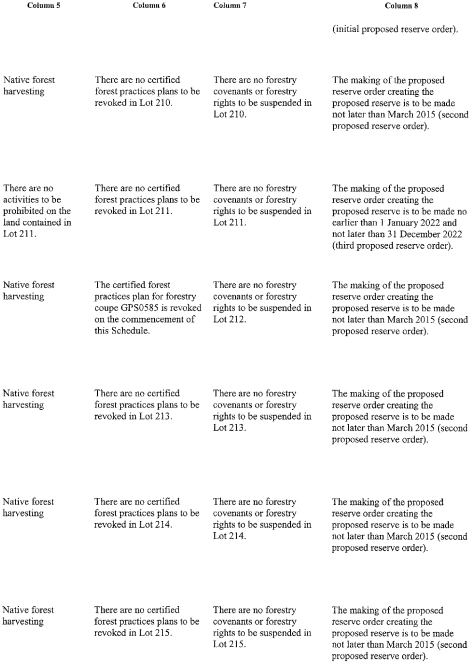
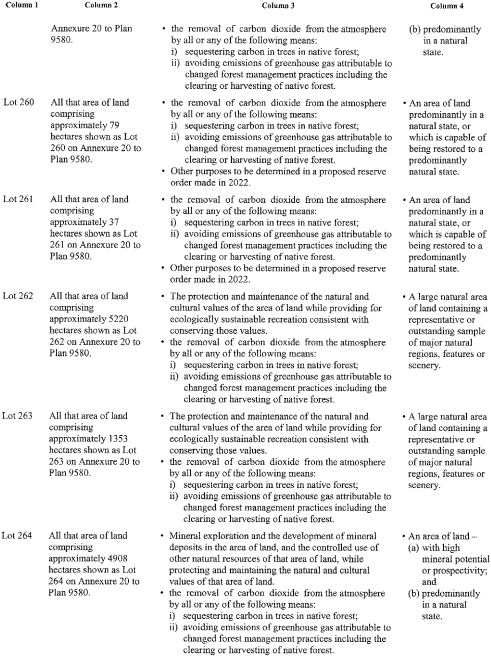
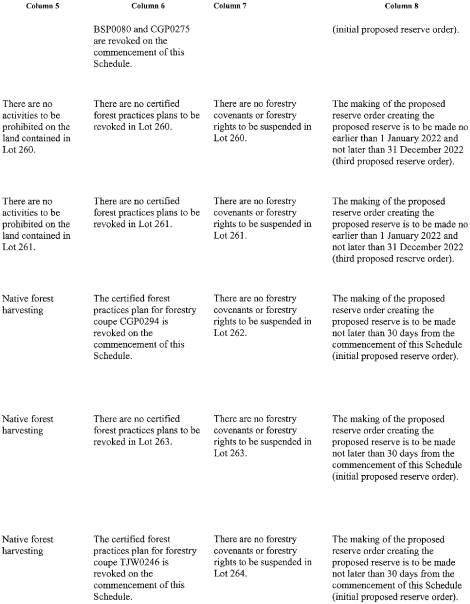
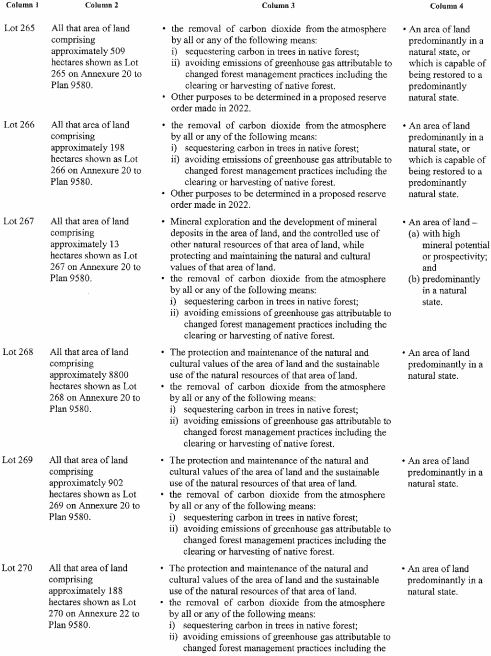
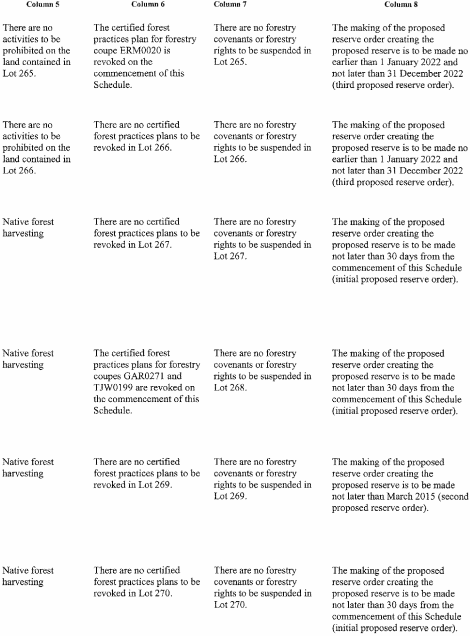
(1) The Minister, by order published in the Gazette (a proposed reserve order ), may declare the future reserve land to be proposed reserves for the purposes of this Act.(2) A proposed reserve order in relation to a proposed reserve –(a) is to be made on or before the date specified in column 8 of the table set out at the end of clause 2 of Schedule 1 in respect of the land; and(b) is to contain the information specified in columns 2, 3, 4 and 5 of the table set out at the end of clause 2 of Schedule 1 in relation to that land.(3) A proposed reserve order is not a statutory rule for the purposes of the Rules Publication Act 1953 .(4) Before the making of the proposed reserve order, the Minister is to request the Special Council to provide the Minister with a durability report prepared by the Special Council and the Special Council is to comply with that request.(5) Before the making of a proposed reserve order, the Minister is to –(a) obtain from the Special Council the durability report referred to in subsection (4) ; and(b) obtain advice, in writing, from the Minister administering the Carbon Credits (Carbon Farming Initiative) Act 2011 of the Commonwealth as to whether any changed management practices on land specified in the proposed reserve order, when reserved under this Act, constitute a project that is not required to be carried out under a law of the State for the purposes of section 41 of the Carbon Credits (Carbon Farming Initiative) Act 2011 of the Commonwealth; and(c) subject to subsection (6) , obtain advice from the Forestry Corporation that Forest Stewardship Council certification has been obtained for forestry operations in permanent timber production zone land.(6) Paragraph (c) of subsection (5) does not apply to the initial proposed reserve order.(7) The Minister must cause a proposed reserve order, the advice referred to in subsection (5)(b) in relation to the land specified in the proposed reserve order, the advice obtained from the Forestry Corporation referred to in subsection (5)(c) and the durability report to be laid before each House of Parliament within the first 2 sitting-days after the proposed reserve order is published.(8) A proposed reserve order is of no effect unless it has been accepted by both Houses of Parliament.(9) For the purposes of subsection (8) , a House of Parliament is to be taken to have accepted a proposed reserve order if a copy of it has been laid on the table of that House and –(a) it is accepted by that House; or(b) at the expiration of 15 sitting-days after it was laid on the table of that House, no notice has been given of a motion to disallow it or, if such notice has been given, the notice has been withdrawn or the motion has been negatived; or(c) if any notice of a motion to disallow it is given during that period of 15 sitting-days, the notice is, after the expiration of that period, withdrawn or the motion is negatived.(10) If –(a) the Minister fails to make the initial proposed reserve order within the time specified in column 8 of the table set out at the end of clause 2 of Schedule 1 in respect of the future reserve land, this Act is repealed on the day after the date by which the initial proposed reserve order is to be made as specified in that column; or(b) either House of Parliament does not accept the initial proposed reserve order, this Act is repealed on the date on which a House does not accept the order.(11) If the Minister fails to make a proposed reserve order (other than the initial proposed reserve order), within the time specified in column 8 of the table set out at the end of clause 2 of Schedule 1 , in respect of the future reserve land, Schedule 1 is repealed.(12) The Minister is to cause a notice to be published in the Gazette notifying –(a) the acceptance of the proposed reserve order by both Houses of Parliament; or(b) the non-acceptance by a House of Parliament of the proposed reserve order; or(c) that the Minister has failed to make a proposed reserve order within the time specified in column 8 of the table set out at the end of clause 2 of Schedule 1 in respect of the future reserve land.(13) The Minister is to cause the notice referred to in subsection (12) to be published in the Gazette within 10 days of the acceptance or non-acceptance of the proposed reserve order.(14) A notice under subsection (12) is not a statutory rule for the purposes of the Rules Publication Act 1953 .
22. Non-acceptance of proposed reserve order
(1) If either House of Parliament does not accept a proposed reserve order, other than the initial proposed reserve order, pursuant to section 21 , the Minister may cause the proposed reserve order to be laid before each House of Parliament on one further occasion within 12 months from the date of the notice referred to in section 21(12) or within such other period from the date of that notice as may be prescribed.(2) Before the proposed reserve order is laid before each House of Parliament under subsection (1) , the Minister is to obtain from the Special Council a new durability report prepared by the Special Council and lay that report before each House of Parliament with the proposed reserve order.(3) The proposed reserve order is of no effect unless it has been accepted by both Houses of Parliament.(4) For the purposes of subsection (3) , a House of Parliament is to be taken to have accepted a proposed reserve order if a copy of it has been laid on the table of that House and –(a) it is accepted by that House; or(b) at the expiration of 15 sitting-days after it was laid on the table of that House, no notice has been given of a motion to disallow it or, if such notice has been given, the notice has been withdrawn or the motion has been negatived; or(c) if any notice of a motion to disallow it is given during that period of 15 sitting-days, the notice is, after the expiration of that period, withdrawn or the motion is negatived.(5) If either House of Parliament does not accept the proposed reserve order laid before each House of Parliament a second time under subsection (1) , the proposed reserve order is revoked and Schedule 1 is repealed.(6) The Minister is to cause a notice to be published in the Gazette notifying –(a) the acceptance of the proposed reserve order by both Houses of Parliament; or(b) the non-acceptance by a House of Parliament of the proposed reserve order.(7) The Minister is to cause the notice referred to in subsection (6) to be published in the Gazette within 10 days of the acceptance or non-acceptance of the proposed reserve order.(8) A notice under subsection (6) is not a statutory rule for the purposes of the Rules Publication Act 1953 .
23. Nature Conservation Minister to be advised of proposed reserve order
If each House of Parliament accepts a proposed reserve order, the Minister is to advise the Nature Conservation Minister of the acceptance of the proposed reserve order.
PART 7 - Making of Reserves
24. Determination of substantial active protests or substantial market disruption
(1) Either House of Parliament may make a determination that there has been a failure of durability including, but not limited to, substantial active protests or substantial market disruption since the previous durability report or, if there is no previous durability report, since the commencement of this Act.(2) The determination of a House of Parliament made under subsection (1) may be revoked by the House of Parliament that made the determination.
(1) On receipt of advice from the Minister of the acceptance of a proposed reserve order, the Nature Conservation Minister must make a determination as to the final boundaries, values and purpose of the proposed reserves specified in the order.(2) The Nature Conservation Minister must not make a determination as to the final boundaries, values and purpose of a proposed reserve specified in column 1 of the table in Schedule 1 with a lot number specified in Schedule 2 –(a) before 1 October 2014; and(b) until the Nature Conservation Minister has received advice from the Forestry Corporation that it has obtained Forest Stewardship Council certification.(3) The Forestry Corporation is to advise the Nature Conservation Minister within 10 days of obtaining Forest Stewardship Council certification.(4) The Nature Conservation Minister must not make a determination as to the final boundaries, values and purpose of a proposed reserve specified in column 1 of the table in Schedule 1 with a lot number specified in Schedule 3 until the Nature Conservation Minister –(a) has received advice from the Forestry Corporation that it has obtained Forest Stewardship Council certification; and(b) is satisfied that a proposed reserve with a lot number specified in Schedule 3 has been included in the World Heritage List.(5) The Forestry Corporation is to advise the Nature Conservation Minister within 10 days of obtaining Forest Stewardship Council certification.(6) For the purposes of subsection (4) , "World Heritage List" means the list kept under that title under Article 11 of the World Heritage Convention.(7) If the Nature Conservation Minister makes a determination as to the final boundaries, values and purpose of a proposed reserve that does not substantially accord with the boundaries, values or purpose for the proposed reserve accepted by each House of Parliament under section 21 , the Nature Conservation Minister is to lay before each House of Parliament a document specifying the changed boundaries, values or purpose determined by the Nature Conservation Minister and the reason for the change.(8) The Nature Conservation Minister's determination under subsection (7) is final.(9) The changed boundaries, values or purpose determined by the Nature Conservation Minister under subsection (7) are of no effect unless they have been accepted by both Houses of Parliament.(10) For the purposes of subsection (9) , a House of Parliament is to be taken to have accepted the changed boundaries, values or purpose determined by the Nature Conservation Minister and specified in the document referred to in subsection (7) if a copy of the document has been laid on the table of that House and –(a) it is accepted by that House; or(b) at the expiration of 15 sitting-days after it was laid on the table of that House, no notice has been given of a motion to disallow it or, if such notice has been given, the notice has been withdrawn or the motion has been negatived; or(c) if any notice of a motion to disallow it is given during that period of 15 sitting-days, the notice is, after the expiration of that period, withdrawn or the motion is negatived.(11) If both Houses of Parliament accept the changed boundaries, values or purpose specified in the document referred to in subsection (7) , the changed boundaries, values or purpose become the boundaries, values or purpose for the proposed reserve.(12) If either House of Parliament does not accept the changed boundaries, values or purpose specified in the document referred to in subsection (7) –(a) the land to which it relates is no longer a proposed reserve for the purposes of this Act; and(b) the land is no longer the future reserve land; and(c) section 18(2) , (3) , (4) , (5) , (6) and (7) cease to apply to the land.(13) If –the Nature Conservation Minister is to lay before each House of Parliament a document specifying the boundaries, values and purpose of the proposed reserve and a durability report obtained from the Special Council that addresses the matters that were the subject of the determination.(a) the Nature Conservation Minister makes a determination as to the boundaries, values and purpose of the proposed reserve that substantially accords with the boundaries, values and purpose accepted by each House of Parliament under section 21 ; and(b) either House of Parliament has made a determination under section 24 within the period of 12 months before the making of the Nature Conservation Minister's determination and that determination has not been revoked –(14) The boundaries, values and purpose of the proposed reserve specified in the document referred to in subsection (13) are of no effect unless they have been accepted by both Houses of Parliament.(15) For the purposes of subsection (14) , a House of Parliament is to be taken to have accepted the boundaries, values and purpose of a proposed reserve specified in the document referred to in subsection (13) if a copy of the document has been laid on the table of that House and –(a) it is accepted by that House; or(b) at the expiration of 15 sitting-days after it was laid on the table of that House, no notice has been given of a motion to disallow it or, if such notice has been given, the notice has been withdrawn or the motion has been negatived; or(c) if any notice of a motion to disallow it is given during that period of 15 sitting-days, the notice is, after the expiration of that period, withdrawn or the motion is negatived.(16) If both Houses of Parliament accept the boundaries, values and purpose specified in the document referred to in subsection (13) , the boundaries, values and purpose become the boundaries, values and purpose of the proposed reserve.(17) If either House of Parliament does not accept the boundaries, values and purpose specified in the document referred to in subsection (13) –(a) the land to which it relates is no longer a proposed reserve for the purposes of this Act; and(b) the land is no longer the future reserve land; and(c) section 18(2) , (3) , (4) , (5) , (6) and (7) cease to apply to the land.(18) Subject to subsection (19) , if –the Nature Conservation Minister is to recommend to the Governor that the Governor declare the proposed reserve to be a class of reserved land under the Nature Conservation Act 2002 that gives effect to the boundaries, values and purpose accepted by each House of Parliament in respect of the proposed reserve.(a) the Nature Conservation Minister makes a determination as to the boundaries, values or purpose of the proposed reserve that substantially accords with the boundaries, values or purpose accepted by each House of Parliament under section 21 and either House of Parliament has not made a determination under section 24 ; or(b) the changed boundaries, values or purpose determined by the Nature Conservation Minister and specified in the document referred to in subsection (7) are accepted by each House of Parliament; or(c) the boundaries, values and purpose determined by the Nature Conservation Minister and specified in the document referred to in subsection (13) are accepted by each House of Parliament –(19) No land described in Schedule 5 (Special Species Contingency Areas) or prescribed in the regulations for the purposes of section 19(2)(a) may be declared to be a class of reserve land under the Nature Conservation Act 2002 unless –(a) the land has been removed from that Schedule pursuant to section 19(2)(b) ; or(b) the regulations have been rescinded.(20) The Nature Conservation Minister's determination under subsection (18)(a) is final.(21) On receipt of a recommendation under subsection (18) , the Governor, by proclamation, may –(a) declare that any part of the proposed reserve that is entered in the Register of Multiple Use Forest Land, immediately before the making of the proclamation, is deleted from that Register; and(b) revoke the dedication as State forest of such part of that proposed reserve that is, immediately before the making of the proclamation, dedicated as State forest; and(c) declare any part of the proposed reserve that is not Crown land, by virtue of paragraph (b) , to be Crown land; and(d) revoke all orders and proclamations reserving Crown land as public reserve, including all orders by virtue of the provisions of any other Act that were taken to have been made pursuant to section 8(1) of the Crown Lands Act 1976 , in so far as they relate to the land described in the proclamation, immediately before the making of the proclamation; and(e) declare the proposed reserve to be reserved land in one of the classes set out in section 11(2)(a) of the Nature Conservation Act 2002 ; and(f) give a name to that reserved land; and(g) identify whether the reserve is being declared for the additional purpose of removing carbon dioxide from the atmosphere by all or any of the following means:(i) sequestering carbon in native forest;(ii) avoiding emissions of greenhouse gas attributable to changed forest management practices including the clearing or harvesting of native forest.(22) For the purposes of subsection (21)(g) –greenhouse gas has the same meaning as in the Carbon Credits (Carbon Farming Initiative) Act 2011 of the Commonwealth;native forest has the same meaning as in the Carbon Credits (Carbon Farming Initiative) Act 2011 of the Commonwealth.(23) Section 11(3) of the Nature Conservation Act 2002 applies to the naming of the reserved land.(24) A proclamation under subsection (21) may only be made declaring a proposed reserve to be reserved land in a class if the proposed reserve satisfies the criteria relating to that class as set out in section 16 of the Nature Conservation Act 2002 .(25) The Minister is to cause a copy of each proclamation made by the Governor under subsection (21) to be tabled in each House of Parliament within 10 sitting-days of the making of the proclamation.
On the making of a proclamation under section 25 –(a) any contract for the sale of any part of the land described in the proclamation that has not been completed is extinguished; and(b) any forestry covenant or forestry right affecting any part of the land described in the proclamation is extinguished; and(c) any part of the land described in the proclamation that is entered in the Register of Multiple Use Forest Land, immediately before the making of the proclamation, is deleted from the Register; and(d) the dedication as State forest of such part of the land described in the proclamation that is dedicated as State forest, immediately before the making of the proclamation, is revoked and that land becomes Crown land; and(e) any part of the land described in the proclamation that is not Crown land, by virtue of paragraph (d) , is vested in the Crown and becomes Crown land; and(f) the reservation as public reserve of the land described in the proclamation that is dedicated as public reserve, immediately before the making of the proclamation, is revoked; and(g) the land described in the proclamation is taken to have been declared by the Governor to be reserved land for the purposes of the Nature Conservation Act 2002 of the class and with the name specified in the proclamation as if the proclamation had been made by the Governor under section 11(2) of that Act; and(h) the land is no longer the future reserve land; and(i) section 18(2) , (3) , (4) , (5) , (6) and (7) cease to apply to the land.
27. Entitlement to compensation
(1) In this section –affected person means a person who is adversely affected by the extinguishment of –(a) a contract for the sale of land that was extinguished by virtue of the operation of section 26(a) , being a contract made before the relevant date; or(b) a forestry covenant that was extinguished by virtue of the operation of section 26(b) , being a forestry covenant made before the relevant date; or(c) a forestry right that was extinguished by virtue of the operation of section 26(b) , being a forestry right made before the relevant date.(2) An affected person is entitled to compensation for any loss in respect of a contract, forestry covenant or forestry right extinguished by this Act.(3) Compensation is the amount agreed, in writing, between the affected person and the Nature Conservation Minister.(4) Before agreeing an amount of compensation, the Nature Conservation Minister must obtain the approval of the Valuer-General to that amount.(5) In determining whether to approve an amount of compensation, the Valuer-General is to apply the same principles, with any necessary modification, as he or she would apply in approving an amount of compensation for the purposes of section 40(8) of the Land Acquisition Act 1993 .(6) If the affected person and the Nature Conservation Minister cannot agree on the amount of compensation, the claim for compensation is to be determined as if it were a disputed claim for compensation under the Land Acquisition Act 1993 and, for that purpose –(a) section 26(a) , (b) or (c) is taken to be a notice of acquisition, within the meaning of that Act, validly gazetted on the day of the making of the proclamation; and(b) the Crown is the acquiring authority.(7) No compensation is payable to any State-owned company or Government Business Enterprise for any loss in respect of a contract, forestry covenant or forestry right extinguished by this Act.
28. Continuation of leases, licences, &c.
(1) In this section –burdening easement means an easement that burdens land which is the subject of a proclamation made under section 25 ;grantor means a Minister acting under an Act, a Government Business Enterprise or a State-owned company that granted a lease, licence, temporary licence, occupation permit or burdening easement referred to in subsection (2) .(2) This section applies to any lease, licence, temporary licence, occupation permit or burdening easement which, at the date of the proclamation made under section 25 , was in force in respect of any land that is declared to be reserved land pursuant to that proclamation.(3) This section does not apply to any lease or licence under the Mineral Resources Development Act 1995 .(4) A reference in subsection (1) , (5) , (6) , (7) , (8) or (9) to a proclamation made under section 25 is a reference to the proclamation made under that section that affects the land that is subject to a lease, licence, temporary licence, occupation permit or burdening easement referred to in subsection (2) .(5) On the making of a proclamation under section 25 , the Reserves Management Minister is substituted as a party to a lease, licence, temporary licence, occupation permit or burdening easement referred to in subsection (2) , that was granted by a grantor, in place of that grantor.(6) Any lease, licence, temporary licence, occupation permit or burdening easement referred to in subsection (2) which was administered by a grantor immediately before the making of the proclamation under section 25 is to be administered by the responsible Department in relation to the National Parks and Reserves Management Act 2002 .(7) Notwithstanding anything in this Act, the Crown Lands Act 1976 , the National Parks and Reserves Management Act 2002 or the Nature Conservation Act 2002 –(a) a lease, licence, temporary licence, occupation permit or burdening easement referred to in subsection (2) continues in force in accordance with this section, after the date of the proclamation made under section 25 , until it expires or is surrendered, released, discharged or terminated, as if the proclamation had not been made; and(b) the Reserves Management Minister –(i) may, in relation to a lease, licence, temporary licence, occupation permit or burdening easement referred to in subsection (2) , perform or exercise, in addition to any functions or powers under the National Parks and Reserves Management Act 2002 or any other Act, the same functions or powers, including without limitation, functions and powers under any written law, that could have continued to be performed or exercised by a grantor if the proclamation made under section 25 had not been made; and(ii) has, in relation to a lease, licence, temporary licence, occupation permit or burdening easement referred to in subsection (2) , the same rights and obligations which a grantor would have continued to have if the proclamation made under section 25 had not been made.(8) Nothing in this section makes the Reserves Management Minister liable for any breach of a lease, licence, temporary licence, occupation permit or burdening easement referred to in subsection (2) that occurred before the making of the proclamation under section 25 .(9) A reference to a grantor in a lease, licence, temporary licence, occupation permit or burdening easement referred to in subsection (2) that was granted by that grantor, is to be taken, on and after the date of the proclamation made under section 25 , to be a reference to the Reserves Management Minister.
29. Vesting of land held under Land Titles Act 1980
(1) In this section –non-vested land, in relation to an area of land that is comprised in a folio of the Register which includes vested land, any part of that area of land that is not vested land;Recorder means the Recorder of Titles appointed pursuant to section 4(1) of the Land Titles Act 1980 ;Register has the same meaning as in the Land Titles Act 1980 ;vested land means land that is vested in the Crown pursuant to section 26(e) .(2) This section applies where a folio of the Register includes both non-vested land and vested land.(3) As soon as practicable following the making of a proclamation under section 25 pursuant to which any land becomes vested land, the Nature Conservation Minister is to cause the following documents to be lodged with the Recorder:(a) an application by the Crown to be the registered proprietor of the vested land in accordance with section 138A of the Land Titles Act 1980 ;(b) a plan, prepared by a registered surveyor in accordance with the requirements of the Recorder, that identifies the non-vested land and the vested land.
State tax is not payable in respect of anything arising or done pursuant to this Act.
PART 8 - Amendments to Nature Conservation Act 2002
31. Amendments to Nature Conservation Act 2002
The Nature Conservation Act 2002 is amended as follows:(a) by omitting "land." from section 11(2)(b) and substituting "land; and";(b) by inserting after paragraph (b) of section 11(2) the following paragraph:(c) identify whether the reserve is being declared for the additional purpose of removing carbon dioxide from the atmosphere by all or any of the following means:(i) sequestering carbon in trees in native forest;(ii) avoiding emissions of greenhouse gas attributable to changed forest management practices including the clearing or harvesting of native forest.(c) by inserting after subsection (2) of section 11 the following subsection:(2A) For the purposes of subsection (2)(c) –greenhouse gas has the same meaning as in the Carbon Credits (Carbon Farming Initiative) Act 2011 of the Commonwealth;native forest has the same meaning as in the Carbon Credits (Carbon Farming Initiative) Act 2011 of the Commonwealth.
PART 9 - Miscellaneous
32. Right to request information
(1) The Minister, the Nature Conservation Minister or the Reserves Management Minister may request a State-owned company or Government Business Enterprise to provide any information that the Minister, Nature Conservation Minister or Reserves Management Minister considers necessary to enable the Minister, Nature Conservation Minister or Reserves Management Minister, as the case may be, to perform his or her functions or exercise his or her powers under this Act.(2) The request must –(a) be made by written notice given to the State-owned company or Government Business Enterprise; and(b) specify the time before which the information is to be given.(3) The information must be given –(a) in writing; and(b) before the time specified in the request.(4) A State-owned company or Government Business Enterprise cannot withhold information requested by a Minister under subsection (1) on any grounds.(5) No person –arising out of anything that the Crown, a Government Business Enterprise or a State-owned company is required to do under this section.(a) has any claim against the Crown, a Government Business Enterprise or a State-owned company including, without limitation, a claim for breach of confidence; or(b) is entitled to claim that a Government Business Enterprise or a State-owned company has breached any contract; or(c) is entitled to terminate a contract or claim any other remedy –(6) For the purposes of this section –information includes, but is not limited to, any analysis or interpretation of information.
33. Effect of certain consequential amendments
The amendments by this Act of a provision of any regulations, rules or by-laws made under any Act does not prevent that provision or any other provision of those regulations, rules or by-laws from being amended or rescinded by any subsequent regulations, rules or by-laws.
(1) The Governor may make regulations for the purposes of this Act.(2) Without limiting subsection (1) , regulations may be made in relation to the process to be undertaken in the preparation of the durability report, the matters to be considered in preparing the report, the preparation of the report and the form of the report.(3) The regulations may be made so as to apply differently according to matters, limitations or restrictions, whether as to time, circumstance or otherwise, specified in the regulations.(4) The regulations may authorise any matter to be from time to time determined, applied or regulated by any person or body specified in the regulations.
35. Savings and transitional provisions
The savings and transitional provisions specified in Schedule 8 have effect.
Until provision is made in relation to this Act by order under section 4 of the Administrative Arrangements Act 1990 –(a) the administration of this Act is assigned to the Minister for Energy and Resources; and(b) the department responsible to that Minister in relation to the administration of this Act is the Department of Infrastructure, Energy and Resources.
See Schedule 9 .
SCHEDULE 1 - The Future Reserve Land
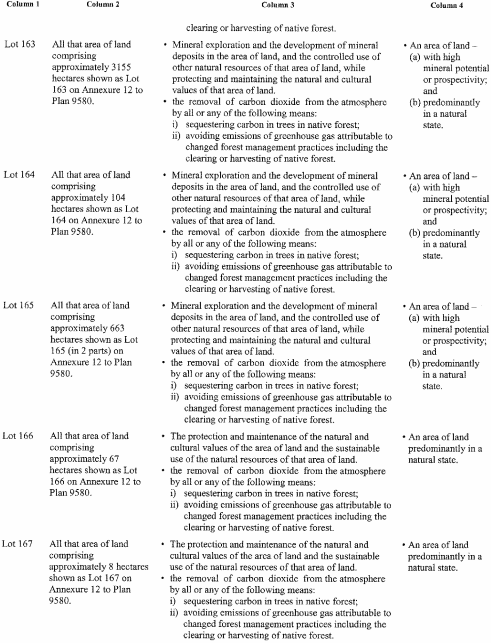
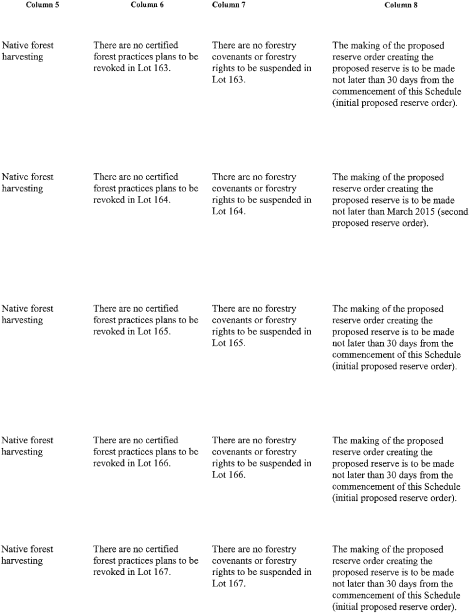
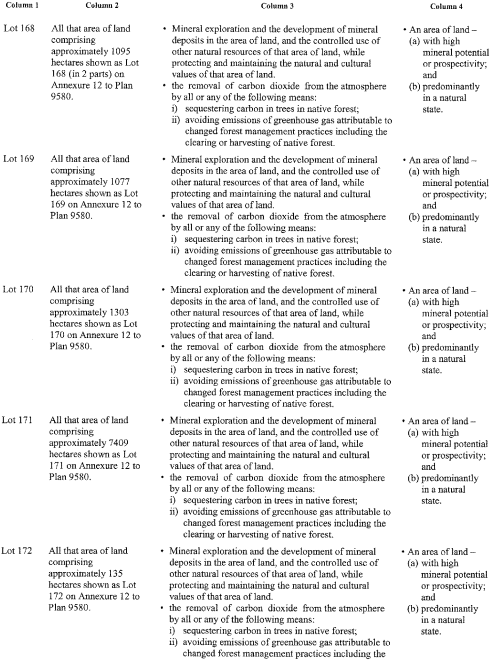
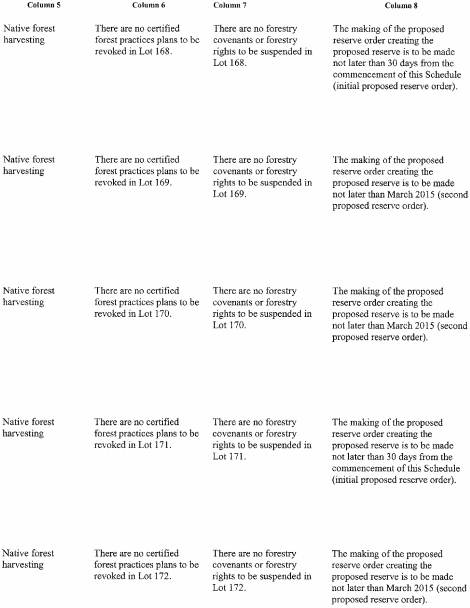
Sections 3 , 6 , 18 and 21
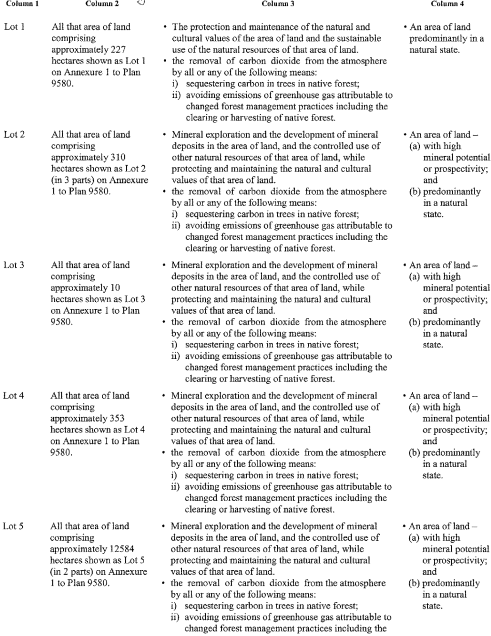
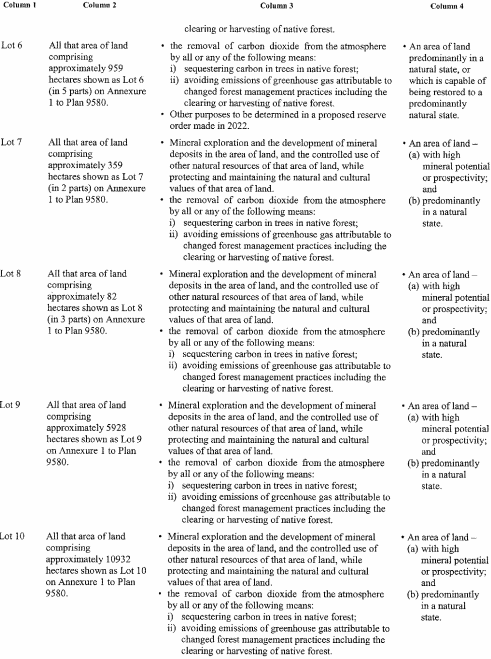
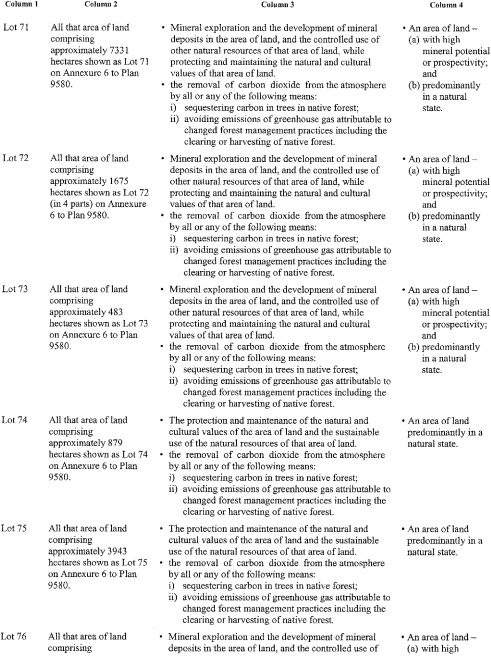
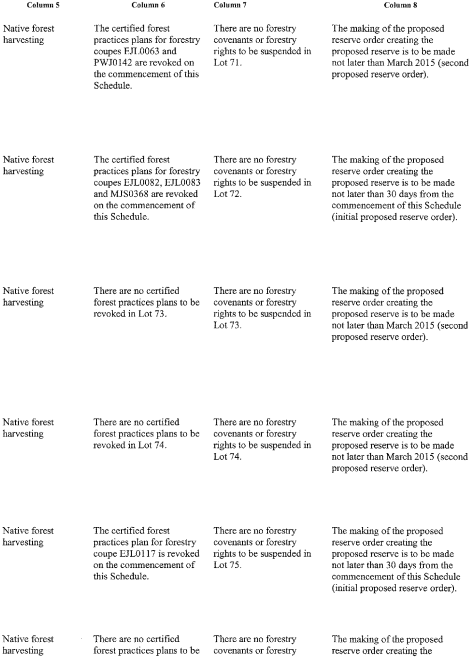
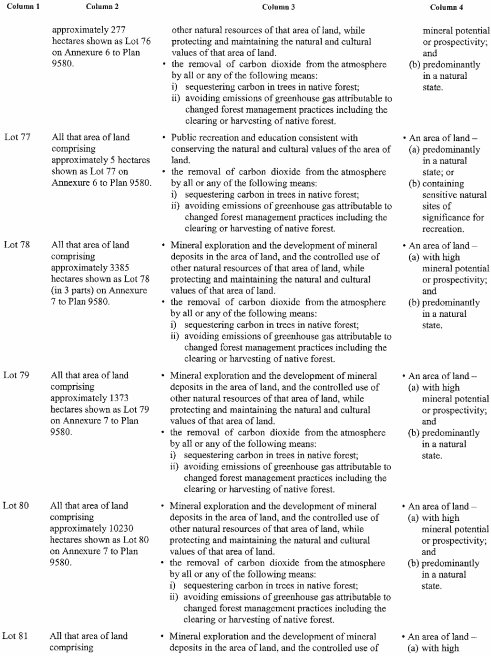
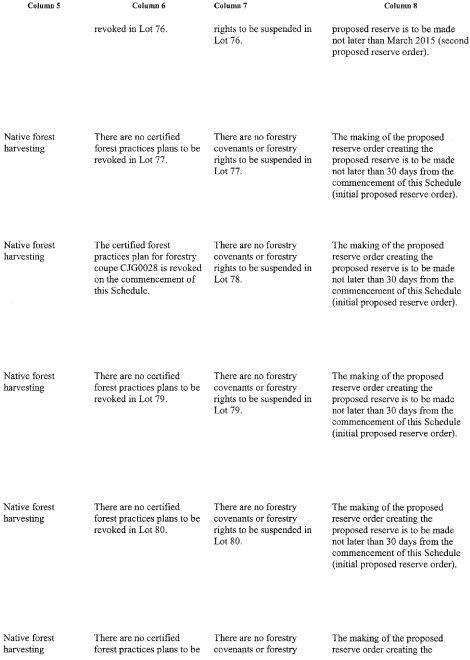
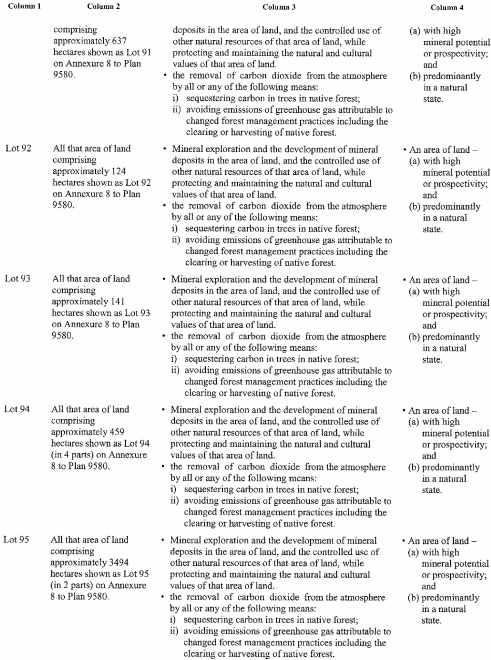
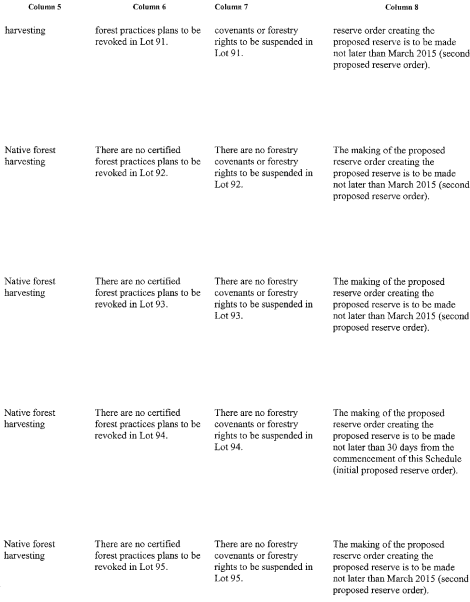
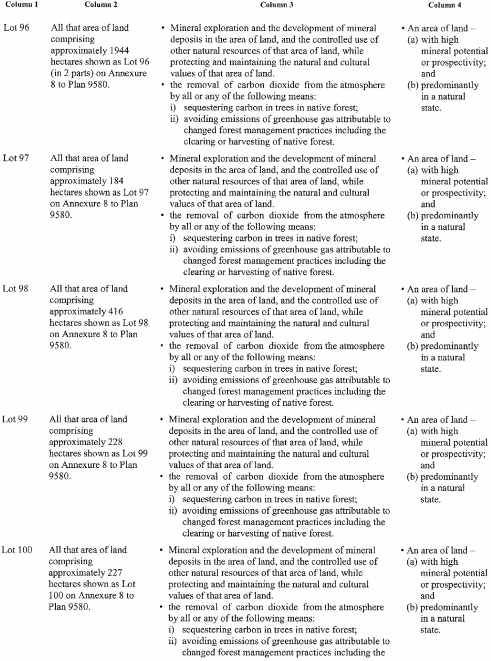
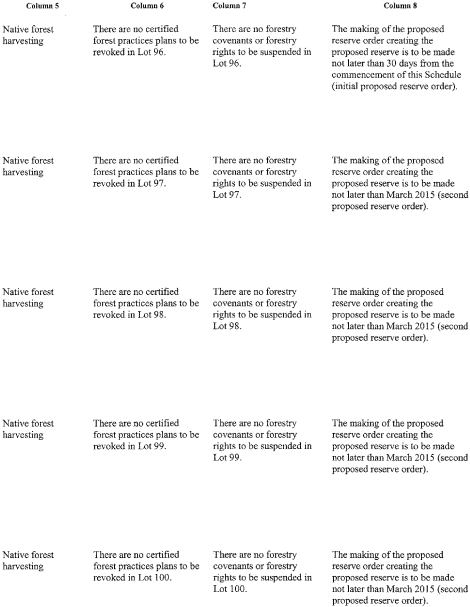
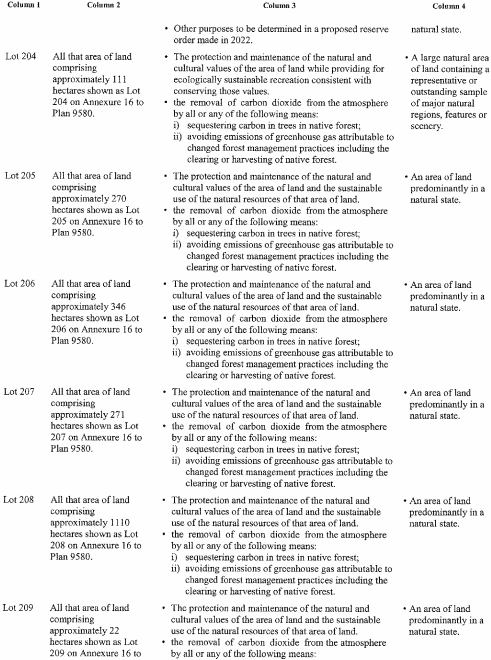
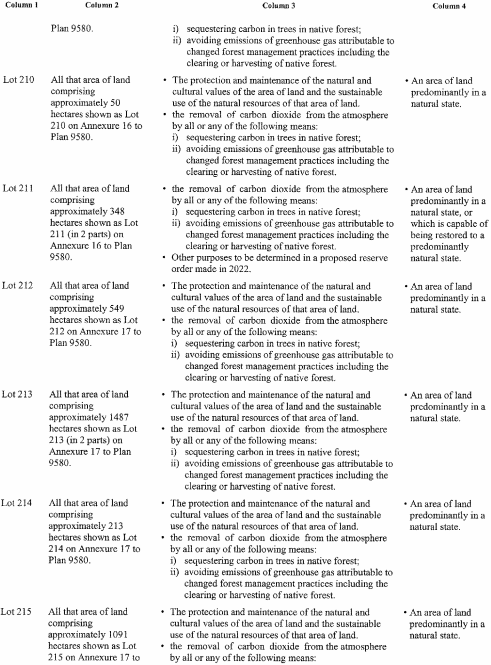
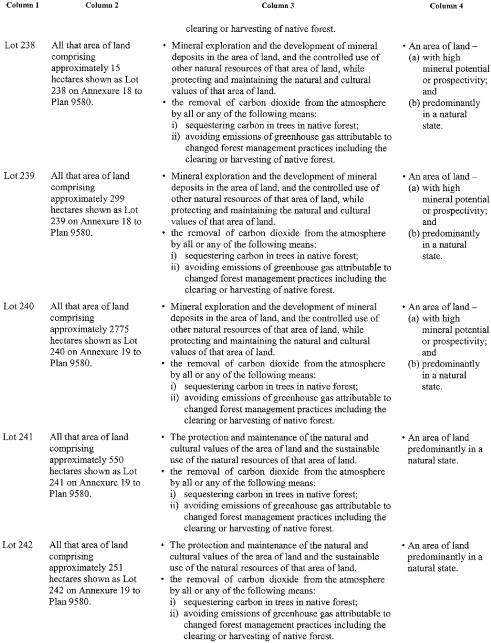
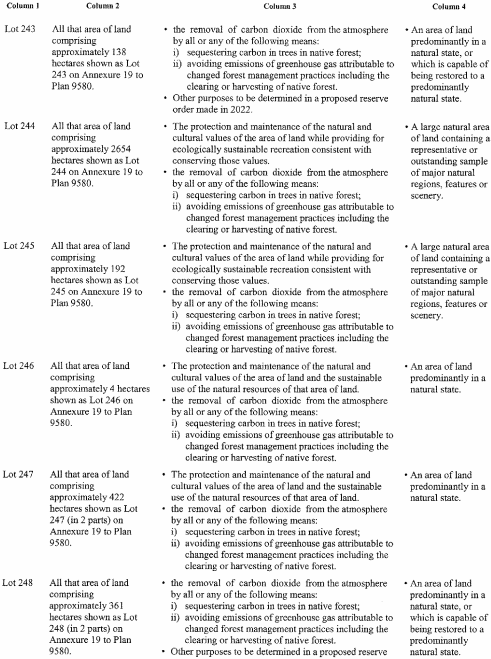
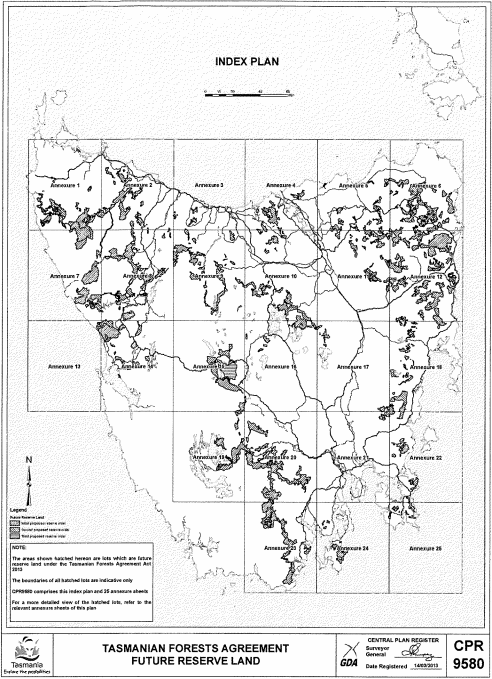
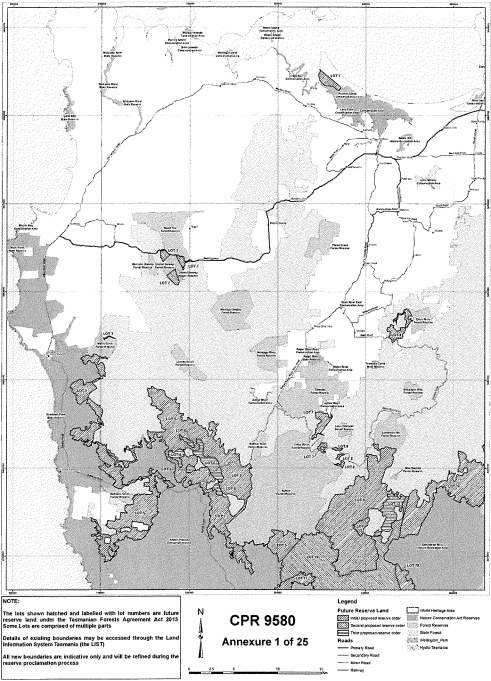
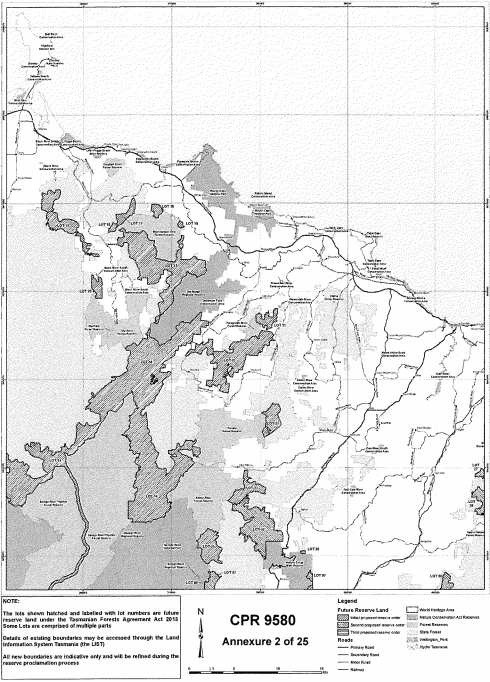
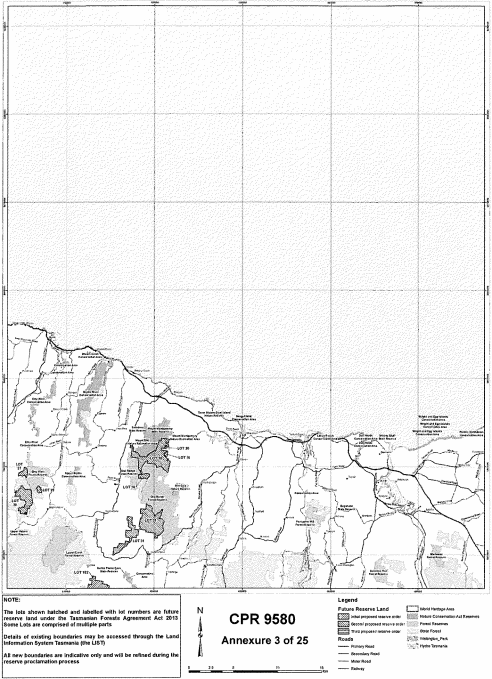
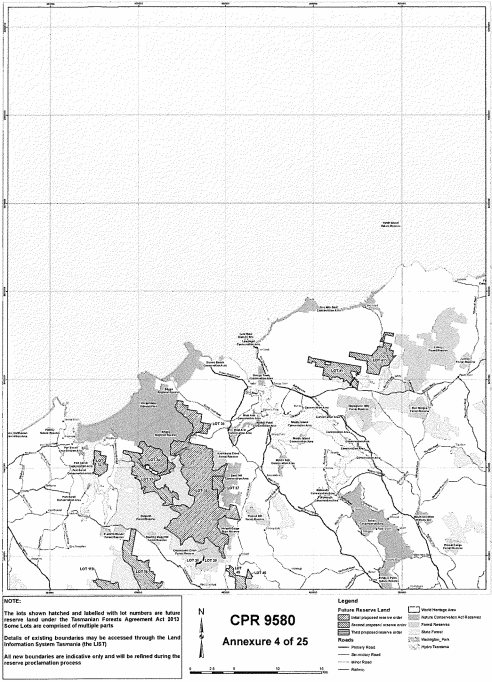
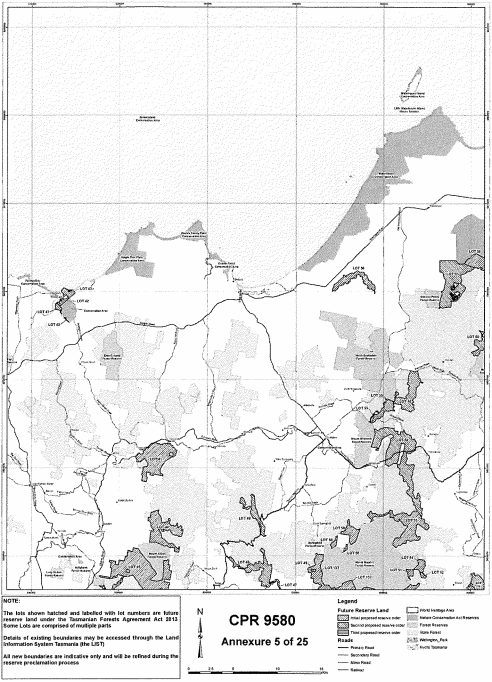
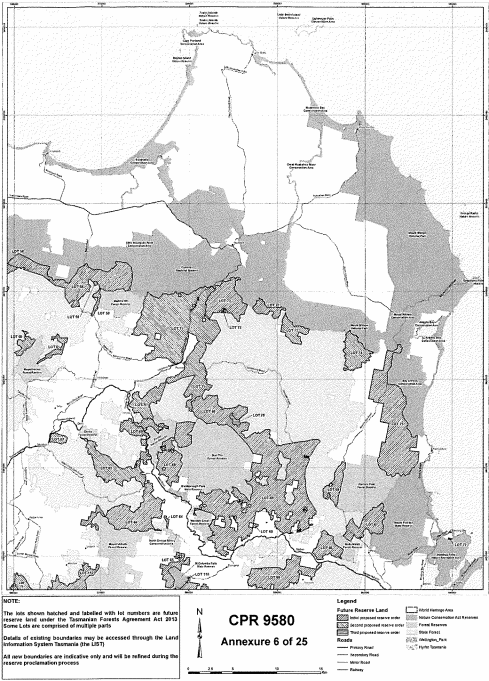
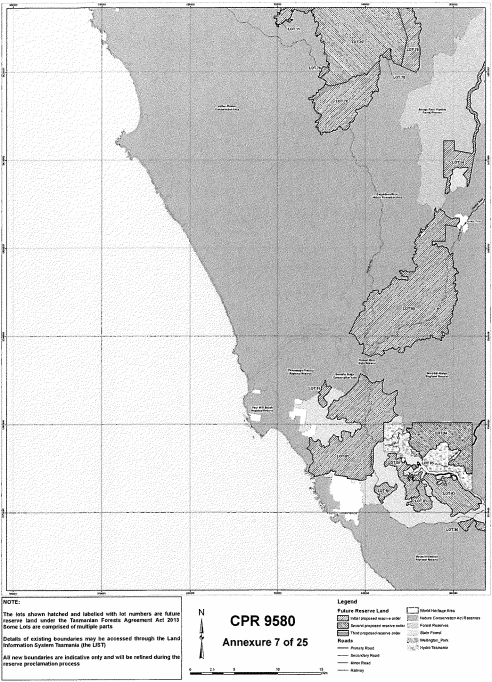
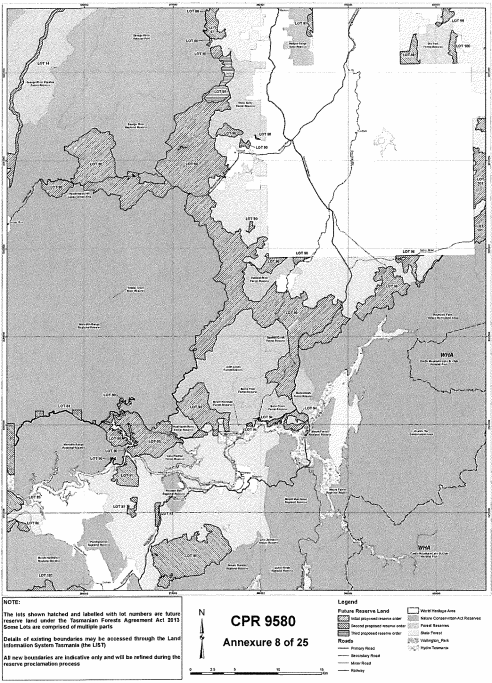
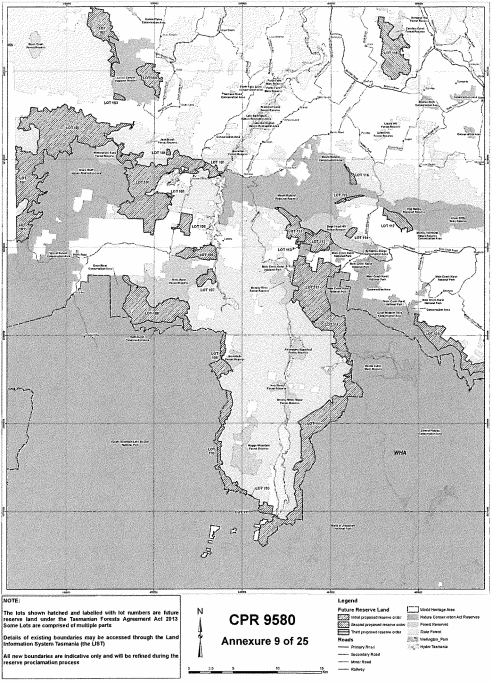
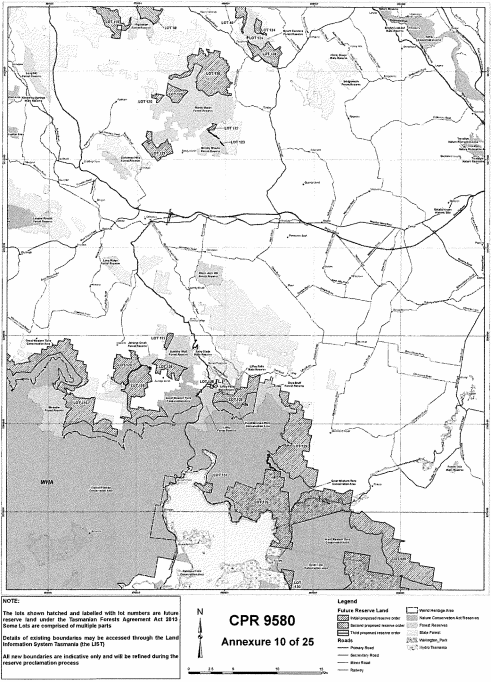
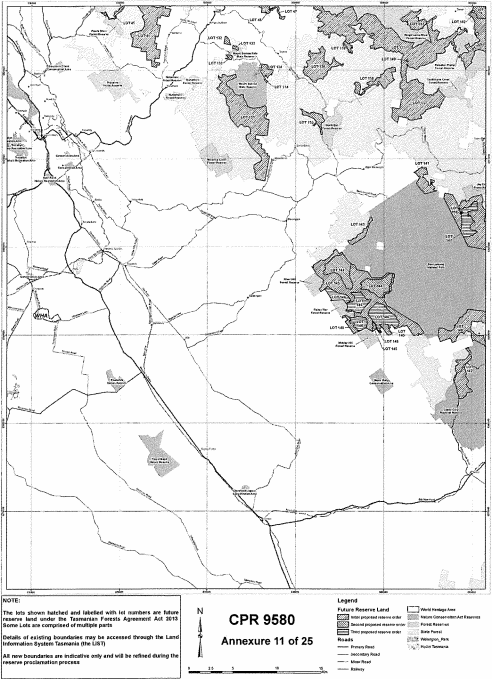
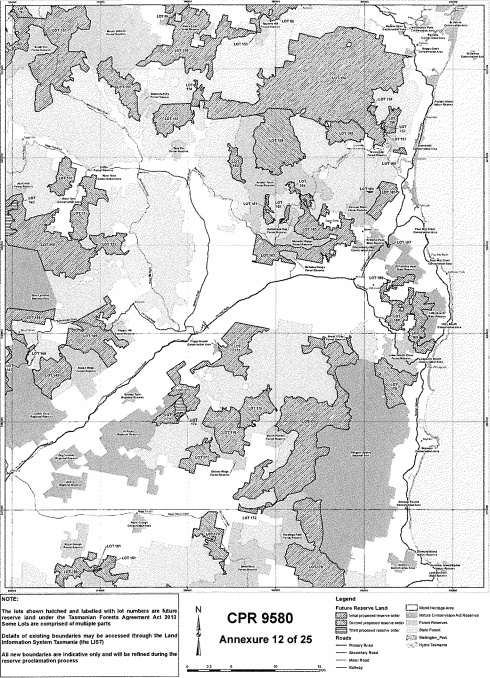
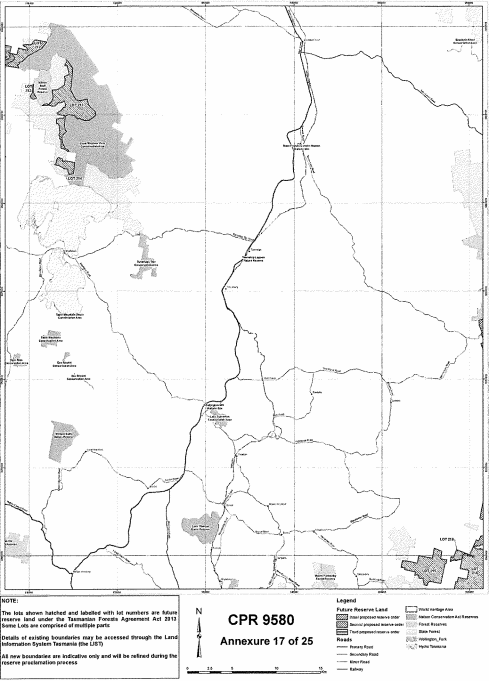
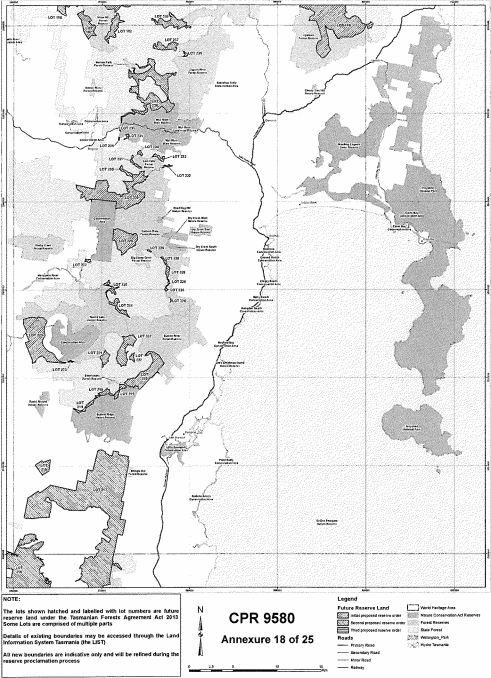
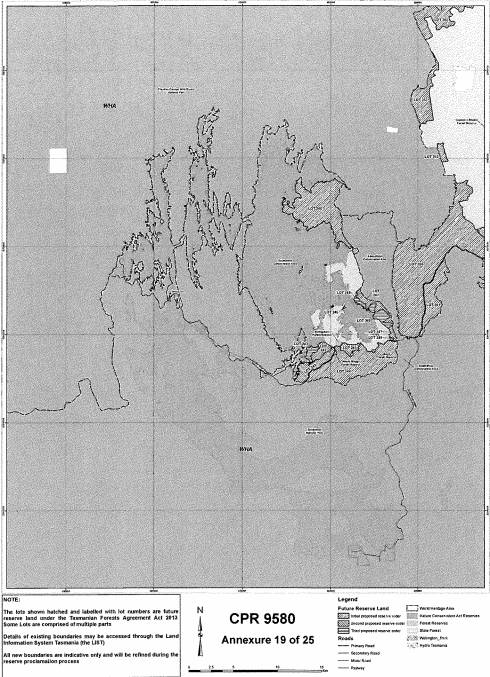
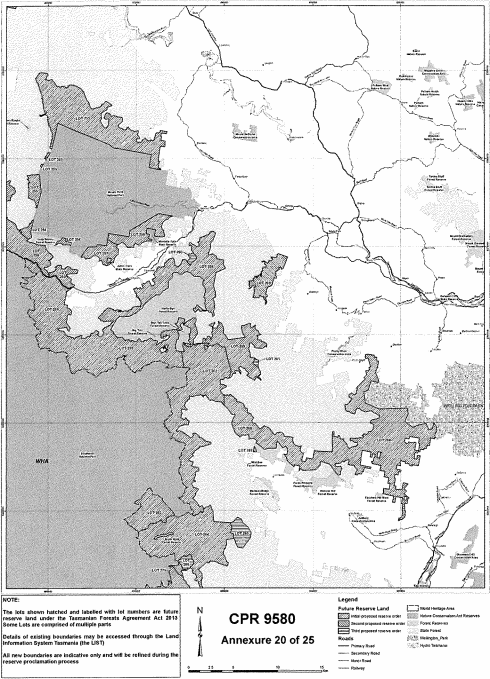
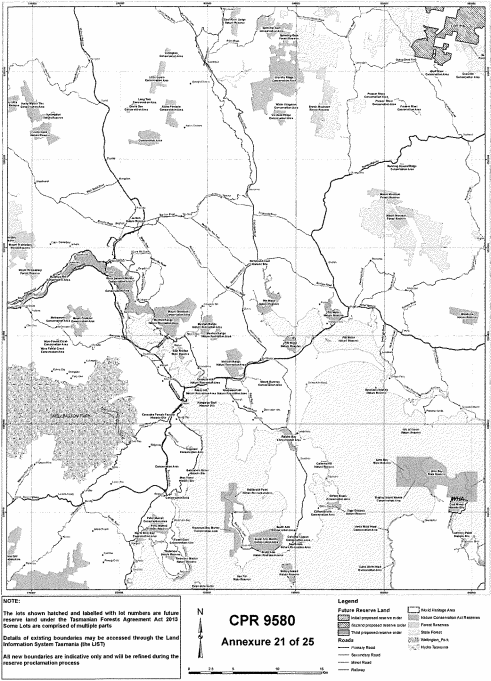
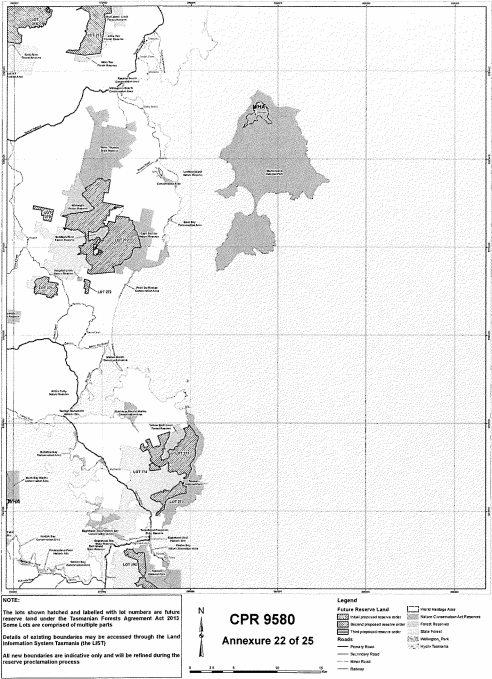
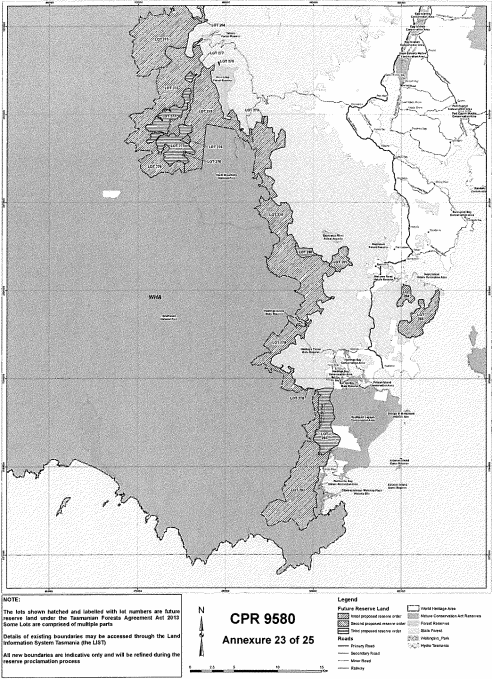
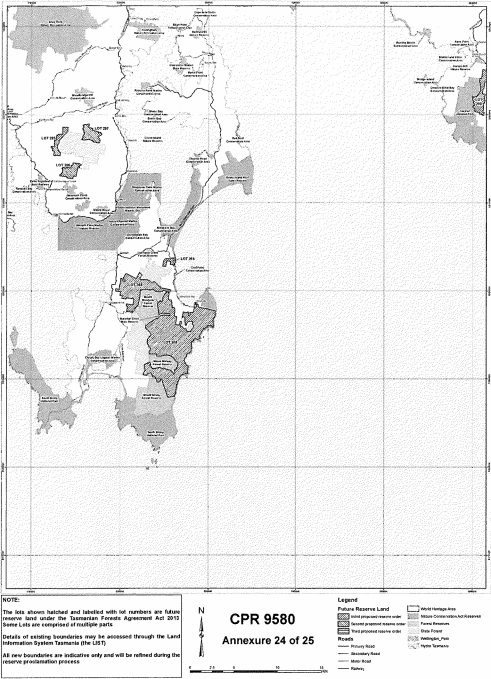
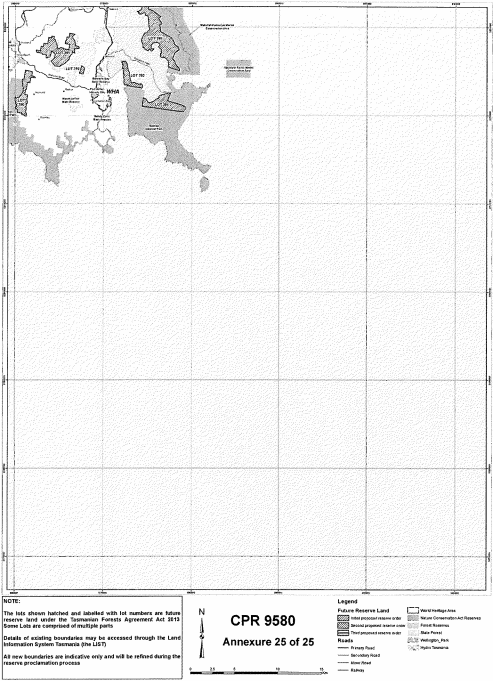
1. InterpretationIn this Schedule –Abt Railway has the same meaning as railway in the Abt Railway Development Act 1999 ;electricity infrastructure has the same meaning as in the Electricity Supply Industry Act 1995 ;Forest Practices Code has the same meaning as in the Forest Practices Act 1985 ;highway means –(a) a highway created in accordance with section 3 of the Highways Act 1951 ; or(b) a State highway proclaimed in accordance with section 7 of the Roads and Jetties Act 1935 ; or(c) a local highway within the meaning of the Local Government (Highways) Act 1982 ; or(d) a highway from time to time created in accordance with section 3 of the Highways Act 1951 , proclaimed in accordance with section 7 of the Roads and Jetties Act 1935 or created within the meaning of the Local Government (Highways) Act 1982 after the commencement of this Schedule;land means –(a) State forest within the meaning of the Forestry Act 1920 ; or(b) Crown land within the meaning of the Crown Lands Act 1976 ; or(c) land owned by the Forestry Corporation; or(d) any other land owned by a State-owned company or Government Business Enterprise –but excludes any of the following:(e) the Abt Railway;(f) electricity infrastructure;(g) highways;(h) powerline corridors;(i) rail infrastructure;(j) rail planning corridor;(k) subsidiary roads;(l) forestry coupes listed in Schedule 6 ;(m) forestry coupes listed in Schedule 5 in relation to which an order has been made under section 19 ;Plan 9580 means the Plan numbered 9580 in the Central Plan Register, a reduced copy of which is set out by way of illustration only in Schedule 7 , and includes all annexures to that Plan;powerline corridor has the same meaning as in the Electricity Wayleaves and Easements Act 2000 ;prohibited activity means those activities listed in column 5 of the table set out at the end of clause 2 ;rail infrastructure has the same meaning as in the Rail Infrastructure Act 2007 ;rail planning corridor has the same meaning as in the Rail Infrastructure Act 2007 ;subsidiary road means a subsidiary road proclaimed in accordance with section 7 of the Roads and Jetties Act 1935 , or which may from time to time be proclaimed under that Act after the commencement of this Schedule.
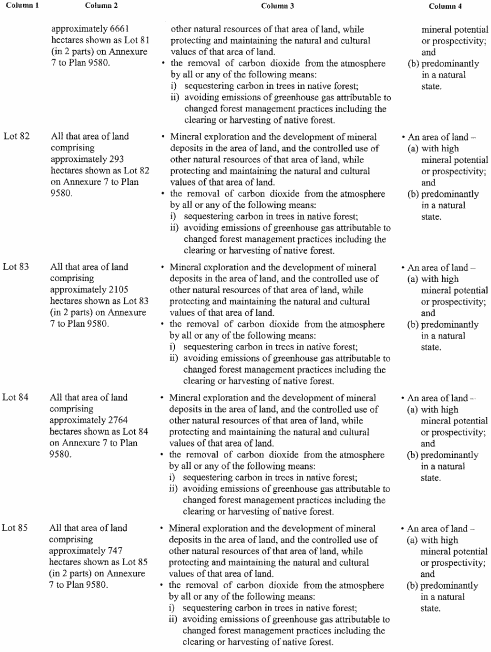
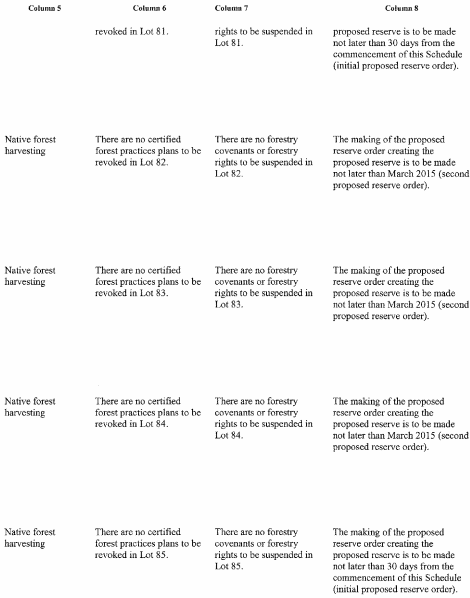
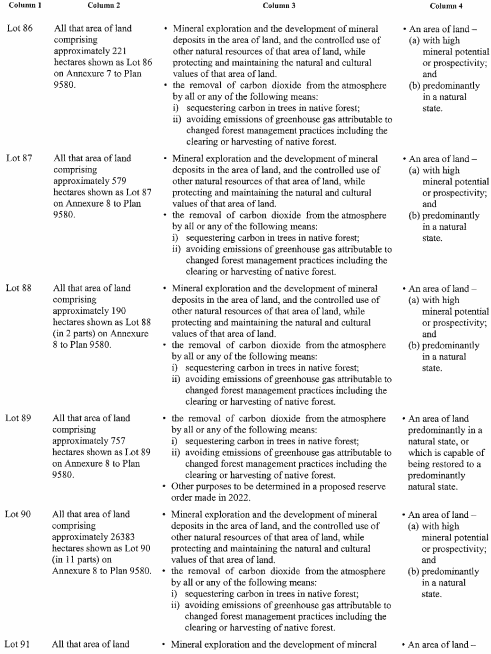
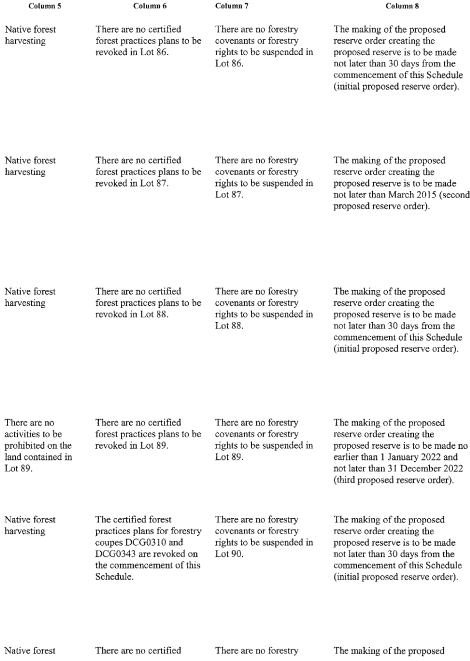
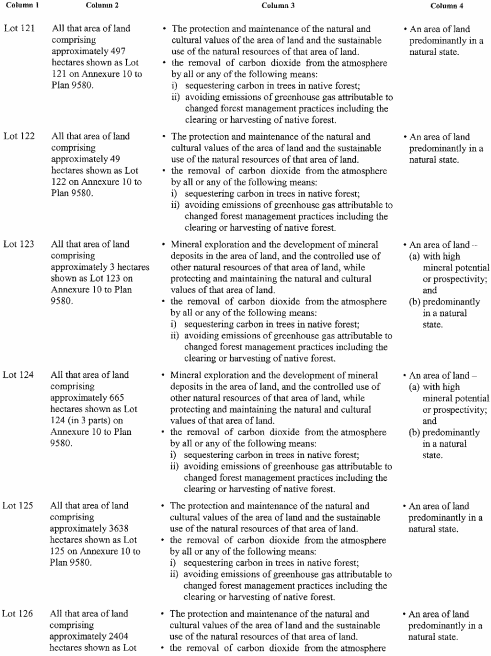
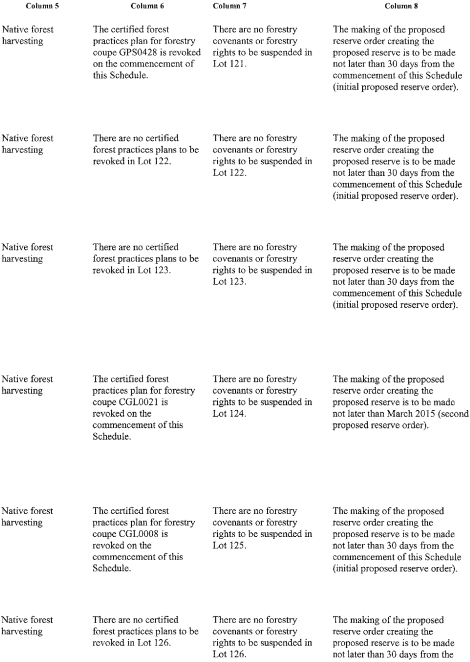
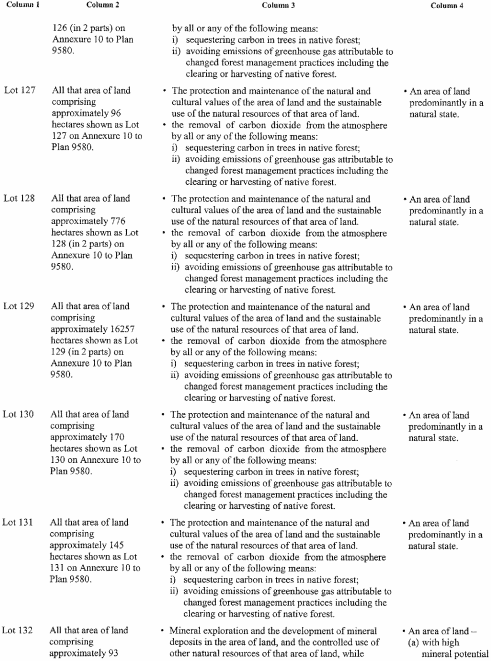
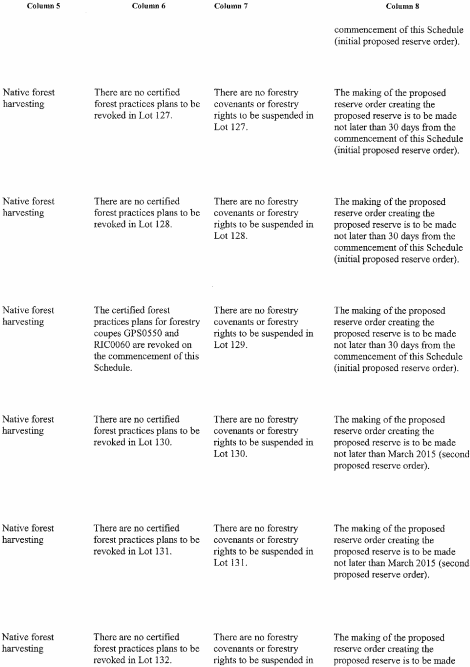
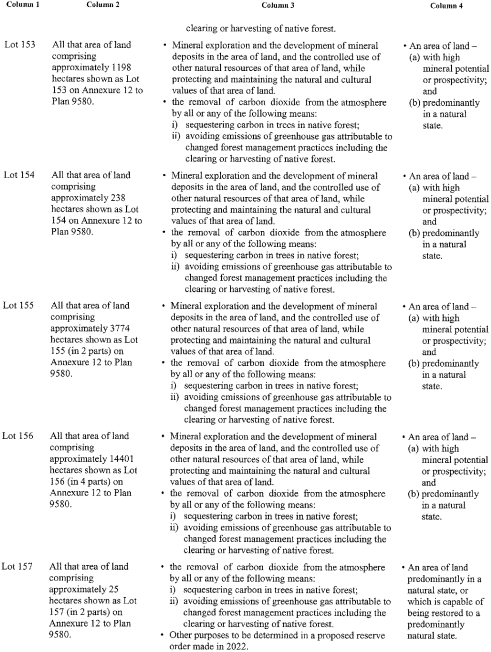
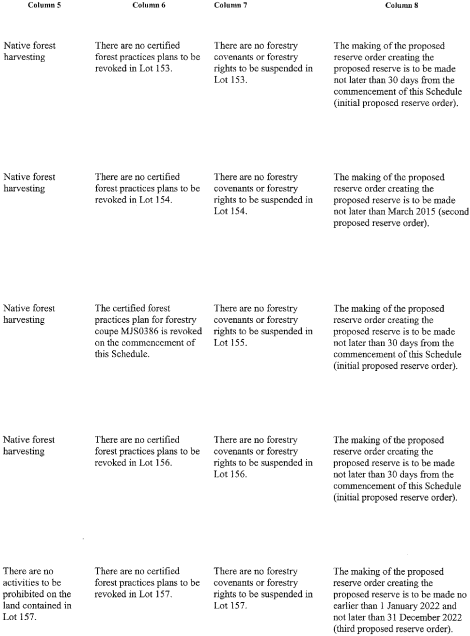
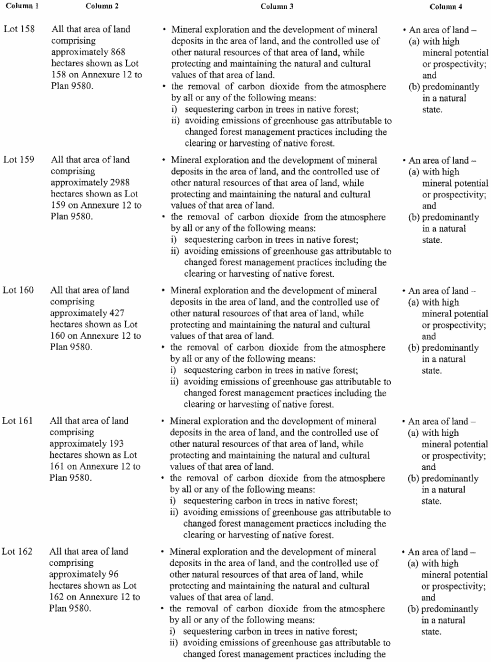
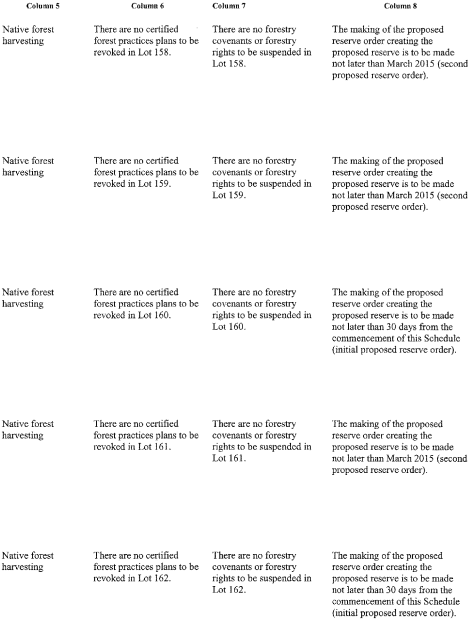
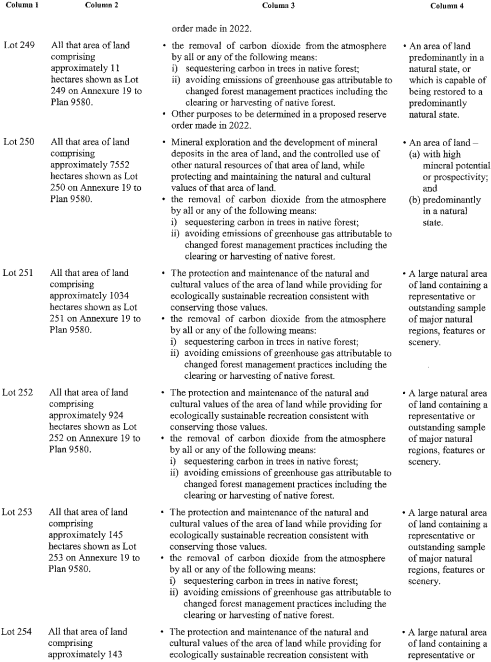
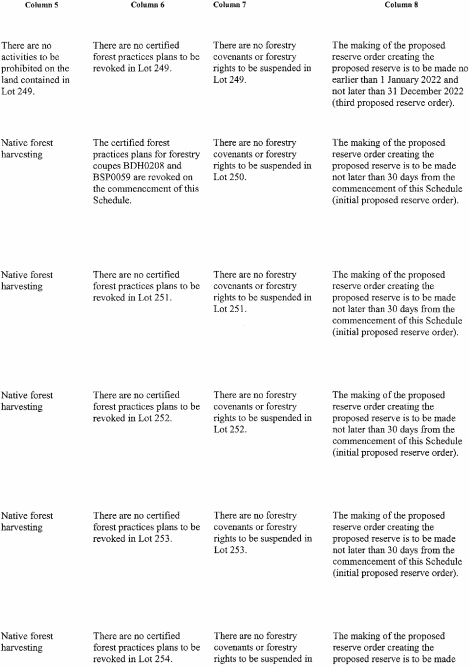
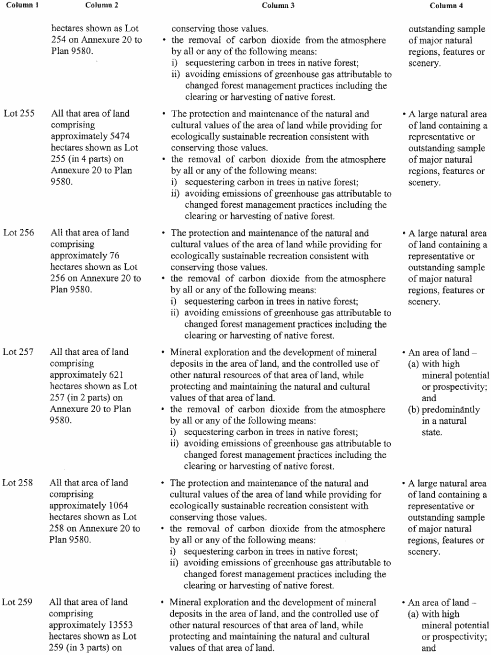
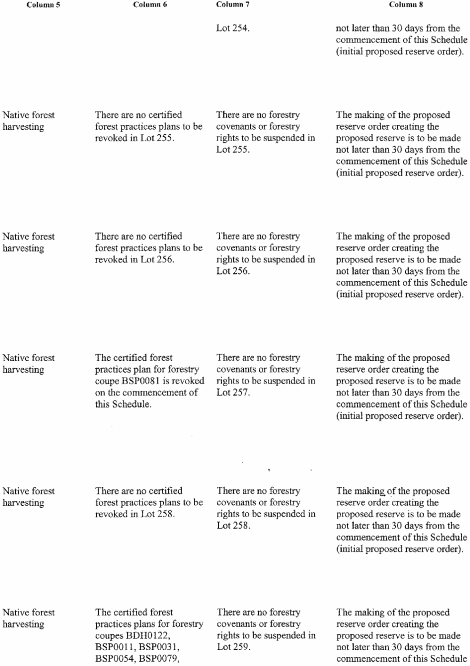
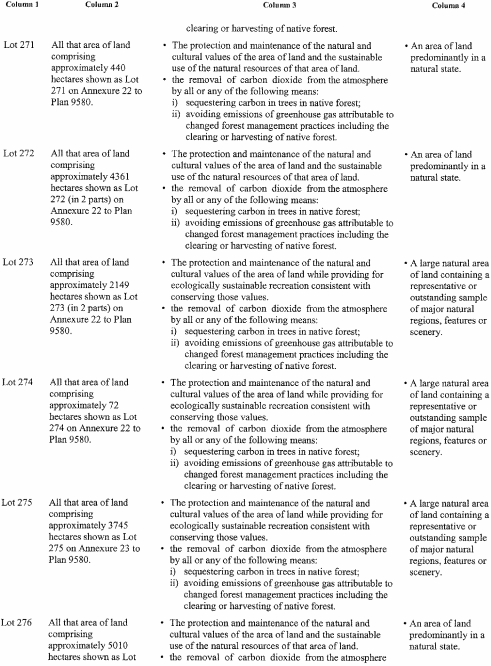
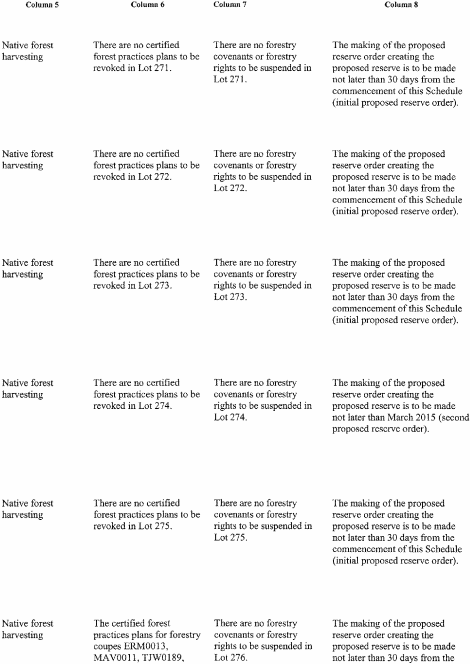
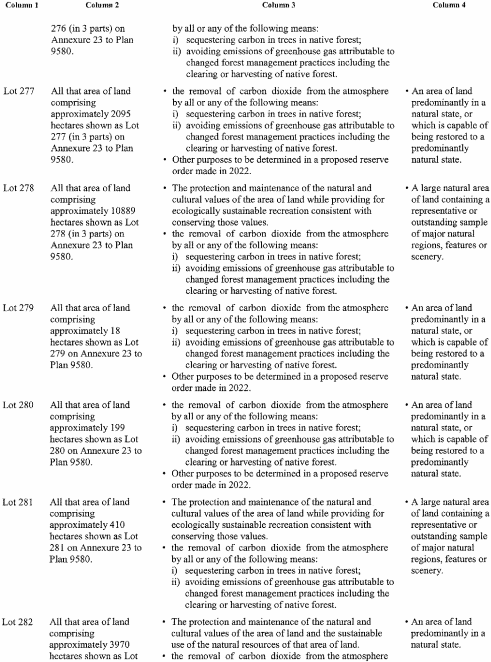
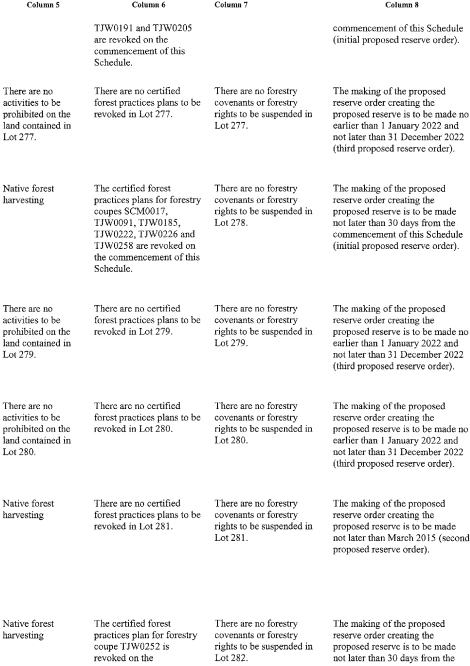
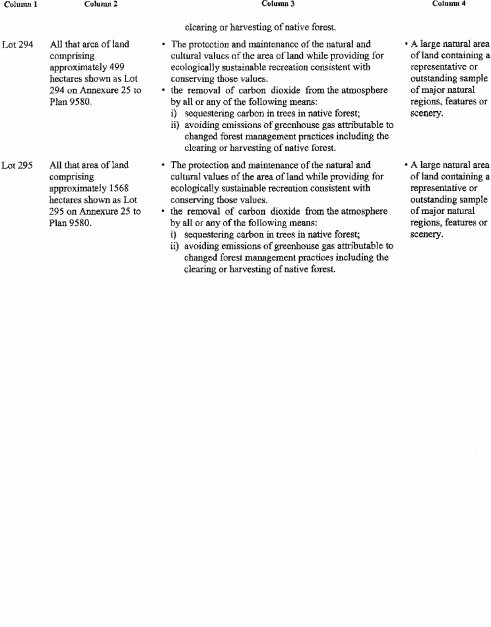
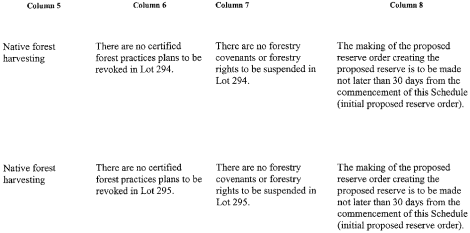
2. The future reserve land(1) The land described in column 2 of the table set out at the end of this clause is the future reserve land.(2) The purposes for which the future reserve land is to be reserved are specified in column 3 of the table set out at the end of this clause.(3) The values for which the future reserve land is to be reserved are specified in column 4 of the table set out at the end of this clause.(4) The activities that are prohibited on the future reserve land are specified in column 5 of the table set out at the end of this clause.(5) The certified forest practices plans relating to the future reserve land that are revoked and the date from which each plan is revoked are specified in column 6 of the table set out at the end of this clause.(6) The forestry covenants or forestry rights relating to the future reserve land that are suspended are specified in column 7 of the table set out at the end of this clause.(7) The date by which the proposed reserve orders creating the proposed reserves relating to the future reserve land are to be made is specified in column 8 of the table set out at the end of this clause.
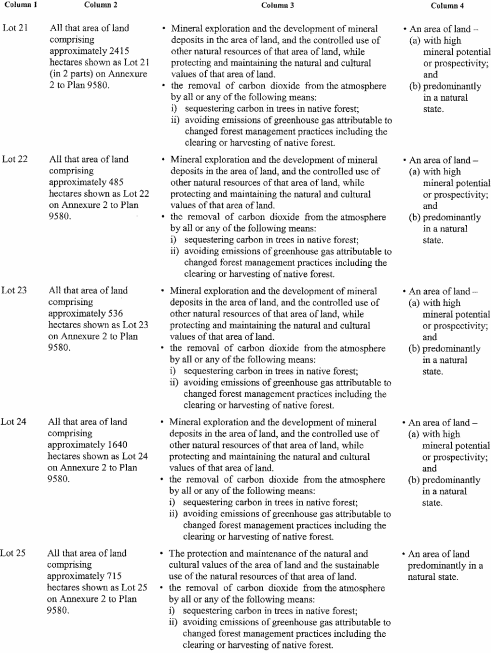
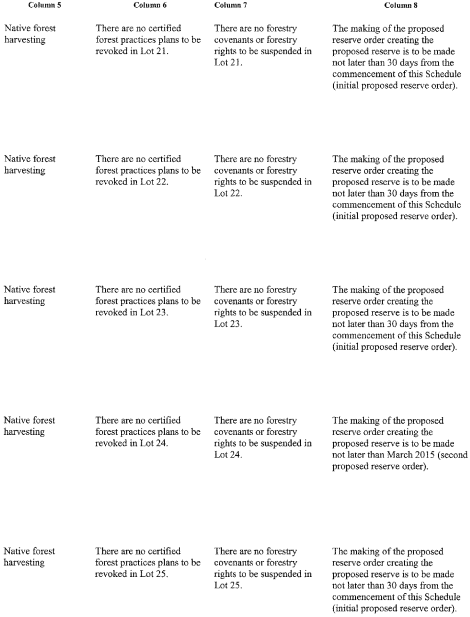
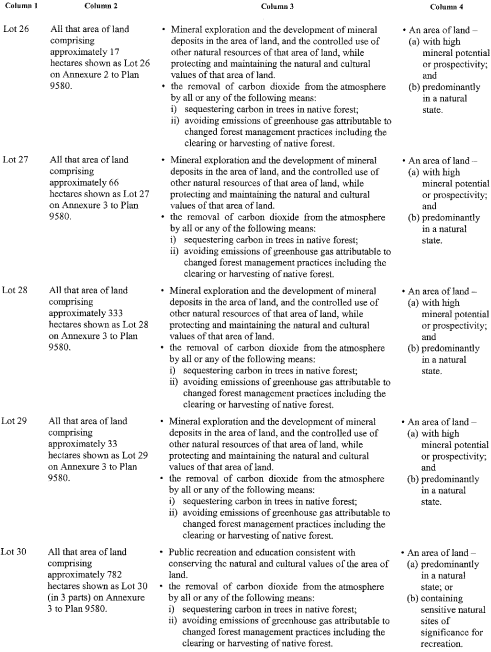
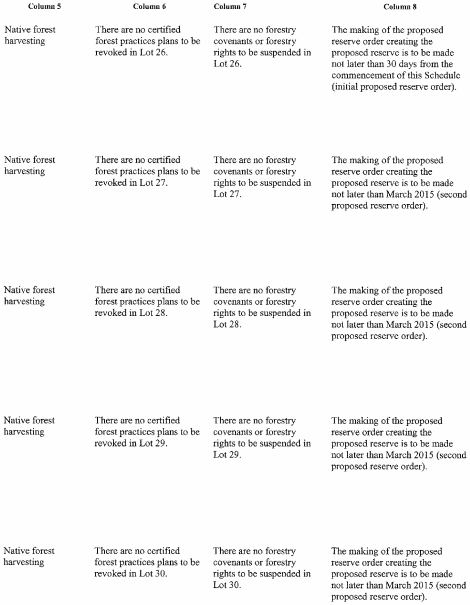
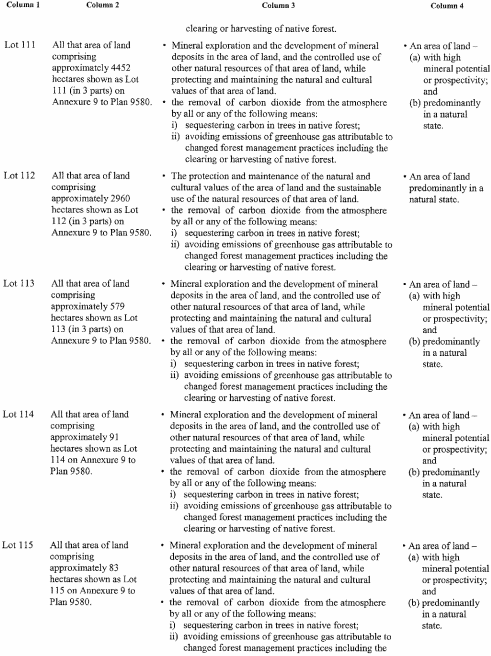
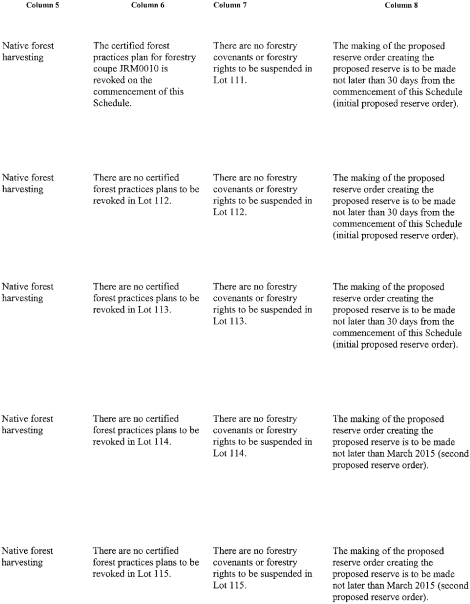
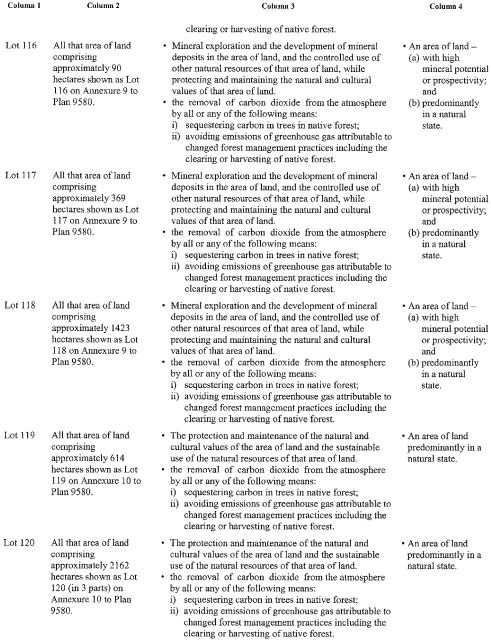
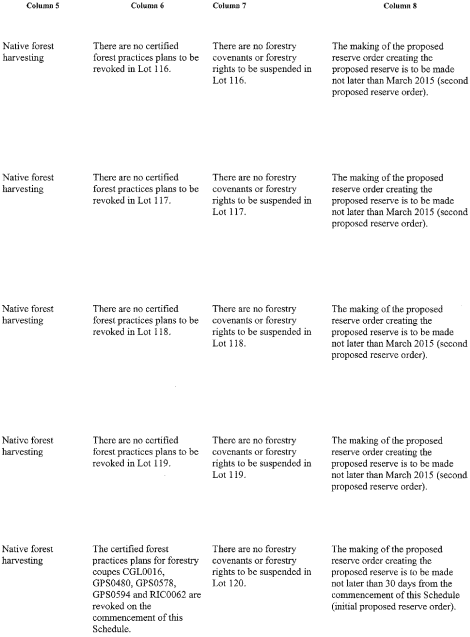
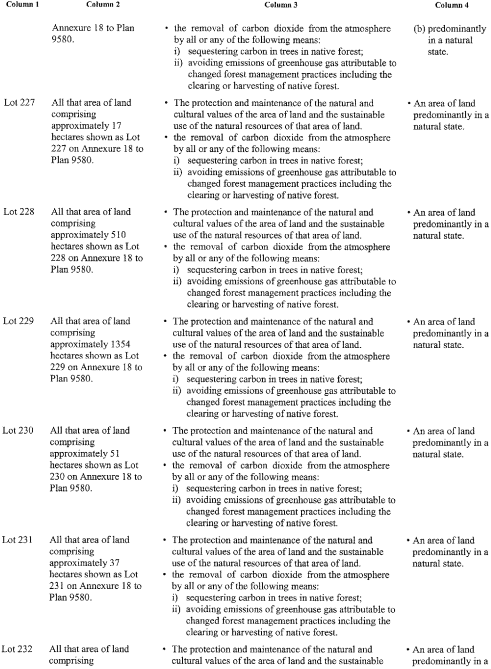
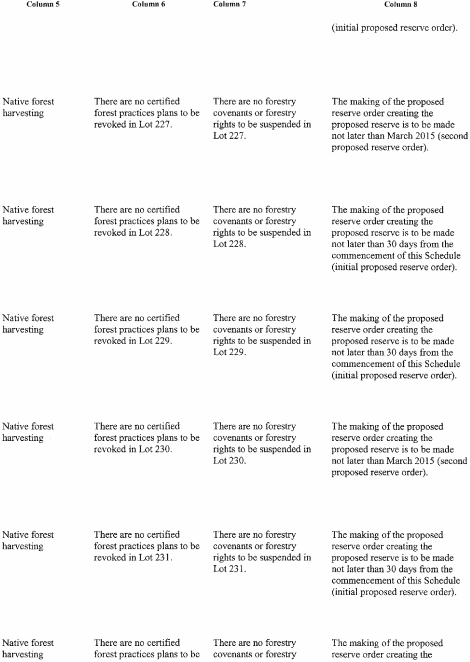
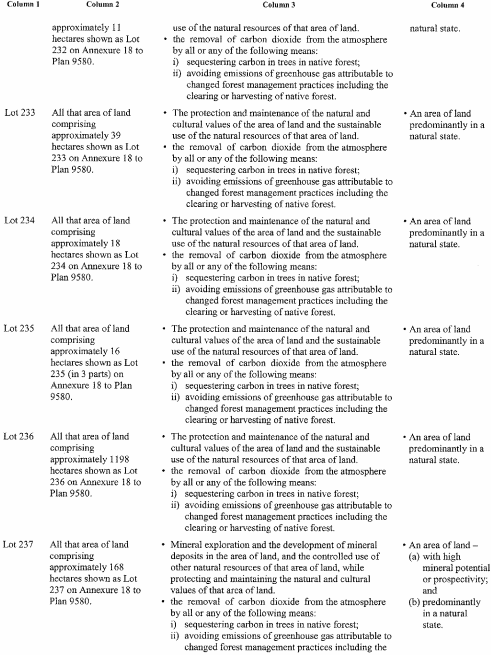
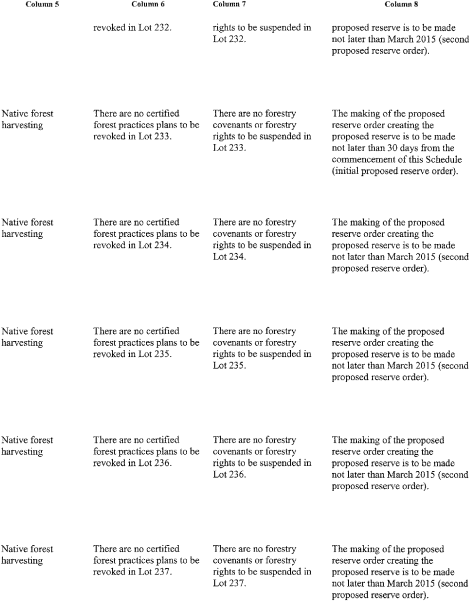
SCHEDULE 2 - Lots Relating to Forest Stewardship Council Certification
Lot number | 1 | 3 | 5 | 7 | 9 | 11 | 14 | 15 | 17 | 18 | 19 | 20 | 21 | 22 | 23 | 25 | 26 | 34 | 35 | 39 | 43 | 44 | 45 | 50 | 51 | 53 | 56 | 58 | 64 | 65 | 66 | 67 | 68 | 69 | 72 | 75 | 77 | 78 | 79 | 80 | 81 | 85 | 86 | 88 | 90 | 94 | 96 | 101 | 102 | 103 | 104 | 105 | 113 | 120 | 121 | 122 | 123 | 127 | 132 | 133 | 134 | 136 | 137 | 141 | 143 | 145 | 147 | 148 | 149 | 150 | 152 | 153 | 155 | 156 | 160 | 162 | 163 | 165 | 166 | 167 | 168 | 171 | 173 | 176 | 178 | 182 | 184 | 194 | 201 | 205 | 209 | 219 | 220 | 221 | 223 | 224 | 226 | 228 | 229 | 231 | 233 | 238 | 242 | 247 | 267 | 270 | 271 | 272 | 273 | 284 | 288 | 289 | 290 | 291 | 292 | 293 | 294 | 295 |
SCHEDULE 3 - Lots Relating to Forest Stewardship Council Certification and World Heritage Listing
Lot number | 106 | 107 | 108 | 109 | 110 | 111 | 112 | 125 | 126 | 128 | 129 |
SCHEDULE 4 - Tasmanian Forest Agreement


SCHEDULE 5 - Special Species Contingency Areas
Forestry Coupes that collectively make up the Special Species Contingency Areas | BF19S | BO4S | CC28S | CD27S | FR20S | GR14S | HE15S | HL16S | KD30S | NA18S | NW3S | RD31S | RR29S | SR22S | SU23S | TE21S | WD12S | WE25S | WE26S | WH10S | WH11S | WH7S | WH8S | WH9S | Total coupes = 24 |
SCHEDULE 6 - Forestry Coupes that are Excluded from the Definition of "Land" in Schedule 1
Forestry Coupe | Forestry Tasmania District | BT009D | Derwent | BT011C | Derwent | BT012D | Derwent | BT013A | Derwent | CD103A | Bass | CF027A | Murchison | CO008A | Derwent | EP011A | Huon | EP048C | Huon | FD056C | Murchison | FL105C | Bass | FR015A | Murchison | FR039A | Murchison | FR041A | Murchison | MD102A | Murchison | NL111A | Bass | NL111B | Bass | NL111G | Bass | NL115H | Bass | PC015B | Huon | SA044B | Bass | SB038A | Huon | SB040A | Huon | SX019I | Derwent | TN051C | Derwent | TY032A | Bass | UR034A | Bass | CF023B | Murchison | FR041B | Murchison | GL108A | Bass | MN001E | Bass | MN023A | Bass | NL111C | Bass | Puzzle Link | Huon | RD019A | Murchison | RU047E | Huon | SA152C | Bass | SB009A | Huon | SY002A | Bass | TY042F | Bass | UR056A | Bass | UR101D | Bass | Total coupes = 42 |
SCHEDULE 7 - Plan 9580
Schedule 1 , Clause 1
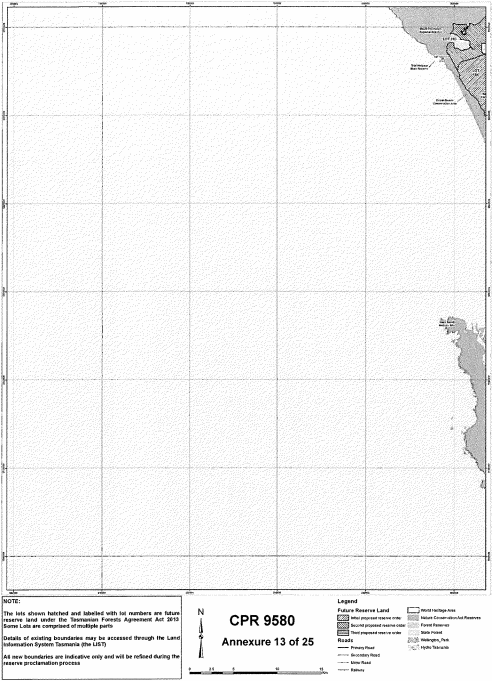
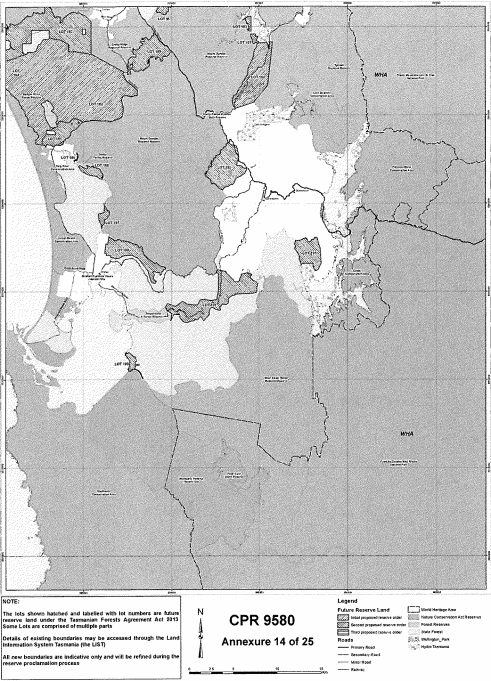
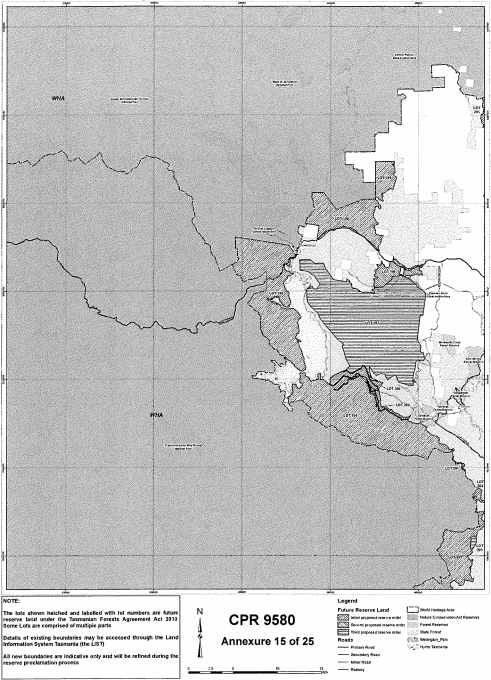
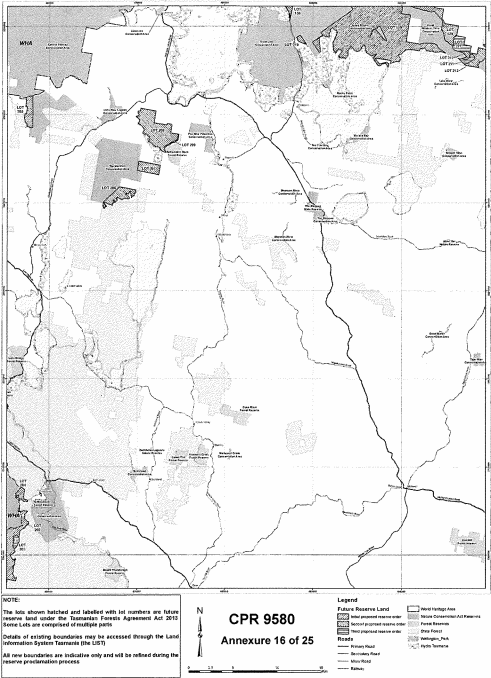
SCHEDULE 8 - Savings and Transitional Provisions
1. InterpretationIn this Schedule –asset means –having any connection with the land that is declared to be reserved land pursuant to a proclamation made under section 25 ;(a) any legal or equitable estate or interest (whether present or future and whether vested or contingent) in real or personal property; and(b) any other right –contract means –having any connection with the land that is declared to be reserved land pursuant to a proclamation made under section 25 ;(a) an agreement, arrangement, undertaking, warranty or other contract; or(b) part of an agreement, arrangement, undertaking, warranty or other contract –corporation means the Forestry Corporation or other Government Business Enterprise or a State-owned company;document includes part of a document;liability includes any, or any part of any, liability, duty and obligation, whether actual, contingent or prospective in relation to any land that is declared to be reserved land pursuant to a proclamation made under section 25 ;right includes any right, power, privilege and immunity, whether actual, contingent or prospective in relation to any land that is declared to be reserved land pursuant to a proclamation made under section 25 ;specified means specified in a transfer notice;timber has the same meaning as in the Forestry Act 1920 ;transfer day means the day on which a transfer notice, or the relevant part of a transfer notice, takes effect;transfer notice means –(a) a notice made under clause 2(1) or (2) ; or(b) a part of such a notice;transferor, in relation to a transfer notice, means –(a) the Crown if the relevant transfer notice transfers any assets, liabilities or contracts to the corporation referred to in the transfer notice; or(b) the corporation referred to in the transfer notice if the relevant transfer notice transfers any assets, liabilities or contracts to the Crown;transfer recipient, in relation to a transfer notice, means –(a) the corporation referred to in the relevant transfer notice if the transfer notice transfers any assets, liabilities or contracts to the corporation; or(b) the Crown if the relevant transfer notice transfers any assets, liabilities or contracts to the Crown.
2. Transfer of assets to and from a corporation(1) The Reserves Management Minister, after consulting the Minister, by notice published in the Gazette, may transfer from a corporation to the Crown such –as are specified in the notice.(a) assets owned by the corporation; and(b) liabilities of the corporation; and(c) contracts to which the corporation is a party, other than contracts for the supply of timber or contracts of employment –(2) The Reserves Management Minister, after consulting the Minister, by notice published in the Gazette, may transfer from the Crown to a corporation such –as are specified in the notice.(a) assets owned by the Crown; and(b) liabilities of the Crown; and(c) contracts to which the Crown is a party, other than contracts of employment –(3) A transfer notice may –(a) specify conditions including, without limitation –(i) conditions relating to the transfer of the assets, liabilities and contracts; and(ii) conditions relating to the payment of consideration, if any is payable; and(b) provide that a right under a specified contract is held by the transferor or the transfer recipient; and(c) provide that a liability under a specified contract is a liability of the transferor or the transfer recipient; and(d) provide that a reference in a specified contract to the transferor is, or is to include, a reference to the transfer recipient; and(e) provide that a transfer recipient is substituted as a party to the contract, in place of the transferor, from a date not earlier than the transfer day; and(f) provide for any matter that is incidental to the transfer of the assets, liabilities and contracts.(4) A transfer notice takes effect on the specified day or days, whether that day is, or those days are, before, on or after the day on which the transfer notice is published in the Gazette.(5) A transfer notice takes effect in accordance with its terms.(6) Without limiting subclause (5) –(a) on the transfer day –(i) the specified assets vest in the transfer recipient, in accordance with the transfer notice, without the need for any further conveyance, transfer, assignment or assurance but subject to any conditions specified in the transfer notice; and(ii) the specified liabilities become the liabilities of the transfer recipient, in accordance with the transfer notice, without the need for any further conveyance, transfer, assignment or assurance but subject to any conditions specified in the transfer notice; and(iii) the transferor ceases to be a party to the specified contracts unless the transfer notice provides otherwise or except to the extent specified in the transfer notice; and(b) on and after the transfer day –(i) a specified contract is taken to have been made by the transfer recipient; and(ii) a reference to the transferor in a specified contract is taken to be or include, as appropriate, a reference to the transfer recipient.(7) Subclause (6)(a) and (6)(b) have effect despite any contrary provision in the specified contract.(8) A person who is a party to a contract that is the subject of a transfer notice is not entitled to –by reason only of the transfer (made by virtue of such a notice) of that contract, or of property, a right, or an obligation, to which that contract relates or arising from that contract.(a) terminate that contract; or(b) claim that there has been a breach or default of the contract; or(c) claim any remedy –(9) The Reserves Management Minister after consulting the Minister may amend or revoke a transfer notice.(10) A transfer notice is not a statutory rule for the purposes of the Rules Publication Act 1953 .
3. Transitional provisions on transfer of property and assets to and from a corporation(1) In this section –transferring asset means any asset specified in a transfer notice;transferring contract means a contract specified in a transfer notice;transferring liability means a liability specified in a transfer notice.(2) On and after the transfer day, the following provisions apply unless the transfer notice provides otherwise:(a) a reference to the transferor in a document in relation to a transferring asset, transferring liability or transferring contract is taken where appropriate to be or to include a reference to the transfer recipient;(b) a contract made by the transferor relating to a transferring asset, transferring liability or transferring contract to the extent that it is not performed or discharged before the transfer day is taken to have been made by the transferor or transfer recipient, as appropriate.(3) A transfer notice may limit the extent to which the provisions of subclause (2) apply.
4. Removing doubt relating to transfer(1) If there is any doubt –the Reserves Management Minister is to determine the matter in consultation with the Minister and is to provide written notice of that determination to the transfer recipient and, if the Reserves Management Minister considers it appropriate, a party to a contract that is relevant to the determination of the matter.(a) as to whether any asset, liability or contract, or any part of any asset, liability or contract, is transferred to the transfer recipient by the operation of clause 2(6)(a) ; or(b) as to whether any contract or other document relates to any asset, liability or contract that is transferred to the transfer recipient by the operation of clause 2(6)(a) –(2) The determination of the Reserves Management Minister under subclause (1) is final and binding.
5. Savings and transitional regulations(1) The Governor may make regulations to provide –(a) for savings and transitional matters, not otherwise provided for in this Act, necessary or expedient for bringing this Act into operation; and(b) for savings and transitional matters consequent on a transfer of any assets, liabilities or contracts to a transfer recipient under a transfer notice.(2) Regulations made under subclause (1) may provide for any of the savings or transitional matters to take effect when this Act commences or on a later day specified in the regulations, whether the day so specified is before, on or after the day on which the regulations are made.
SCHEDULE 9 - Consequential AmendmentsThe amendments effected by Section 37 and this Schedule have been incorporated into authorised versions of the following Acts and Statutory Rules:
(a) Forest Practices Act 1985 ;(b) Public Land (Administration and Forests) Act 1991 ;(c) Regional Forest Agreement (Land Classification) Act 1998 ;(d) Wellington Park Act 1993 ;(e) Forestry Regulations 2009 .