

Alcohol and Drug Dependency Regulations 1999
I, the Governor in and over the State of Tasmania and its Dependencies in the Commonwealth of Australia, acting with the advice of the Executive Council, make the following regulations under Alcohol and Drug Dependency Act 1968 .
22 December 1999g. s. m. green
Governor
By His Excellency's Command,
judy jackson
Minister for Health and Human Services
PART 1 - Preliminary
These regulations may be cited as the Alcohol and Drug Dependency Regulations 1999 .
These regulations take effect on the day on which their making is notified in the Gazette.
(1) In these regulations,Act means the Alcohol and Drug Dependency Act 1968 .(2) In these regulations, a reference to a form, quoted by a number, is a reference to the form of that number set out in Schedule 1 .
4. Exercise of certain functions of superintendents by other persons
(1) The following functions of the superintendent of a treatment centre may be exercised on his or her behalf by a medical practitioner employed at the centre:(a) the receipt of an admission application under section 23(6) of the Act;(b) the detention of a patient in a treatment centre under section 26(2) of the Act.(2) The following functions of the superintendent of a treatment centre in relation to a patient liable to be detained in that centre may be exercised on his behalf by the responsible medical officer:(a) the giving of a direction in writing under section 44(1) of the Act directing that the patient be transferred to another treatment centre;(b) the authorisation under section 44(2) of the Act of a person to convey the patient to the treatment centre to which the patient is directed to be transferred.(3) It is prescribed as a condition subject to which a function of the superintendent of a treatment centre may be exercised by another person that the authority for the exercise of that function must be in writing and signed by the superintendent.
PART 2 - . . . . . . . .[Part 2 Rescinded by No. 29 of 2009, s. 13, Applied:01 Sep 2009] [Regulation 5 Rescinded by No. 29 of 2009, s. 13, Applied:01 Sep 2009] . . . . . . . . [Regulation 6 Rescinded by No. 29 of 2009, s. 13, Applied:01 Sep 2009] . . . . . . . .
PART 3 - General provisions relating to admissions and discharges
7. Admission applications and related documents
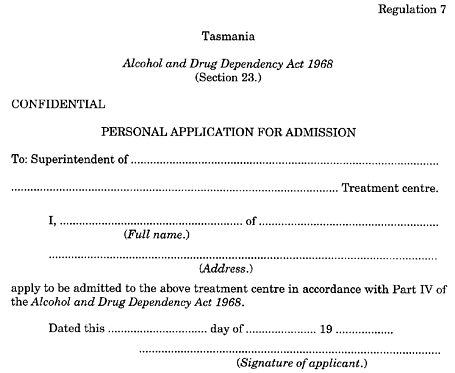
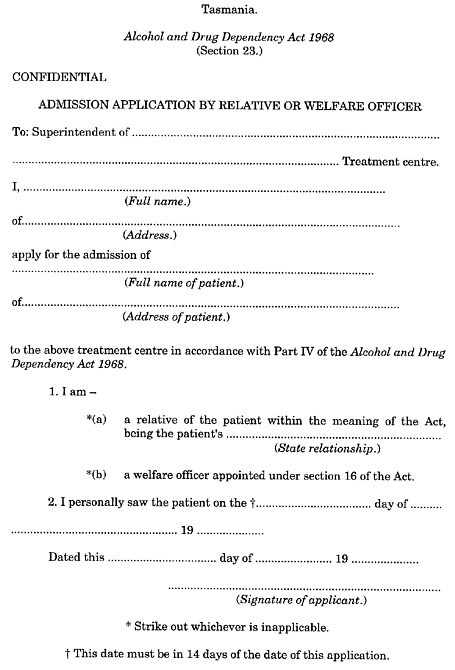
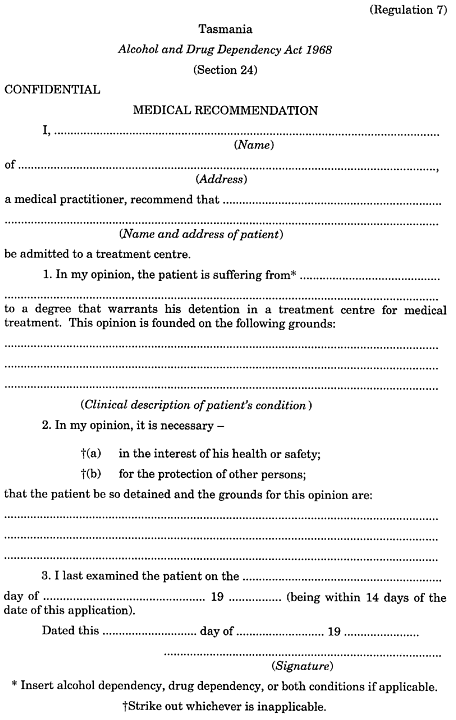
(1) For the purposes of section 23(3) of the Act, an admission application –(a) in the case of a personal application, is to be in accordance with Form 3; and(b) in the case of any other application, is to be in accordance with Form 4.(2) For the purposes of section 24(4) of the Act, a medical recommendation –(a) is to be in accordance with Form 5; and(b) is to contain a clinical description of the condition of the patient to whom the recommendation relates.(3) For the purposes of section 26(3) of the Act, a certificate by an appropriate medical officer is to be in accordance with Form 6.
8. Instruments relating to renewal of authority for detention in treatment centre
(1) For the purposes of section 27(2) of the Act, a report by a responsible medical officer is to be in accordance with Form 7.(2) For the purposes of section 27(4) of the Act –(a) the consent by a patient to the renewal of the authority for his detention is to be in accordance with Form 8; and(b) the consent by a relative of a patient to such a renewal is to be in accordance with Form 9.
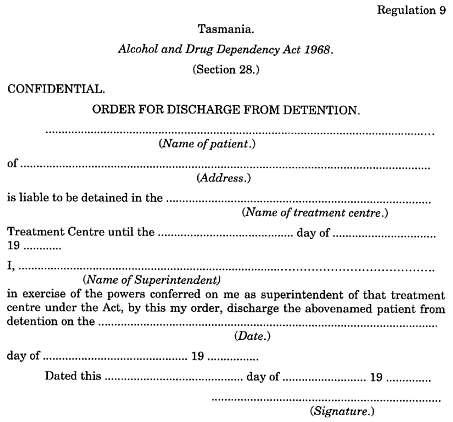
For the purposes of section 28 of the Act, an order for the discharge of a patient from detention is to be in accordance with Form 10.
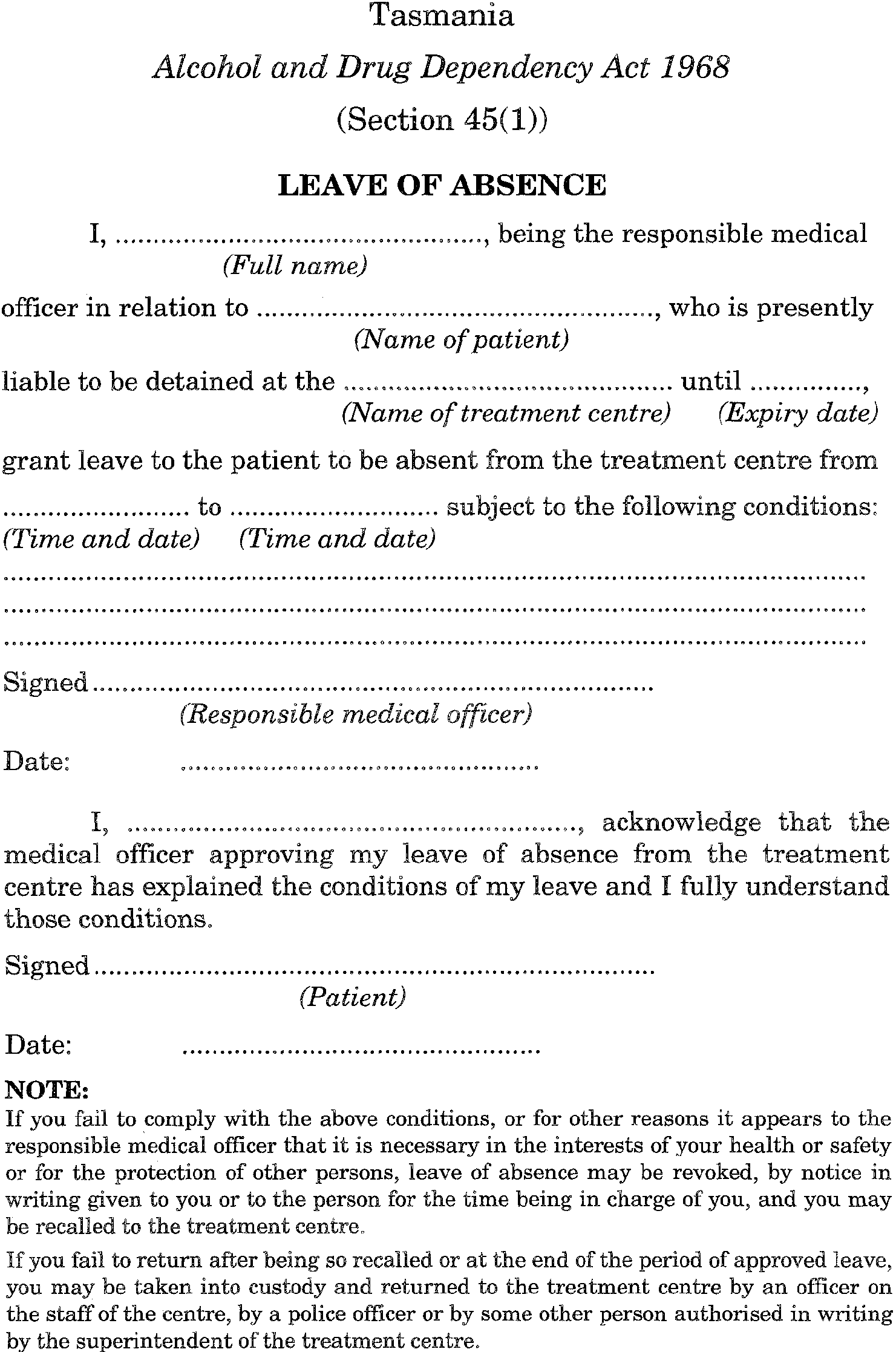
[Regulation 9A Inserted by S.R. 2003, No. 38, Applied:28 May 2003] For the purposes of section 45(1) of the Alcohol and Drug Dependency Act 1968 , a leave of absence form is to be in accordance with Form 10A.
PART 4 - The Tribunal and applications to the Tribunal
In this Part, unless the contrary intention appears –application means an application to the Tribunal under section 29 of the Act for an order for the discharge of a patient from a treatment centre;authorised person means a person authorised in writing by a superintendent of a treatment centre to act on his behalf;patient, used in relation to an application, means the patient to whom the application relates;
11. Application under section 29 of the Act
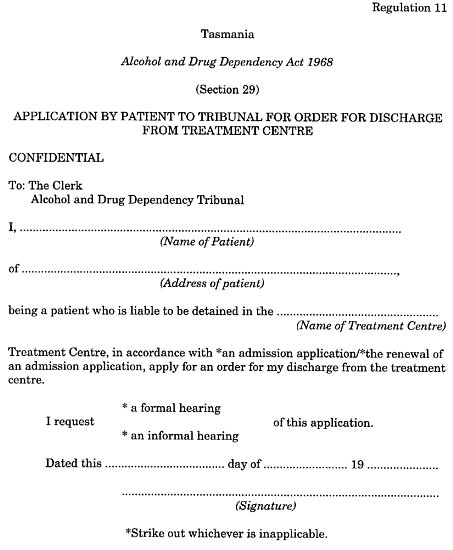
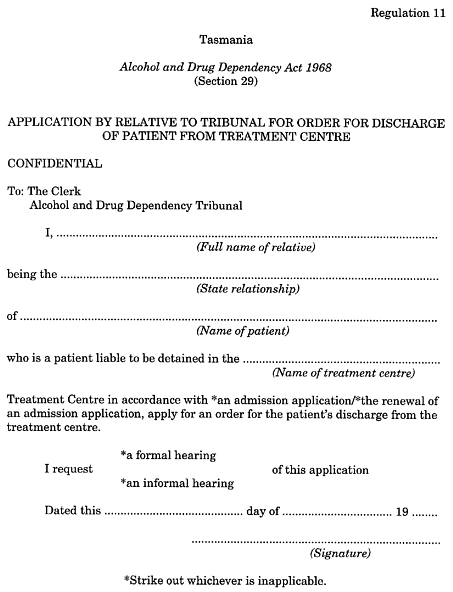
(1) An application is to be –(a) in accordance with –(i) Form 11, in the case of an application by a patient; or(ii) Form 12, in the case of an application by a relative of a patient; and(b) lodged with the clerk of the Tribunal; and(c) given to the superintendent of, or an authorised person at, the treatment centre at which the patient is being detained.(2) Where an applicant requests a formal hearing, that fact is to be stated in his or her application.(3) An applicant is entitled to have his or her application heard by the Tribunal, or disposed of by the Tribunal without a formal hearing, not more than 28 days after its receipt by the clerk of the Tribunal.
12. Procedure after applications lodged
(1) The superintendent must, within 7 days of receiving an application, forward to the clerk of the Tribunal a statement of the reasons why the superintendent or authorised person is not prepared to discharge the patient.(2) Where an application is forwarded directly to the clerk of the Tribunal, the Tribunal may request the superintendent to provide a statement of the reasons why the superintendent is not prepared to discharge the patient.(3) A superintendent must, within 7 days after receiving a request for a statement under subregulation (2) , forward the statement to the clerk of the Tribunal.
13. Powers and duties of Tribunal and superintendents
(1) Any member of the Tribunal may visit and interview in private any patient.(2) The Tribunal must make available to any person having a right to be heard by the Tribunal –except where the Tribunal considers it undesirable in the interests of the patient or for other special reasons.(a) a copy of any document obtained or provided to the Tribunal in connection with an application; and(b) a statement of any oral information so obtained or provided –(3) The superintendent of a treatment centre in which the patient is detained –(a) is to provide the Tribunal with such information relevant to the application as the Tribunal requests; and(b) is to permit any member of the Tribunal to interview the patient in private.
(1) Where an applicant has requested a formal hearing, the Tribunal is to give at least 7 days' notice of the date, time and place of the hearing to –(a) the applicant; and(b) the superintendent of the treatment centre in which the patient is detained; and(c) any other person who, in the Tribunal's opinion, should have an opportunity of being heard.(2) The Tribunal may –(a) exclude a person or class of persons from a formal hearing of an application; and(b) prohibit publication of a report in relation to a formal hearing of an application or the name of a person involved in such a hearing.(3) The following persons are entitled to be heard by, and make representations to, the Tribunal in respect of a formal hearing of an application:(a) the applicant;(b) the patient, if he or she is not the applicant.(4) A representation to the Tribunal is to be –(a) in writing; and(b) lodged with the Tribunal before the hearing starts.(5) If the Tribunal conducts a formal hearing of an application a person specified in subregulation (3) may –(a) call witnesses; and(b) be represented or accompanied by another person.(6) A person who has a right to be heard by the Tribunal at a formal hearing in respect of an application need not attend in person before the Tribunal but may be represented by another person for the purposes of the hearing if –(a) the person is unable to attend; and(b) the person authorises the other person, in writing, to attend as the person's representative.
(1) The Tribunal may adjourn the hearing of an application at any time.(2) The Tribunal, if requested by –is to adjourn the hearing of an application for the consideration of any information or document made available at the hearing.(a) the applicant; or(b) the patient, if he or she is not the applicant –(3) Except with the consent of the applicant, the hearing of an application is not to be adjourned for a period exceeding 14 days.(4) Where, after an adjournment, the hearing of an application is resumed, the Tribunal is to give at least 7 days' notice of the resumption of the hearing to –(a) the applicant; and(b) the superintendent of the treatment centre in which the patient is detained; and(c) any other person who was notified of the hearing under regulation 14 and who appeared at the previous hearing.(5) This regulation applies only to proceedings in which an applicant has requested a formal hearing.
(1) Where an applicant has not requested a formal hearing or where it appears to the Tribunal that such a hearing would be detrimental to the patient, the Tribunal may dispose of an application is such manner as the Tribunal thinks appropriate.(2) Before disposing of an application, the Tribunal –(a) is to take any step it considers proper, including interviewing any person, to ensure that the Tribunal has before it the information necessary to decide the case; and(b) is to give to the applicant, the appropriate superintendent, and any other person who, in the Tribunal's opinion, has an interest in the application, an opportunity of an interview with the Tribunal at a date, time and place of which at least 7 days' notice is to be given; and(c) is to consider any representations made to it with reference to the application.(3) A person interviewed by the Tribunal is to be given the opportunity of stating his or her views and drawing the attention of the Tribunal to any evidence or information relevant to the application in question.
17. Withdrawal of applications
(1) An applicant may withdraw his or her application at any time on giving notice in writing to the Tribunal.(2) An application is taken to be withdrawn if the patient is discharged from a treatment centre before the hearing of the application.
(1) The Tribunal, within 7 days after it makes a decision in respect of an application, is to advise the following persons of that decision:(a) the applicant;(b) the patient, if he or she is not the applicant;(c) the superintendent of the treatment centre in which the patient is detained.(2) If the Tribunal refuses to approve an application, the applicant or patient may request the Tribunal for a statement of the Tribunal's reasons for that refusal.(3) The Tribunal must provide a person with a statement of reasons requested by that person unless the Board considers that it would be undesirable to do so.
PART 5 - Rescission
The Alcohol and Drug Dependency Regulations 1969 are rescinded.
SCHEDULE 1 - Forms
Regulations 5 , 6 , 7 , 8 , 9 and 11
[Schedule 1 Amended by No. 29 of 2009, s. 14, Applied:01 Sep 2009]Form 3
Form 4
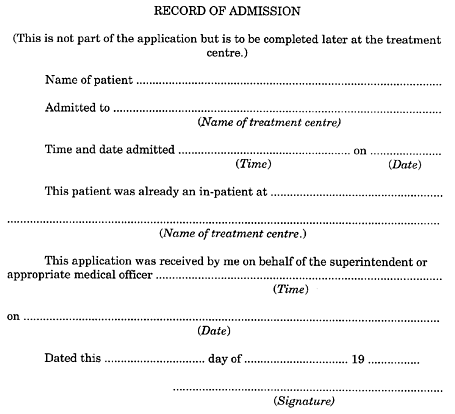
Form 5
Form 6
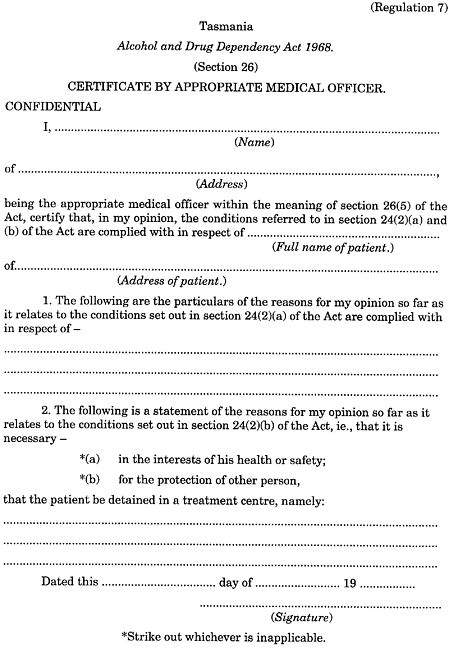
Form 7
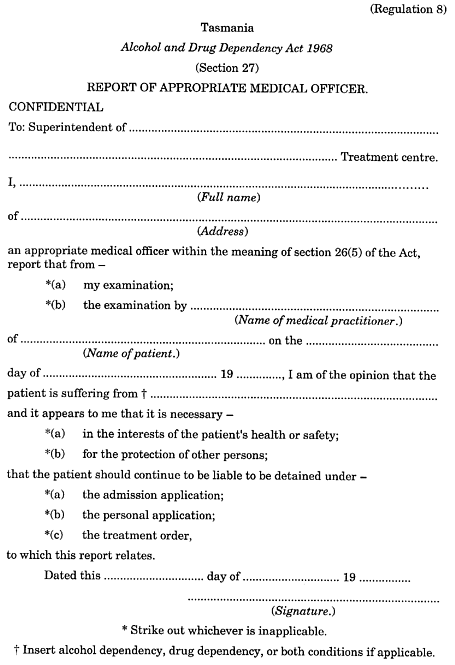
Form 8
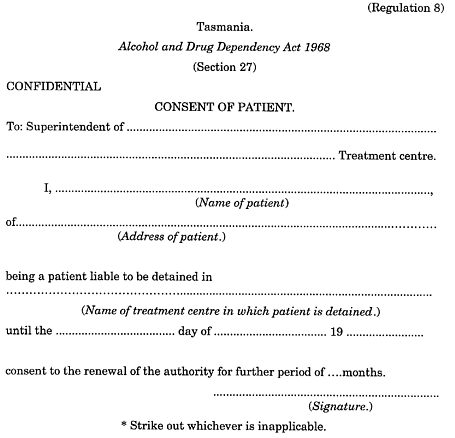
Form 9
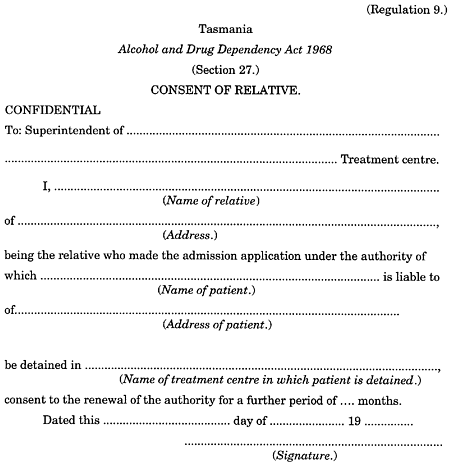
Form 10
Form 10A[Schedule 1 Amended by S.R. 2003, No. 38, Applied:28 May 2003]
Form 11
Form 12
Displayed and numbered in accordance with the Rules Publication Act 1953.
Notified in the Gazette on 29 December 1999
These regulations are administered in the Department of Health and Human Services.