

Supreme Court (Corporations) Rules 20003 April 2000
We, the Honourable William John Ellis Cox, Companion of the Order of Australia, Chief Justice, and the Honourable Peter George Underwood, the Honourable Ewan Charles Crawford and the Honourable Peter Ethrington Evans, Puisne Judges of the Supreme Court of Tasmania, on the recommendation of the Rule Committee, make the following Rules of Court under the Supreme Court Civil Procedure Act 1932 .
PART 1 - Preliminary
[Rule 1 Amended by S.R. 2004, No. 55, Applied:21 Jul 2004] These Rules of Court may be cited as the Supreme Court (Corporations) Rules 2000 .
These Rules of Court take effect on the day on which their making is notified in the Gazette.
3. Application of these Rules and other rules of the Court
(1) [Rule 3 Subrule (1) amended by S.R. 2004, No. 55, Applied:21 Jul 2004] [Rule 3 Subrule (1) amended by S.R. 2001, No. 44, Applied:25 Apr 2001] Unless the Court otherwise orders, these Rules apply to a proceeding in the Court under the Corporations Act, or the ASIC Act, that is commenced on or after the commencement of these Rules.(2) [Rule 3 Subrule (2) amended by S.R. 2004, No. 55, Applied:21 Jul 2004] [Rule 3 Subrule (2) amended by S.R. 2001, No. 44, Applied:25 Apr 2001] The other rules of the Court apply, so far as they are relevant and not inconsistent with these Rules, to a proceeding in the Court under the Corporations Act, or the ASIC Act, that is commenced on or after the commencement of these Rules.(3) [Rule 3 Subrule (3) amended by S.R. 2004, No. 55, Applied:21 Jul 2004] [Rule 3 Subrule (3) amended by S.R. 2001, No. 44, Applied:25 Apr 2001] Unless the Court otherwise orders, the rules applying to a proceeding in the Court under the Corporations Act, or the ASIC Act, as in force immediately before the commencement of these Rules, continue to apply to a proceeding under the Corporations Act, or the ASIC Act, that was commenced before the commencement of these Rules.NoteBy virtue of the definition of 'this Act' in section 9 of the Corporations Act, a reference to the Corporations Act includes a reference to the Corporations Regulations.
4. Expressions used in the Corporations Act
[Rule 4 Amended by S.R. 2004, No. 55, Applied:21 Jul 2004] Unless the contrary intention appears, an expression used in these Rules and in the Corporations Act has the same meaning in these Rules as it has in the Corporations Act.NoteExpressions used in these Rules (including the notes to these Rules) that are defined in the Corporations Law include:(a) ACN (short for ‘Australian Company Number’) — see section 9(b) ARBN (short for ‘Australian Registered Body Number’) — see section 9(c) body — see section 9(d) body corporate — see section 9(e) books — see section 9(f) Commission — see section 9(h) company — see section 9(i) corporation — see section 57A(j) daily newspaper — see section 9(k) foreign country — see section 9(l) futures broker — see section 9(m) Gazette — see section 9(n) officer, in relation to a body corporate — see section 82A(o) official liquidator — see section 9(p) Part 5.1 body — see section 9(q) Part 5.7 body — see section 9(r) register — see section 9(s) registered liquidator — see section 9(t) registered office — see section 9(u) statutory demand — see section 9.
5. Definitions for these Rules
In these Rules, unless the contrary intention appears –applicant means a person claiming interlocutory relief in a proceeding;[Rule 5 Amended by S.R. 2004, No. 55, Applied:21 Jul 2004] ASIC Act means the Australian Securities and Investments Commission Act 2001 of the Commonwealth;[Rule 5 Amended by S.R. 2004, No. 55, Applied:21 Jul 2004] Commission means the Australian Securities and Investments Commission established by the Australian Securities and Investments Commission Act 1989 of the Commonwealth;[Rule 5 Amended by S.R. 2004, No. 55, Applied:21 Jul 2004] Corporations Act means the Corporations Act 2001 of the Commonwealth;[Rule 5 Amended by S.R. 2004, No. 55, Applied:21 Jul 2004] Corporations Regulations means the Corporations Regulations 2001 of the Commonwealth;[Rule 5 Amended by S.R. 2001, No. 44, Applied:25 Apr 2001] [Rule 5 Amended by S.R. 2004, No. 55, Applied:21 Jul 2004] defendant means a person against whom relief (except interlocutory relief) is claimed under the Corporations Act or the ASIC Act, whether in the originating process or not;interlocutory process means an interlocutory process in accordance with Form 3;originating process means an originating process in accordance with Form 2;[Rule 5 Amended by S.R. 2001, No. 44, Applied:25 Apr 2001] [Rule 5 Amended by S.R. 2004, No. 55, Applied:21 Jul 2004] plaintiff means a person claiming relief (except interlocutory relief) under the Corporations Act or the ASIC Act, whether in the originating process or not;[Rule 5 Amended by S.R. 2004, No. 55, Applied:21 Jul 2004] respondent means a person against whom interlocutory relief is claimed in a proceeding.[Rule 5 Amended by S.R. 2004, No. 55, Applied:21 Jul 2004]
6. References to rules and forms
In these Rules, unless the contrary intention appears –(a) a reference to a rule is a reference to a rule in these Rules; and(b) a reference to a form followed by a number is a reference to the form so numbered in Schedule 1 to these Rules.
7. Substantial compliance with forms
(1) It is sufficient compliance with these Rules in relation to a document that is required to be in accordance with a form in Schedule 1 if the document is substantially in accordance with the form required or has only such variations as the nature of the case requires.(2) Without limiting subrule (1) , the Registrar must not reject a document for filing only because a term used to describe a party in the document differs from the term used in these Rules.
8. Court’s power to give directions
The Court may give directions in relation to the practice and procedure to be followed in a proceeding if it is satisfied, in the circumstances of the proceeding, that –(a) [Rule 8 Amended by S.R. 2001, No. 44, Applied:25 Apr 2001] [Rule 8 Amended by S.R. 2004, No. 55, Applied:21 Jul 2004] the provisions of the Corporations Act, the ASIC Act, or the rules of this Court do not adequately provide for the practice and procedure to be followed in the proceeding; or(b) a difficulty arises, or doubt exists, in relation to the practice and procedure to be followed in the proceeding.
(1) If, for any purpose, these Rules –a period of time before or after a particular day, act or event, the period is to be calculated without counting that day, or the day of the act or event, as the case may be.(a) prohibit, permit or require an act or thing to be done within, by, or before the end of; or(b) otherwise prescribe, allow or provide for –(2) Without limiting subrule (1) , in calculating how many days a particular day, act or event is before or after another day, act or event, only the first day, or the day of the first act or event, is to be counted.(3) If the last day of any period prescribed or allowed by these Rules for an act or thing to be done falls on a day that is not a business day in the place where the act or thing is to be or may be done, the act or thing may be done on the first business day in the place after that day.(4) In calculating a period of time for the purposes of these Rules, the period beginning on 25 December in a year and ending at the end of 1 January in the next year is not to be counted.
10. Extension and abridgment of time
[Rule 10 Amended by S.R. 2001, No. 44, Applied:25 Apr 2001] [Rule 10 Amended by S.R. 2004, No. 55, Applied:21 Jul 2004] Unless the Corporations Act, the ASIC Act, or these Rules otherwise provide, the rules of this Court that provide for the extension or abridgment of a period of time fixed for the doing of any act or thing in relation to a proceeding apply to a proceeding to which these Rules apply.
PART 2 - Proceedings generally
11. Title of documents in a proceeding – Form 1
The title of a document filed in a proceeding must be in accordance with Form 1.
12. Originating process and interlocutory process – Forms 2 and 3
(1) [Rule 12 Subrule (1) amended by S.R. 2004, No. 55, Applied:21 Jul 2004] Unless these Rules otherwise provide, a person must make an application required or permitted by the Corporations Act to be made to the Court –(a) if the application is not made in a proceeding already commenced in the Court — by filing an originating process; and(b) in any other case — by filing an interlocutory process.(2) Unless the Court otherwise directs, a person may make an application to the Court in relation to a proceeding in respect of which final relief has been granted by filing an interlocutory process in that proceeding.(3) An originating process must –(a) be in accordance with Form 2; and(b) state –(i) [Rule 12 Subrule (3) amended by S.R. 2001, No. 44, Applied:25 Apr 2001] [Rule 12 Subrule (3) amended by S.R. 2004, No. 55, Applied:21 Jul 2004] each section of the Corporations Act or the ASIC Act, or each regulation of the Corporations Regulations, under which the proceeding is brought; and(ii) the relief sought.(4) An interlocutory process must –(a) be in accordance with Form 3; and(b) state –(i) [Rule 12 Subrule (4) amended by S.R. 2001, No. 44, Applied:25 Apr 2001] [Rule 12 Subrule (4) amended by S.R. 2004, No. 55, Applied:21 Jul 2004] if appropriate, each section of the Corporations Act or the ASIC Act, or each regulation of the Corporations Regulations, or each rule of Court under which the interlocutory application is made; and(ii) the relief sought.
On receiving an originating process or interlocutory process, the Registrar –(a) must fix a time, date and place for hearing and endorse those details on the originating process or interlocutory process; and(b) may seal a sufficient number of copies for service and proof of service.
(1) Unless the Court otherwise directs, an originating process, or interlocutory process, must be supported by an affidavit stating the facts in support of the process.(2) [Rule 14 Subrule (2) amended by S.R. 2001, No. 69, Applied:30 Jun 2001] Subject to rule 14A , an affidavit in support of an originating process must annex a record of a search of the records maintained by the Commission, in relation to the company that is the subject of the application to which the originating process relates, carried out no earlier than 7 days before the originating process is filed.
14A. Application for order setting aside statutory demand (Corporations Act s 459G)
[Rule 14A Inserted by S.R. 2001, No. 69, Applied:30 Jun 2001](1) [Rule 14A Subrule (1) amended by S.R. 2004, No. 55, Applied:21 Jul 2004] This rule applies, and rule 14(2) does not apply, to an application by a company under section 459G of the Corporations Act for an order setting aside a statutory demand served on the company.(2) The plaintiff may file with the originating process seeking the order a copy of the statutory demand and a copy of any affidavit that accompanied the statutory demand.(3) The plaintiff must –(a) no earlier than 7 days before the originating process is filed, and no later than the day before the hearing of the application, carry out a search of the records maintained by the Commission in relation to the plaintiff; and(b) either –(i) annex the record of the search to the affidavit in support of the originating process; or(ii) file the record of the search before or tender it on the hearing of the application.
15. Affidavits made by creditors
[Rule 15 Amended by S.R. 2000, No. 82, Applied:21 Jun 2000] Subject to rule 35 , an affidavit that is to be made by a creditor may be made –(a) if the creditor is a corporation — by a director, secretary, or other principal officer of the corporation, or by a person employed by the corporation who is authorised to make the affidavit on its behalf; or(b) if the creditor is a company to which a liquidator, provisional liquidator, receiver, administrator or controller has been appointed — by that person; or(c) in any other case — by the creditor or a person authorised by the creditor to make the affidavit on behalf of the creditor.
An affidavit must be in a form that complies with –(a) the rules of the Court; or(b) the rules of the Supreme Court of the State (if any) or Territory (if any) where the affidavit was sworn or affirmed; or(c) the rules of the Federal Court of Australia.
17. Service of originating process or interlocutory process and supporting affidavit
(1) As soon as practicable after filing an originating process and, in any case, at least 5 days before the date fixed for hearing, the plaintiff must serve a copy of the originating process and any supporting affidavit on –(a) each defendant (if any) to the proceeding; and(b) if the corporation to which the proceeding relates is not a party to the proceeding — the corporation.(2) As soon as practicable after filing an interlocutory process and, in any case, at least 3 days before the date fixed for hearing, the applicant must serve a copy of the interlocutory process and any supporting affidavit on –(a) each respondent (if any) to the interlocutory application; and(b) if the corporation to which the interlocutory application relates is not a party to the interlocutory application — the corporation.
18. Notice of certain applications to be given to Commission
(1) [Rule 18 Subrule (1) amended by S.R. 2004, No. 55, Applied:21 Jul 2004] This rule has effect in addition to the requirements of the Corporations Act that, in relation to a proceeding, particular documents are to be served on the Commission or notice of particular matters is to be given to the Commission.(2) This rule does not apply to a person making an application if the person is the Commission or a person authorised by the Commission.(3) [Rule 18 Subrule (3) amended by S.R. 2004, No. 55, Applied:21 Jul 2004] [Rule 18 Subrule (3) substituted by S.R. 2001, No. 44, Applied:25 Apr 2001] Unless the Court otherwise orders, if a person makes an application under a provision of the Corporations Act mentioned in column 2 of the following table, the person must serve on the Commission, a reasonable time before the hearing of the application, a copy of the originating process, or interlocutory process, and supporting affidavit in respect of the application.
Column 1
Column 2
Column 3
Item
Provision
Description of application
1.
Section 480
For the release of a liquidator of a company and the deregistration of the company
2.
Subsection 482 (1)
For the stay of a compulsory winding up
3.
Subsection 509 (6)
For the deregistration of a company
4.
Subsection 536 (1)
For an inquiry into the conduct of a liquidator
5.
Subsection 601AH (2)
To reinstate the registration of a company
6.
Subsection 601CC (8)
To restore the name of an Australian body to the register
7.
Subsection 601CL (9)
To restore the name of a foreign company to the register
8.
Chapter 6, 6A, 6B, 6C, 6D or 7
Any application under these Chapters
9.
Subsections 1317S (2), (4) and (5)
For relief from liability for contravention of a civil penalty provision
19. Notice of appearance (Corporations Act s 465C) — Form 4
(1) A person who intends to appear before the Court at the hearing of an application must, before appearing –(a) file –(i) a notice of appearance in accordance with Form 4; and(ii) if appropriate — an affidavit stating any facts on which the person intends to rely; and(b) serve on the plaintiff a copy of the notice of appearance and any affidavit not later than –(i) if the person is named in an originating process — 3 days before the date fixed for hearing; or(ii) if the person is named in an interlocutory process — 1 day before the date fixed for hearing.(2) [Rule 19 Subrule (2) amended by S.R. 2004, No. 55, Applied:21 Jul 2004] If the person intends to appear before the Court to oppose an application for winding up, the person may include in the notice of appearance the notice of the grounds on which the person opposes the application required by section 465C of the Corporations Act.(3) [Rule 19 Subrule (3) amended by S.R. 2004, No. 55, Applied:21 Jul 2004] The period prescribed for filing and serving the notice and affidavit required by section 465C of the Corporations Act is the period mentioned in subrule (1)(b)(i) .NoteUnder section 465C of the Law, a person may not, without the leave of the Court, oppose an application for winding up unless, within the period prescribed by the rules (see subrule (3) of this rule), the person has filed, and served on the plaintiff, notice of the grounds on which the person opposes the application and an affidavit verifying the matters stated in the notice.
20. Intervention in proceeding by Commission (Corporations Act s 1330) — Form 5
(1) If the Commission intends to intervene in a proceeding, the Commission must file a notice of intervention in accordance with Form 5.(2) Not later than 3 days before the date fixed for the hearing at which the Commission intends to appear in the proceeding, the Commission must serve a copy of the notice, and any affidavit on which it intends to rely, on the plaintiff and on any other party to the proceeding.
If a rule requires a notice in relation to a body to be published in accordance with this rule, the notice must be published once in a daily newspaper circulating generally in the State or Territory where the body has its principal, or last known, place of business.NoteUnder the Law, certain notices may also be required to be published in the Gazette. Nothing in this rule is intended to affect the operation of any provision of the Law that requires publication of a notice in the Gazette.
(1) This rule applies in relation to any matter published in connection with a proceeding.(2) Unless these Rules otherwise provide, or the Court otherwise orders, the person responsible for the publication of the matter, or the person’s legal practitioner, must file –(a) an affidavit made by the person, or the person’s legal practitioner, that states the date of publication and to which is annexed or exhibited a copy of the published matter; or(b) a memorandum signed by the person, or the person’s legal practitioner, that states the date of publication and refers to and annexes a copy of the published matter.(3) The affidavit or memorandum is prima facie evidence that the publication took place on the date and otherwise as stated in the affidavit or memorandum.
23. Leave to creditor, contributory or officer to be heard
(1) The Court may grant leave to any person who is, or who claims to be –to be heard in a proceeding without becoming a party to the proceeding.(a) a creditor, contributory or officer of a corporation; or(b) [Rule 23 Subrule (1) amended by S.R. 2001, No. 44, Applied:25 Apr 2001] an officer of a creditor, or contributory, of a corporation; or(c) [Rule 23 Subrule (1) amended by S.R. 2001, No. 44, Applied:25 Apr 2001] any other interested person –(2) If the Court considers that the attendance of a person to whom leave has been granted under subrule (1) has resulted in additional costs for any party, or the corporation, which should be borne by the person to whom leave was granted, the Court may –(a) direct that the person pay the costs; and(b) order that the person not be heard further in the proceeding until the costs are paid or secured to the Court’s satisfaction.(3) The Court may order that a person who is, or who claims to be, a creditor, contributory or officer of a corporation be added as a defendant to the proceeding.(4) The Court may grant leave to a person under subrule (1) , or order that a person be added as a defendant to a proceeding under subrule (3) –(a) on application by the person or a party to the proceeding; or(b) on the Court’s own initiative.(5) The Court may –(a) appoint a creditor or contributory to represent all or any class of the creditors or contributories on any question, or in relation to any proceeding, before the Court, at the expense of the corporation; and(b) remove any person so appointed.
24. Inquiry in relation to corporation’s debts, &c.
The Court may direct an inquiry in relation to the debts, claims or liabilities, or a class of debts, claims or liabilities, of or affecting a corporation to which a proceeding relates.
25. Meetings ordered by the Court
[Rule 25 Amended by S.R. 2004, No. 55, Applied:21 Jul 2004] Subject to the Corporations Law, these Rules and any direction of the Court to the contrary, regulations 5.6.12 to 5.6.36A of the Corporations Regulations apply to meetings ordered by the Court.
PART 3 - Compromises and arrangements in relation to Part 5.1 bodies
26. Application of Part 3
This Part applies if an application is made to the Court for approval of a compromise or arrangement between a Part 5.1 body and its creditors or members, or any class of its creditors or members.
27. Nomination of chairperson for meeting
[Rule 27 Amended by S.R. 2004, No. 55, Applied:21 Jul 2004] Before the hearing of an application under subsection 411 (1), (1A) or (1B) of the Corporations Law, the plaintiff must file an affidavit stating –(a) the names of the persons who have been nominated to be the chairperson and alternate chairperson of the meeting; and(b) that each person nominated –(i) is willing to act as chairperson; and(ii) has had no previous relationship or dealing with the body, or any other person interested in the proposed compromise or arrangement, except as disclosed in the affidavit; and(iii) has no interest or obligation that may give rise to a conflict of interest or duty if the person were to act as chairperson of the meeting, except as disclosed in the affidavit; and(c) the name of the person (if any) proposed to be appointed to administer the proposed compromise or arrangement; and(d) [Rule 27 Amended by S.R. 2004, No. 55, Applied:21 Jul 2004] that the person does not fall within paragraphs 411 (7) (a) to (f) of the Corporations Law, except as disclosed in the affidavit.
28. Order for meetings to identify proposed scheme
[Rule 28 Substituted by S.R. 2001, No. 69, Applied:30 Jun 2001](1) [Rule 28 Subrule (1) amended by S.R. 2004, No. 55, Applied:21 Jul 2004] An order under subsection 411(1) or (1A) of the Corporations Act ordering a meeting or meetings in relation to a proposed compromise or arrangement must set out in a schedule, or otherwise identify, a copy of the proposed compromise or arrangement.(2) [Rule 28 Subrule (2) amended by S.R. 2004, No. 55, Applied:21 Jul 2004] Unless the Court otherwise orders, a meeting of members ordered under section 411 of the Corporations Act must be convened, held and conducted in accordance with –(a) [Rule 28 Subrule (2) amended by S.R. 2004, No. 55, Applied:21 Jul 2004] the provisions of Part 2G.2 of the Corporations Act that apply to the members of a company; and(b) [Rule 28 Subrule (2) amended by S.R. 2004, No. 55, Applied:21 Jul 2004] the provisions of the plaintiff's constitution that apply in relation to meetings of members and are not inconsistent with Part 2G.2 of the Corporations Act.(3) [Rule 28 Subrule (3) amended by S.R. 2004, No. 55, Applied:21 Jul 2004] Unless the Court otherwise orders, a meeting of a class of holders of convertible securities ordered under section 411 of the Corporations Act must be convened, held and conducted as if –but in accordance with, and subject to, the applicable provisions of the instrument under which the securities were issued.(a) the holders were a separate class of members; and(b) the meeting were a meeting of members convened, held and conducted under subrule (2) –
29. Notice of hearing (Corporations Act s 411 (4), s 413 (1)) — Form 6
(1) This rule applies to –(a) [Rule 29 Subrule (1) amended by S.R. 2004, No. 55, Applied:21 Jul 2004] an application, under subsection 411 (4) of the Corporations Act, for an order approving a proposed compromise or arrangement in relation to a Part 5.1 body; and(b) [Rule 29 Subrule (1) amended by S.R. 2004, No. 55, Applied:21 Jul 2004] an application, under subsection 413 (1) of the Corporations Act, for an order in relation to the reconstruction of a Part 5.1 body, or Part 5.1 bodies, or the amalgamation of 2 or more Part 5.1 bodies.(2) Unless the Court otherwise orders, the plaintiff must publish a notice of the hearing of the application.(3) The notice must be –(a) in accordance with Form 6; and(b) [Rule 29 Subrule (3) amended by S.R. 2000, No. 82, Applied:21 Jun 2000] published in accordance with rule 21 at least 5 days before the date fixed for the hearing of the application.
30. Copy of order approving compromise or arrangement to be lodged with Commission
[Rule 30 Amended by S.R. 2004, No. 55, Applied:21 Jul 2004] If the Court makes an order under subsection 411 (1), (1A) or (4), or 413 (1) of the Corporations Act, the plaintiff must, as soon as practicable after the order is made –(a) have the order sealed; and(b) lodge an office copy of the order with the Commission; and(c) serve an office copy of the order on any person appointed to administer the compromise or arrangement.
PART 4 - Receivers and other controllers of corporation property (Corporations Act Part 5.2)[Part 4 Heading amended by S.R. 2004, No. 55, Applied:21 Jul 2004]
31. Inquiry into conduct of controller (Corporations Act s 423)
[Rule 31 Amended by S.R. 2004, No. 55, Applied:21 Jul 2004] A complaint to the Court under paragraph 423 (1) (b) of the Corporations Act about an act or omission of a receiver, or a controller appointed by the Court, must be made by an originating process seeking an inquiry in relation to the complaint.
PART 5 - Winding up proceedings (including oppression proceedings where winding up is sought)
32. Application of Part 5
This Part applies to the following applications for the winding up of a company:(a) [Rule 32 Amended by S.R. 2001, No. 44, Applied:25 Apr 2001] [Rule 32 Amended by S.R. 2004, No. 55, Applied:21 Jul 2004] an application for an order under Part 2F.1 of the Corporations Act;(b) [Rule 32 Amended by S.R. 2004, No. 55, Applied:21 Jul 2004] an application under Part 5.4 or Part 5.4A of the Corporations Act.
33. Affidavit accompanying statutory demand (Corporations Act s 459E (3)) — Form 7
[Rule 33 Amended by S.R. 2004, No. 55, Applied:21 Jul 2004] For the purposes of subsection 459E (3) of the Corporations Act, the affidavit accompanying a statutory demand relating to a debt, or debts, owed by a company must –(a) be in accordance with Form 7 and state the matters mentioned in that Form; and(b) be made by the creditor or by a person with the authority of the creditor or creditors; and(c) not state a proceeding number, or refer to a Court proceeding, in any heading or title to the affidavit.
34. Application for leave to apply for winding up in insolvency (Corporations Act s 459P (2))
An application for leave to apply to the Court for an order that a company be wound up in insolvency may be made at the same time as the application for an order that the company be wound up in insolvency is made.
35. Affidavit in support of application for winding up (Corporations Act s 459P, s 462, s 464)
(1) The affidavit in support of an originating process seeking an order that company be wound up must be made by the plaintiff or by a person with the authority of the plaintiff or plaintiffs.(2) If the application is made in reliance on a failure by the company to comply with a statutory demand, the affidavit must –(a) verify service of the demand on the company; and(b) verify the failure of the company to comply with the demand; and(c) state whether and, if so, to what extent the debt, or each of the debts, to which the demand relates is still due and payable by the company at the date when the affidavit is made.(3) [Rule 35 Subrule (3) amended by S.R. 2004, No. 55, Applied:21 Jul 2004] If the application is made in reliance on the ground mentioned in paragraph 461 (1) (a) of the Corporations Act, the affidavit must –(a) state whether the company is able to pay all its debts as and when they become due and payable; and(b) refer to the company’s most recent balance sheet and profit and loss statement as an annexure or exhibit to the affidavit, or explain their absence.(4) The affidavit must be made within 7 days before the originating process is filed.
36. Consent of liquidator (Corporations Act s 532 (9)) — Form 8
(1) In this rule,liquidator does not include a provisional liquidator.(2) [Rule 36 Subrule (2) amended by S.R. 2004, No. 55, Applied:21 Jul 2004] For the purposes of subsection 532 (9) of the Corporations Act, the consent of an official liquidator to act as liquidator of a company must be in accordance with Form 8.(3) In an application for an order that a company be wound up, the plaintiff must –(a) before the hearing of the application, file the consent mentioned in subrule (2) of an official liquidator who would be entitled to be appointed as liquidator of the company; and(b) serve a copy of the consent on the company at least 1 day before the hearing.
37. Notice of application for winding up — Form 9
(1) Unless the Court otherwise orders, the plaintiff must publish a notice of the application for an order that a company be wound up.(2) The notice must be –(a) in accordance with Form 9; and(b) [Rule 37 Subrule (2) amended by S.R. 2000, No. 82, Applied:21 Jun 2000] published in accordance with rule 21 –(i) at least 3 days after the originating process is served on the company; and(ii) at least 7 days before the date fixed for hearing of the application.
38. Applicant to make copies of documents available
A copy of any document filed in a proceeding to which this Part applies must be available at the plaintiff’s address for service for inspection by a creditor, contributory or officer of the company, or an officer of a creditor or contributory of the company.
39. Discontinuance of application for winding up
An application for an order that a company be wound up may not be discontinued except with the leave of the Court.
40. Appearance before Registrar
After filing an originating process seeking an order that a company be wound up, the plaintiff must, if required –(a) appear before the Registrar on a date to be appointed by the Registrar; and(b) [Rule 40 Amended by S.R. 2004, No. 55, Applied:21 Jul 2004] satisfy the Registrar that the plaintiff has complied with the Corporations Act and these Rules in relation to applications for a winding up order.
41. Order substituting plaintiff in application for winding up (Corporations Act s 465B) — Form 10
(1) [Rule 41 Subrule (1) amended by S.R. 2004, No. 55, Applied:21 Jul 2004] If the Court makes an order under section 465B of the Corporations Act, the Court may also order that the substituted plaintiff or plaintiffs publish a notice stating that the substituted plaintiff or plaintiffs intend to apply for an order that the company be wound up.(2) The notice must be –(a) in accordance with Form 10; and(b) [Rule 41 Subrule (2) amended by S.R. 2000, No. 82, Applied:21 Jun 2000] published in accordance with rule 21 or as otherwise directed by the Court.
42. Notice of winding up order and appointment of liquidator — Form 11
(1) This rule applies if the Court orders that a company be wound up and an official liquidator be appointed as liquidator of the company.(2) Not later than the day after the order is made, the plaintiff must inform the liquidator of the appointment.(3) As soon as practicable after being informed of the appointment, the liquidator must publish a notice of the winding up order and the liquidator’s appointment.(4) The notice must be –(a) in accordance with Form 11; and(b) [Rule 42 Subrule (4) amended by S.R. 2000, No. 82, Applied:21 Jun 2000] published in accordance with rule 21 .(5) In this rule,liquidator does not include a provisional liquidator.
PART 6 - Provisional liquidators (Corporations Act Part 5.4B)[Part 6 Heading amended by S.R. 2004, No. 55, Applied:21 Jul 2004]
43. Appointment of provisional liquidator (Corporations Act s 472) — Form 8
(1) [Rule 43 Subrule (1) amended by S.R. 2004, No. 55, Applied:21 Jul 2004] An application by a company, a creditor or contributory of the company, or the Commission, under subsection 472 (2) of the Corporations Act, for an official liquidator to be appointed as a provisional liquidator of the company must be accompanied by the written consent of the official liquidator.(2) The consent must be in accordance with Form 8.(3) [Rule 43 Subrule (3) substituted by S.R. 2001, No. 44, Applied:25 Apr 2001] If –the order must include a short description of the part of the property of the company that the provisional liquidator may take into custody.(a) an order is made appointing a provisional liquidator; and(b) the order provides that the provisional liquidator may take into the provisional liquidator's custody part only of the property of the company –(4) The Court may require the plaintiff to give an undertaking as to damages.
44. Notice of appointment of provisional liquidator — Form 12
(1) This rule applies if the Court orders that an official liquidator be appointed as a provisional liquidator of a company.(2) Not later than the day after the order is made, the plaintiff must –(a) except if the plaintiff is the Commission — lodge an office copy of the order with the Commission; and(b) serve an office copy of the order on the company (except if the plaintiff is the company) and on any other person as directed by the Court; and(c) give to the provisional liquidator an office copy of the order and a written statement that the order has been served as required by paragraph (b) .(3) As soon as practicable after the order is made, the provisional liquidator must publish a notice of the provisional liquidator’s appointment.(4) The notice must be –(a) in accordance with Form 12; and(b) published in accordance with rule 21 .
PART 7 - Liquidators
45. Resignation of liquidator (Corporations Act s 473 (1))
(1) A liquidator appointed by the Court who wishes to resign office must file with the Registrar, and lodge with the Commission, a memorandum of resignation.(2) The resignation takes effect on the filing and lodging of the memorandum.
46. Filling vacancy in office of liquidator (Corporations Act s 473 (7), s 502)
(1) If, for any reason, there is no liquidator acting in a winding up, the Court may –(a) in the case of a winding up by the Court — appoint another official liquidator whose written consent in accordance with Form 8 has been filed; and(b) in the case of a voluntary winding up — appoint another registered liquidator whose written consent in accordance with Form 8 has been filed.(2) The Court may make the appointment –(a) in any case — on application by the Commission, a creditor or a contributory; or(b) in the case of a winding up by the Court — on its own initiative.
47. Report to liquidator as to company’s affairs (Corporations Act s 475)
(1) [Rule 47 Subrule (1) amended by S.R. 2004, No. 55, Applied:21 Jul 2004] If a person is required under section 475 of the Corporations Act to submit and verify a report as to the affairs of a company, the liquidator must give to the person the appropriate forms and instructions for the preparation of the report.(2) Except by order of the Court, no person is to be allowed out of the property of a company any costs or expenses incurred in relation to the preparation of the report that have not been –(a) sanctioned by the liquidator before being incurred; or(b) taxed or assessed.(3) [Rule 47 Subrule (3) amended by S.R. 2004, No. 55, Applied:21 Jul 2004] The liquidator must report to the Court any default in complying with the requirements of section 475 of the Corporations Act.(4) In this rule,liquidator includes a provisional liquidator.
48. Liquidator to file certificate and copy of settled list of contributories (Corporations Act s 478)
If, in a winding up by the Court, a liquidator has settled and certified a list, or supplementary list, of contributories, the liquidator must, within 14 days after doing so, file the certificate and a copy of the list.
49. Release of liquidator and deregistration of company (Corporations Act s 480 (c) and (d))
(1) This rule applies to an application by the liquidator of a company –(a) for an order that the liquidator be released; or(b) for an order that the liquidator be released and that the Commission deregister the company.(2) The interlocutory process seeking the order must include –(a) a notice stating that any objection to the release of the liquidator must be made by filing and serving a notice of objection, in the prescribed form, within 21 days after the date of service of the interlocutory process; and(b) [Rule 49 Subrule (2) amended by S.R. 2004, No. 55, Applied:21 Jul 2004] a statement setting out the terms of subsection 481 (3) of the Corporations Act.NoteSubsection 481 (3) of the Law provides that an order of the Court releasing a liquidator discharges the liquidator from all liability in respect of any act done or default made by the liquidator in the administration of the affairs of the company, or otherwise in relation to the liquidator’s conduct as liquidator, but any such order may be revoked on proof that it was obtained by fraud or by suppression or by concealment of any material fact.(3) The supporting affidavit must include details of the following matters:(a) whether the whole of the company’s property has been realised or whether so much of the company’s property has been realised as, in the liquidator’s opinion, can be realised without needlessly protracting the winding up;(b) any calls made on contributories in the course of the winding up;(c) any dividends paid in the course of the winding up;(d) whether the committee of inspection (if any) has passed a resolution approving the liquidator’s release;(e) [Rule 49 Subrule (3) amended by S.R. 2004, No. 55, Applied:21 Jul 2004] whether the Commission has appointed an auditor to report on an account or statement of the position in the winding up under subsection 539 (2) of the Corporations Act;(f) whether the Court has ordered a report on the accounts of the liquidator to be prepared;(g) whether any objection to the release of the liquidator has been received by the liquidator from –(i) an auditor appointed by the Commission or by the Court; or(ii) any creditor, contributory or other interested person;(h) [Rule 49 Subrule (3) amended by S.R. 2004, No. 55, Applied:21 Jul 2004] whether any report has been submitted by the liquidator to the Commission under section 533 of the Corporations Act;(i) whether the liquidator considers it necessary to report on the affairs of the company or any of its officers;(j) any property disclaimed in the course of the winding up;(k) any remuneration paid or payable to the liquidator and how such remuneration was determined;(l) any costs, charges or expenses payable by the liquidator if the Court grants the liquidator’s release;(m) [Rule 49 Subrule (3) amended by S.R. 2004, No. 55, Applied:21 Jul 2004] if the application is made under paragraph 480 (c) of the Corporations Act — the facts and circumstances by reason of which it is submitted that the company should not be deregistered.(4) The liquidator must include in the supporting affidavit the statements set out in paragraphs (a) and (b) of this subrule, including, if appropriate, the words in brackets –(a) ‘To the best of my belief, there has been no act done or default made by me in the administration of the affairs of the subject corporation or otherwise in relation to my conduct as liquidator which is likely to give rise to any liability to the subject corporation or any creditor or contributory [except as disclosed in this affidavit]’;(b) ‘I am not aware of any claim made by any person that there has been any such act or default [except as disclosed in this affidavit]’.(5) The liquidator must file with, or annex to, the supporting affidavit –(a) a statement of the financial position of the company at the date when the interlocutory process seeking release was filed; and(b) a summary of the liquidator’s receipts and payments in winding up the company.(6) Unless the Court otherwise orders, the liquidator must serve by prepaid post, on each creditor who has proved a debt in the course of the winding up, and on each contributory, a copy of the interlocutory process accompanied by –(a) a copy of the summary of the liquidator’s receipts and payments in winding up the company; and(b) a copy of the statement of the financial position of the company at the date when the interlocutory process seeking release was filed.
50. Objection to release of liquidator — Form 13
(1) A creditor or contributory of a company who wishes to object to the release of the liquidator of the company must, within 21 days after the date of service of the interlocutory process seeking release –(a) file –(i) a notice of objection in accordance with Form 13; and(ii) if appropriate, an affidavit stating any facts relied on; and(b) serve a copy of the notice and the affidavit (if any) on the liquidator.(2) If the liquidator is served with a notice of objection by a creditor or contributory, the liquidator must, within 3 days after being served, serve on the creditor or contributory a copy of the affidavit supporting the interlocutory process.
51. Report on accounts of liquidator (Corporations Act s 481)
(1) [Rule 51 Subrule (1) amended by S.R. 2004, No. 55, Applied:21 Jul 2004] If the Court orders that a report on the accounts of a liquidator be prepared under subsection 481 (1) of the Corporations Act, the liquidator must give to the auditor appointed to prepare the report all information, books and vouchers required to prepare the report.(2) On completing the report, the auditor must –(a) [Rule 51 Subrule (2) amended by S.R. 2004, No. 55, Applied:21 Jul 2004] file a copy of the report in a sealed envelope that is marked with the title and number of the proceeding and the words ‘Auditor’s report under subsection 481 (1) of the Corporations Act 2001’; and(b) serve a copy of the report on the liquidator; and(c) lodge a copy of the report with the Commission.(3) Except with the leave of the Court, a report is not available for inspection by any person except the liquidator or the Commission.
52. Application for payment of call (Corporations Act s 483 (3) (b)) — Form 14
[Rule 52 Amended by S.R. 2004, No. 55, Applied:21 Jul 2004] The affidavit in support of an application by the liquidator of a company, under paragraph 483 (3) (b) of the Corporations Act, for an order for the payment of a call must be in accordance with Form 14.
53. Distribution of surplus by liquidator with special leave of the Court (Corporations Act s 488 (2)) — Form 15
(1) The affidavit in support of an application for special leave to distribute a surplus must state how the liquidator intends to distribute the surplus including the name and address of each person to whom the liquidator intends to distribute any part of the surplus.(2) At least 14 days before the date fixed for hearing of the application, the liquidator must publish a notice of the application.(3) The notice must be –(a) in accordance with Form 15; and(b) [Rule 53 Subrule (3) amended by S.R. 2000, No. 82, Applied:21 Jun 2000] published in accordance with rule 21 .
54. Powers delegated to liquidator by the Court (Corporations Act s 488)
[Rule 54 Amended by S.R. 2004, No. 55, Applied:21 Jul 2004] Subject to the Corporations Act, the Corporations Regulations, these Rules, and any order of the Court, the powers and duties conferred or imposed on the Court by Part 5.4B of the Corporations Act in respect of the matters mentioned in subsection 488 (1) of the Corporations Act may be exercised or performed by a liquidator appointed by the Court as an officer of the Court and subject to the control of the Court.
55. Inquiry into conduct of liquidator (Corporations Act s 536(1) and (2))
(1) [Rule 55 Subrule (1) amended by S.R. 2004, No. 55, Applied:21 Jul 2004] A complaint to the Court under paragraph 536 (1) (b) of the Corporations Act must be made –(a) in the case of a winding up by the Court — by an interlocutory process seeking an inquiry; and(b) in the case of a voluntary winding up — by an originating process seeking an inquiry.(2) [Rule 55 Subrule (2) amended by S.R. 2004, No. 55, Applied:21 Jul 2004] A report to the Court by the Commission under subsection 536 (2) of the Corporations Act must be made –(a) in the case of a winding up by the Court — by filing –(i) an interlocutory process seeking orders under the subsection; and(ii) a written report in a sealed envelope that is marked with the title and number of the proceeding; and(b) in the case of a voluntary winding up — by filing –(i) an originating process seeking orders under the subsection; and(ii) a written report in a sealed envelope that is marked with the title of the proceeding and provision for its number.(3) The contents of a report filed under subrule (2) need not, at the time of filing, be verified by an affidavit.(4) [Rule 55 Subrule (4) amended by S.R. 2004, No. 55, Applied:21 Jul 2004] Except with the leave of the Court, a report made under subsection 536 (2) of the Corporations Act is not available for inspection by any person except the liquidator or the Commission.(5) In this rule,liquidator includes a provisional liquidator.
PART 8 - Special managers (Corporations Act Part 5.4B)[Part 8 Heading amended by S.R. 2004, No. 55, Applied:21 Jul 2004]
56. Application for appointment of special manager (Corporations Act s 484)
(1) An application by a liquidator for the appointment of a special manager in relation to a company must state the powers which, in the liquidator’s opinion, should be entrusted by the Court to the special manager.(2) The supporting affidavit must state –(a) the circumstances making it proper that a special manager be appointed; and(b) details of the remuneration proposed to be paid to the special manager; and(c) whether any committee of inspection in the winding up, or a meeting of creditors, has approved the appointment of a special manager.
57. Security given by special manager (Corporations Act s 484)
(1) The Court may, from time to time, direct that the amount of security given by a special manager be varied.(2) Unless the Court otherwise directs, the costs of furnishing the security given by a special manager in respect of a particular winding up –(a) are the personal expenses of the special manager; and(b) must not be charged against the property of the company as an expense incurred in the winding up.
58. Special manager’s receipts and payments (Corporations Act s 484)
(1) A special manager must give to the liquidator –(a) an account of the special manager’s receipts and payments; and(b) a statutory declaration verifying the account.(2) If the liquidator approves the account, the liquidator must include the total amounts of the special manager’s receipts and payments in the liquidator’s accounts.
PART 9 - Remuneration of office-holders
59. Remuneration of receiver (Corporations Act s 425 (1)) — Form 16
(1) [Rule 59 Subrule (1) amended by S.R. 2004, No. 55, Applied:21 Jul 2004] This rule applies to an application by a receiver of property of a corporation for an order under subsection 425 (1) of the Corporations Act fixing the receiver’s remuneration.NoteUnder paragraph 425 (2) (b) of the Law, the Court may exercise its power to make an order fixing the remuneration of a receiver even if the receiver has died, or has ceased to act, before the making of the order or the application for the order.(2) At least 21 days before filing an originating process, or interlocutory process, seeking the order, the receiver must serve a notice in accordance with Form 16 of the receiver’s intention to apply for the order, and a copy of any affidavit on which the receiver intends to rely, on the following persons:(a) the person who appointed the receiver;(b) any creditor holding security over all or any of the same property of the corporation (except if the creditor is the person who appointed the receiver);(c) any administrator, liquidator or provisional liquidator of the corporation;(d) any administrator of a deed of company arrangement executed by the corporation;(e) if there is no person of the kind mentioned in paragraph (c) or (d) –(i) each of the 5 largest (measured by amount of debt) unsecured creditors of the corporation; and(ii) each member of the corporation whose shareholding represents at least 10 per cent of the issued capital of the corporation.(3) Within 21 days after the last service of the documents mentioned in subrule (2) , any creditor or contributory, or any person mentioned in subrule (2)(c) , (d) or (e) , may give to the receiver a notice of objection to the remuneration claimed, stating the grounds of objection.(4) If the receiver does not receive a notice of objection within the period mentioned in subrule (3) –(a) the receiver may file an affidavit, made after the end of that period, in support of the originating process, or interlocutory process, seeking the order stating –(i) the date, or dates, when the notice and affidavit required to be served under subrule (2) were served; and(ii) that the receiver has not received any notice of objection to the remuneration claimed within the period mentioned in subrule (3) ; and(b) the receiver may endorse the originating process, or interlocutory process, with a request that the application be dealt with in the absence of the public and without any attendance by, or on behalf of, the receiver; and(c) the application may be so dealt with.(5) If the receiver receives a notice of objection within the period mentioned in subrule (3) , the receiver must serve a copy of the originating process, or interlocutory process, seeking the order on each creditor or contributory, or other person, who has given a notice of objection.(6) An affidavit in support of the originating process, or interlocutory process, seeking the order must –(a) state the nature of the work carried out by the receiver; and(b) state the amount of remuneration claimed; and(c) include a summary of the receipts taken and payments made by the receiver for the period for which remuneration is claimed; and(d) [Rule 59 Subrule (6) amended by S.R. 2001, No. 44, Applied:25 Apr 2001] state particulars of any objection of which the receiver has received notice; and(e) [Rule 59 Subrule (6) amended by S.R. 2001, No. 44, Applied:25 Apr 2001] if the receivership is continuing — give details of any matters delaying the completion of the receivership.
60. Remuneration of administrator (Corporations Act s 449E (1)) — Form 16
(1) [Rule 60 Subrule (1) amended by S.R. 2004, No. 55, Applied:21 Jul 2004] This rule applies to an application by the administrator of a company under administration, or of a deed of company arrangement, for an order under subsection 449E (1) of the Corporations Act fixing the administrator’s remuneration.(2) [Rule 60 Subrule (2) amended by S.R. 2004, No. 55, Applied:21 Jul 2004] [Rule 60 Subrule (2) substituted by S.R. 2001, No. 44, Applied:25 Apr 2001] The administrator must not apply for the order until after the date of the meeting of creditors mentioned in paragraph 449E(1)(a) of the Corporations Act.(3) At least 21 days before filing an originating process, or interlocutory process, seeking the order, the administrator must serve a notice in accordance with Form 16 of the administrator’s intention to apply for the order, and a copy of any affidavit on which the administrator intends to rely, on the following persons:(a) each creditor who was present, in person or by proxy at the meeting of creditors;(b) [Rule 60 Subrule (3) amended by S.R. 2001, No. 44, Applied:25 Apr 2001] each member of any committee of creditors;(c) each member of the company whose shareholding represents at least 10 per cent of the issued capital of the company.(4) Within 21 days after the last service of the documents mentioned in subrule (3), any creditor or contributory may give to the administrator a notice of objection to the remuneration claimed, stating the grounds of objection.(5) If the administrator does not receive a notice of objection within the period mentioned in subrule (4) –(a) the administrator may file an affidavit, made after the end of that period, in support of the originating process, or interlocutory process, seeking the order stating –(i) the date, or dates, when the notice and affidavit required to be served under subrule (3) were served; and(ii) that the administrator has not received any notice of objection to the remuneration claimed within the period mentioned in subrule (4) ; and(b) the administrator may endorse the originating process, or interlocutory process, with a request that the application be dealt with in the absence of the public and without any attendance by, or on behalf of, the administrator; and(c) the application may be so dealt with.(6) If the administrator receives a notice of objection within the period mentioned in subrule (4) , the administrator must serve a copy of the originating process, or interlocutory process, seeking the order on each creditor or contributory who has given a notice of objection.(7) An affidavit in support of the originating process, or interlocutory process, seeking the order must –(a) state the nature of the work carried out by the administrator; and(b) state the amount of remuneration claimed; and(c) include a summary of the receipts taken and payments made by the administrator for the period for which remuneration is claimed; and(d) [Rule 60 Subrule (7) amended by S.R. 2001, No. 44, Applied:25 Apr 2001] state particulars of any objection of which the administrator has received notice; and(e) [Rule 60 Subrule (7) amended by S.R. 2001, No. 44, Applied:25 Apr 2001] if the administration is continuing — give details of any matters delaying the completion of the administration.
61. Remuneration of provisional liquidator (Corporations Act s 473 (2)) — Form 16
(1) [Rule 61 Subrule (1) amended by S.R. 2004, No. 55, Applied:21 Jul 2004] This rule applies to an application by a provisional liquidator of a company for an order under subsection 473 (2) of the Corporations Act determining the provisional liquidator’s remuneration.(2) The application must be made by interlocutory process in the winding up proceeding.(3) At least 21 days before filing the interlocutory process seeking the order, the provisional liquidator must serve a notice in accordance with Form 16 of the provisional liquidator’s intention to apply for the order, and a copy of any affidavit on which the provisional liquidator intends to rely, on the following persons:(a) any liquidator (except the provisional liquidator) of the company;(b) [Rule 61 Subrule (3) amended by S.R. 2001, No. 44, Applied:25 Apr 2001] each member of any committee of creditors or, if there is no committee of creditors, each of the 5 largest (measured by amount of debt) creditors of the company;(c) each member of the company whose shareholding represents at least 10 per cent of the issued capital of the company.(4) Within 21 days after the last service of the documents mentioned in subrule (3) , the liquidator, or any creditor or contributory, may give to the provisional liquidator a notice of objection to the remuneration claimed, stating the grounds of objection.(5) If the provisional liquidator does not receive a notice of objection within the period mentioned in subrule (4) –(a) the provisional liquidator may file an affidavit, made after the end of that period, in support of the interlocutory process seeking the order stating –(i) the date, or dates, when the notice and affidavit required to be served under subrule (3) were served; and(ii) that the provisional liquidator has not received any notice of objection to the remuneration claimed within the period mentioned in subrule (4) ; and(b) the provisional liquidator may endorse the interlocutory process with a request that the application be dealt with in the absence of the public and without any attendance by, or on behalf of, the provisional liquidator; and(c) the application may be so dealt with.(6) If the provisional liquidator receives a notice of objection within the period mentioned in subrule (4) , the provisional liquidator must serve a copy of the interlocutory process seeking the order –(a) on each creditor or contributory who has given a notice of objection; and(b) on the liquidator (if any).(7) An affidavit in support of the interlocutory process seeking the order must –(a) state the nature of the work carried out by the provisional liquidator; and(b) state the amount of remuneration claimed; and(c) include a summary of the receipts taken and payments made by the provisional liquidator for the period for which remuneration is claimed; and(d) [Rule 61 Subrule (7) amended by S.R. 2001, No. 44, Applied:25 Apr 2001] state particulars of any objection of which the provisional liquidator has received notice; and(e) [Rule 61 Subrule (7) amended by S.R. 2001, No. 44, Applied:25 Apr 2001] if the winding up proceeding has not been determined — give details of –(i) any reasons known to the provisional liquidator why the winding up proceeding has not been determined; and(ii) any reasons why the provisional liquidator’s remuneration should be determined before the determination of the winding up proceeding.
62. Remuneration of liquidator (Corporations Act s 473 (3)) — Form 16
(1) [Rule 62 Subrule (1) amended by S.R. 2004, No. 55, Applied:21 Jul 2004] This rule applies to an application by a liquidator of a company for an order under subsection 473 (3) of the Corporations Act determining the liquidator’s remuneration.(2) The application –(a) must be made by interlocutory process in the winding up proceeding; and(b) [Rule 62 Subrule (2) amended by S.R. 2001, No. 44, Applied:25 Apr 2001] [Rule 62 Subrule (2) amended by S.R. 2004, No. 55, Applied:21 Jul 2004] must not be made until after the date of the meeting of creditors mentioned in subsection 473 (4) of the Corporations Act.(3) At least 21 days before filing the interlocutory process seeking the order, the liquidator must serve a notice in accordance with Form 16 of the liquidator’s intention to apply for the order, and a copy of any affidavit on which the liquidator intends to rely, on the following persons:(a) each creditor who was present, in person or by proxy, at the meeting of creditors;(b) [Rule 62 Subrule (3) amended by S.R. 2001, No. 44, Applied:25 Apr 2001] each member of any committee of creditors;(c) each member of the company whose shareholding represents at least 10 per cent of the issued capital of the company.(4) Within 21 days after the last service of the documents mentioned in subrule (3) , any creditor or contributory may give to the liquidator a notice of objection to the remuneration claimed, stating the grounds of objection.(5) If the liquidator does not receive a notice of objection within the period mentioned in subrule (4) –(a) the liquidator may file an affidavit, made after the end of that period, in support of the interlocutory process seeking the order stating:(i) the date, or dates, when the notice and affidavit required to be served under subrule (3) were served; and(ii) that the liquidator has not received any notice of objection to the remuneration claimed within the period mentioned in subrule (4) ; and(b) the liquidator may endorse the interlocutory process with a request that the application be dealt with in the absence of the public and without any attendance by, or on behalf of, the liquidator; and(c) the application may be so dealt with.(6) If the liquidator receives a notice of objection within the period mentioned in subrule (4) , the liquidator must serve a copy of the interlocutory process seeking the order on each creditor or contributory who has given a notice of objection.(7) An affidavit in support of the interlocutory process seeking the order must –(a) state the nature of the work carried out by the liquidator; and(b) state the amount of remuneration claimed; and(c) include a summary of the receipts taken and payments made by the liquidator for the period for which remuneration is claimed; and(d) [Rule 62 Subrule (7) amended by S.R. 2001, No. 44, Applied:25 Apr 2001] state particulars of any objection of which the liquidator has received notice; and(e) [Rule 62 Subrule (7) amended by S.R. 2001, No. 44, Applied:25 Apr 2001] if the winding up is continuing — give details of any matters delaying the completion of the winding up.
63. Remuneration of special manager (Corporations Act s 484 (2)) — Form 16
(1) [Rule 63 Subrule (1) amended by S.R. 2004, No. 55, Applied:21 Jul 2004] This rule applies to an application by a special manager of the property or business of a company for an order under subsection 484 (2) of the Corporations Act fixing the special manager’s remuneration.(2) The application must be made by interlocutory process in the winding up proceeding.(3) At least 21 days before filing the interlocutory process seeking the order, the special manager must serve a notice in accordance with Form 16 of the special manager’s intention to apply for the order, and a copy of any affidavit on which the special manager intends to rely, on the following persons:(a) the liquidator of the company;(b) [Rule 63 Subrule (3) amended by S.R. 2001, No. 44, Applied:25 Apr 2001] each member of any committee of creditors or, if there is no committee of creditors, each of the 5 largest (measured by amount of debt) creditors of the company;(c) each member of the company whose shareholding represents at least 10 per cent of the issued capital of the company.(4) Within 21 days after the last service of the documents mentioned in subrule (3) , the liquidator, or any creditor or contributory, may give to the special manager a notice of objection to the remuneration claimed, stating the grounds of objection.(5) If the special manager does not receive a notice of objection within the period mentioned in subrule (4) –(a) the special manager may file an affidavit, made after the end of that period, in support of the interlocutory process seeking the order stating –(i) the date, or dates, when the notice and affidavit required to be served under subrule (3) were served; and(ii) that the special manager has not received any notice of objection to the remuneration claimed within the period mentioned in subrule (4) ; and(b) the special manager may endorse the interlocutory process with a request that the application be dealt with in the absence of the public and without any attendance by, or on behalf of, the special manager; and(c) the application may be so dealt with.(6) If the special manager receives a notice of objection within the period mentioned in subrule (4) , the special manager must serve a copy of the interlocutory process seeking the order –(a) on each creditor or contributory who has given a notice of objection; and(b) on the liquidator.(7) The affidavit in support of the interlocutory process seeking the order must –(a) state the nature of the work carried out by the special manager; and(b) state the amount of remuneration claimed; and(c) include a summary of the receipts taken and payments made by the special manager for the period for which remuneration is claimed; and(d) [Rule 63 Subrule (7) amended by S.R. 2001, No. 44, Applied:25 Apr 2001] state particulars of any objection of which the special manager has received notice; and(e) [Rule 63 Subrule (7) amended by S.R. 2001, No. 44, Applied:25 Apr 2001] if the special management is continuing — give details of any matters delaying the completion of the special management.
PART 10 - Winding up generally
64. Determination of value of debts or claims (Corporations Act s 554A (2))
[Rule 64 Amended by S.R. 2004, No. 55, Applied:21 Jul 2004] A reference to the Court by a liquidator of a company under paragraph 554A (2) (b) of the Corporations Act must be made –(a) in the case of a winding up by the Court — by filing an interlocutory process seeking an order estimating, or determining a method for working out, the value of the debt or claim; and(b) in the case of a voluntary winding up — by filing an originating process seeking an order estimating, or determining a method for working out, the value of the debt or claim.
65. Disclaimer of contract (Corporations Act s 568 (1A))
(1) [Rule 65 Subrule (1) amended by S.R. 2004, No. 55, Applied:21 Jul 2004] The affidavit in support of an application by a liquidator, under section 568 (1A) of the Corporations Act, for leave to disclaim a contract in relation to a company must –(a) specify the persons interested, and their interests, under the contract; and(b) state the facts on which it is submitted that the contract should be disclaimed.(2) The liquidator must serve the affidavit on each party to the contract (except the company) and on any person interested in the contract.
66. Winding up Part 5.7 bodies (Corporations Act s 583, s 585) and registered schemes (Corporations Act s 601ND)
These Rules apply, with any necessary adaptations, and in the same way as they apply to a company, in relation to the winding up of a Part 5.7 body or a registered scheme.
PART 11 - Examinations and orders (Corporations Act Part 5.9, Divisions 1 and 2)[Part 11 Heading amended by S.R. 2004, No. 55, Applied:21 Jul 2004]
67. Definition for Part 11
In this Part,[Rule 67 Amended by S.R. 2004, No. 55, Applied:21 Jul 2004] examination summons means a summons under section 596A or 596B of the Corporations Act for the examination of a person about a corporation’s examinable affairs.
68. Application for examination or investigation under s 411(9)(b), s 423 or s 536 (3) of the Corporations Act
(1) [Rule 68 Subrule (1) amended by S.R. 2004, No. 55, Applied:21 Jul 2004] [Rule 68 Subrule (1) amended by S.R. 2001, No. 44, Applied:25 Apr 2001] An application for an order for the examination or investigation of a person under paragraph 411(9)(b), section 423 or subsection 536 (3) of the Corporations Act may be made by –(a) the Commission; or(b) a person authorised by the Commission; or(c) a creditor or contributory; or(d) any other person aggrieved by the conduct of –(i) a person appointed to administer a compromise or arrangement; or(ii) a controller; or(iii) a liquidator or provisional liquidator.(2) [Rule 68 Subrule (2) substituted by S.R. 2001, No. 69, Applied:30 Jun 2001] The application may be made without notice to any person.(3) [Rule 68 Subrule (3) amended by S.R. 2004, No. 55, Applied:21 Jul 2004] [Rule 68 Subrule (3) amended by S.R. 2001, No. 44, Applied:25 Apr 2001] The provisions of this Part that apply to an examination under Division 1 of Part 5.9 of the Corporations Act apply, with any necessary adaptations, to an examination or an investigation under paragraph 411(9)(b), section 423 or subsection 536 (3) of the Corporations Act.
69. Application for examination summons (Corporations Act s 596A, s 596B) — Form 17
(1) An application for the issue of an examination summons must be made by filing an interlocutory process or an originating process, as the case requires.(2) [Rule 69 Subrule (2) substituted by S.R. 2001, No. 44, Applied:25 Apr 2001] [Rule 69 Subrule (2) substituted by S.R. 2001, No. 69, Applied:30 Jun 2001] The application may be made without notice to any person.(3) The originating process, or interlocutory process, seeking the issue of the examination summons must be –(a) supported by an affidavit stating the facts in support of the process; and(b) accompanied by a draft examination summons.(4) The originating process, or interlocutory process, and supporting affidavit must be filed in a sealed envelope marked, as appropriate –(a) [Rule 69 Subrule (4) amended by S.R. 2004, No. 55, Applied:21 Jul 2004] ‘Application and supporting affidavit for issue of summons for examination under section 596A of the Corporations Act 2001’; or(b) [Rule 69 Subrule (4) amended by S.R. 2004, No. 55, Applied:21 Jul 2004] ‘Application and supporting affidavit for issue of summons for examination under section 596B of the Corporations Act 2001’.(5) If the application is not made by the liquidator, the liquidator must be given notice of the application and, if required by the liquidator, served with a copy of the originating process, or interlocutory process, and the supporting affidavit.(6) If the application is not made by the Commission, the Commission must be given notice of the application and, if required by the Commission, served with a copy of the originating process, or interlocutory process, and the supporting affidavit.(7) Unless the Court otherwise orders, an affidavit in support of an application for an examination summons is not available for inspection by any person.(8) [Rule 69 Subrule (8) amended by S.R. 2001, No. 44, Applied:25 Apr 2001] An examination summons must be in accordance with Form 17.
70. Service of examination summons
An examination summons issued by the Court must be personally served, or served in any other manner as the Court may direct, on the person who is to be examined at least 8 days before the date fixed for the examination.
71. Discharge of examination summons
(1) This rule applies if a person is served with an examination summons.(2) Within 3 days after the person is served with the examination summons, the person may apply to the Court for an order discharging the summons by filing –(a) an interlocutory process seeking an order discharging the summons; and(b) an affidavit stating the facts in support of the interlocutory process.(3) As soon as practicable after filing the interlocutory process seeking the order and the supporting affidavit, the person must serve a copy of the interlocutory process and the supporting affidavit on –(a) the person who applied for the examination; and(b) unless that person is the Commission or a person authorised by the Commission — the Commission.
72. Filing of record of examination (Corporations Act s 597 (13))
[Rule 72 Amended by S.R. 2004, No. 55, Applied:21 Jul 2004] If the Court makes an order in relation to an examination under subsection 597 (13) of the Corporations Act, the Court may give directions for the filing of the written record of the examination.
73. Authentication of transcript of examination (Corporations Act s 597 (14))
[Rule 73 Amended by S.R. 2004, No. 55, Applied:21 Jul 2004] For the purposes of subsection 597 (14) of the Corporations Act, a transcript of an examination may be authenticated –(a) by the person, or persons, who prepared the record of examination, or under whose supervision the record was prepared, certifying in writing signed by the person or persons, that the record is a true transcript of the record of examination; or(b) by any person present at the examination, or any part of the examination, signing the person’s name at the bottom of each page of the written record that records a part of the examination at which the person was present.
74. Inspection of record or transcript of examination or investigation under s 411, s 423 or s 536 of the Corporations Act
(1) [Rule 74 Subrule (1) amended by S.R. 2004, No. 55, Applied:21 Jul 2004] A written record or transcript of an examination or investigation under section 411, 423 or 536 of the Corporations Act is not available for inspection by any person except –(a) with the consent of the liquidator (if any) or the Commission; or(b) by leave of the Court.(2) This rule does not apply to the liquidator, the Commission or any person authorised by the Commission.
75. Entitlement to record or transcript of examination held in public
(1) This rule applies if –(a) [Rule 75 Subrule (1) amended by S.R. 2004, No. 55, Applied:21 Jul 2004] an examination under section 597 of the Corporations Act is held wholly or partly in public; and(b) a written record or transcript of the examination is filed in the Court.(2) The person examined may apply to the Registrar, within 3 years after the date of completion of the examination, for a copy of the record or transcript of the part of the examination of the person held in public.(3) On receiving an application from a person under subrule (2) , and any applicable fee, the Registrar must give a copy of the record or transcript to the person.
76. Default in relation to examination
(1) This rule applies if a person is summoned or ordered by the Court to attend for examination, and –(a) without reasonable cause, the person –(i) fails to attend at the time and place appointed; or(ii) fails to attend from day to day until the conclusion of the examination; or(iii) refuses or fails to take an oath or make an affirmation; or(iv) refuses or fails to answer a question that the Court directs the person to answer; or(v) refuses or fails to produce books that the summons requires the person to produce; or(vi) fails to comply with a requirement by the Court to sign a written record of the examination; or(b) before the day fixed for the examination, the person who applied for the summons or order satisfies the Court that there is reason to believe that the person summoned or ordered to attend for examination has absconded or is about to abscond.(2) The Court may –(a) issue a warrant for the arrest of the person summoned or ordered to attend for examination; and(b) make any other orders that the Court thinks just or necessary.
77. Service of application for order in relation to breaches etc by person concerned with corporation (Corporations Act s 598)
(1) [Rule 77 Subrule (1) amended by S.R. 2004, No. 55, Applied:21 Jul 2004] This rule applies to a person applying for an order under section 598 of the Corporations Act.(2) In addition to complying with rules 17 and 18 , the person must serve a copy of the originating process, or interlocutory process, as the case requires, and the supporting affidavit on any liquidator or provisional liquidator (except if the person is the liquidator or provisional liquidator) of the corporation or body.NoteUnder rule 2.7, a plaintiff must serve a copy of the originating process, and any supporting affidavit, on a defendant to the proceeding and, if necessary, on the corporation to which the proceeding relates; and an applicant must serve a copy of an interlocutory process, and any supporting affidavit, on a respondent to the proceeding and, if necessary, on the corporation to which the proceeding relates. In certain cases, these documents may also be required to be served on the Commission — see rule 2.8.
PART 12 - Takeovers, acquisitions of shares, &c. (Corporations Act Chapters 6 to 6D) and Securities (Corporations Act Chapter 7)[Part 12 Heading amended by S.R. 2004, No. 55, Applied:21 Jul 2004] [Part 12 Heading amended by S.R. 2001, No. 44, Applied:25 Apr 2001]
78. Service on Commission in relation to proceedings under Chapter 6, 6A, 6B, 6C, 6D or 7 of the Corporations Act
[Rule 78 Amended by S.R. 2004, No. 55, Applied:21 Jul 2004] [Rule 78 Substituted by S.R. 2001, No. 44, Applied:25 Apr 2001] If the Commission is not a party to an application made under Chapter 6, 6A, 6B, 6C, 6D or 7 of the Corporations Act, the plaintiff must serve a copy of the originating process and the supporting affidavit on the Commission as soon as practicable after filing the originating process.
78A. Reference to Court of question of law arising in proceedings before Takeovers Panel (Corporations Act s 659A)
[Rule 78A Inserted by S.R. 2004, No. 55, Applied:21 Jul 2004] Division 3 of Part 27 of the Supreme Court Rules 2000 applies, with any necessary adaptations, to a reference of a question of law arising in a proceeding before the Takeovers Panel to the Court under section 659A of the Corporations Act.
79. Application for summons for appearance of person (Corporations Act s 1071D(4)) — Form 18
(1) [Rule 79 Subrule (1) amended by S.R. 2004, No. 55, Applied:21 Jul 2004] An application for the issue of a summons under subsection 1071D(4) of the Corporations Act must be made by filing an originating process or an interlocutory process.(2) The application may be made ex parte.(3) The originating process, or interlocutory process, seeking the issue of the summons must be –(a) supported by an affidavit stating the facts in support of the process; and(b) accompanied by a draft summons.(4) Unless the Court otherwise orders, a summons issued under this rule is to be in accordance with Form 18.
80. Application for orders relating to refusal to register transfer or transmission of shares etc (Corporations Act s 1071F)
[Rule 80 Amended by S.R. 2004, No. 55, Applied:21 Jul 2004] As soon as practicable after filing an originating process seeking an order under section 1071F of the Corporations Act, the plaintiff must serve a copy of the originating process and the supporting affidavit on –(a) the company; and(b) any person against whom an order is sought.
PART 13 - . . . . . . . .[Part 13 Rescinded by S.R. 2004, No. 55, Applied:21 Jul 2004] [Rule 81 Rescinded by S.R. 2004, No. 55, Applied:21 Jul 2004] . . . . . . . . [Rule 82 Rescinded by S.R. 2004, No. 55, Applied:21 Jul 2004] . . . . . . . .
PART 14 - Powers of Courts (Corporations Act Part 9.5)[Part 14 Heading amended by S.R. 2004, No. 55, Applied:21 Jul 2004]
83. Appeal from act, omission or decision of administrator, receiver or liquidator, etc (Corporations Act s 554A, s 1321)
(1) [Rule 83 Subrule (1) amended by S.R. 2004, No. 55, Applied:21 Jul 2004] All appeals to the Court authorised by the Corporations Act must be commenced by an originating process, or interlocutory process, stating –(a) the act, omission or decision complained of; and(b) in the case of an appeal against a decision — whether the whole or part only and, if part only, which part of the decision is complained of; and(c) the grounds on which the complaint is based.(2) [Rule 83 Subrule (2) amended by S.R. 2004, No. 55, Applied:21 Jul 2004] Unless the Corporations Act or the Corporations Regulations otherwise provide, the originating process, or interlocutory process, must be filed within –(a) 21 days after the date of the act, omission or decision appealed against; or(b) any further time allowed by the Court.(3) The Court may extend the time for filing the originating process, or interlocutory process, either before or after the time for filing expires and whether or not the application for extension is made before the time expires.(4) As soon as practicable after filing the originating process, or interlocutory process, and, in any case, at least 5 days before the date fixed for hearing, the person instituting the appeal must serve a copy of the originating process, or interlocutory process, and any supporting affidavit, on each person directly affected by the appeal.(5) As soon as practicable after being served with a copy of the originating process, or interlocutory process, and any supporting affidavit, a person whose act, omission or decision is being appealed against must file an affidavit –(a) stating the basis on which the act, omission or decision was done or made; and(b) annexing or exhibiting a copy of all relevant documents that have not been put in evidence by the person instituting the appeal.
PART 15 - Proceedings under the ASIC Act[Part 15 Heading amended by S.R. 2004, No. 55, Applied:21 Jul 2004] [Part 15 Heading amended by S.R. 2001, No. 44, Applied:25 Apr 2001]
84. Reference to Court of question of law arising at hearing of Commission (ASIC Act s 61)
[Rule 84 Amended by S.R. 2000, No. 82, Applied:21 Jun 2000] [Rule 84 Amended by S.R. 2001, No. 44, Applied:25 Apr 2001] [Rule 84 Amended by S.R. 2004, No. 55, Applied:21 Jul 2004] Division 3 of Part 22 of the Supreme Court Rules 2000 applies, with any necessary adaptations, to a reference of a question of law arising at a hearing by the Commission to the Court under section 61 of the ASIC Act.[Rule 85 Amended by S.R. 2000, No. 82, Applied:21 Jun 2000] [Rule 85 Amended by S.R. 2001, No. 44, Applied:25 Apr 2001] [Rule 85 Rescinded by S.R. 2004, No. 55, Applied:21 Jul 2004] . . . . . . . .
86. Application for inquiry (ASIC Act s 70, s 201, s 219)
[Rule 86 Amended by S.R. 2001, No. 44, Applied:25 Apr 2001] [Rule 86 Amended by S.R. 2004, No. 55, Applied:21 Jul 2004] An application for an inquiry under subsection 70 (3), 201 (3) or 219 (7) of the ASIC Act must be made by filing an originating process seeking an inquiry and orders under the relevant subsection.
PART 16 - Proceedings under the Federal Courts (State Jurisdiction) Act 1999
87. Form for initiating proceeding
[Rule 87 Inserted by S.R. 2001, No. 44, Applied:25 Apr 2001](1) Subject to subrule (2) and any direction of the Court, a proceeding for relief under section 7, 10 or 11 of the Federal Courts (State Jurisdiction) Act 1999 must be initiated by filing an originating process.(2) If –an application under the Federal Courts (State Jurisdiction) Act 1999 in relation to the winding up of the company may be made by filing an interlocutory process.(a) in a proceeding, the Federal Court of Australia has made an order for the winding up of a company; and(b) the order is an ineffective judgment within the meaning of the Federal Courts (State Jurisdiction) Act 1999 –(3) An interlocutory process filed under subrule (2) must state the proceeding number of the Federal Court proceeding.
SCHEDULE 1 - Forms
Form 1 - Document title
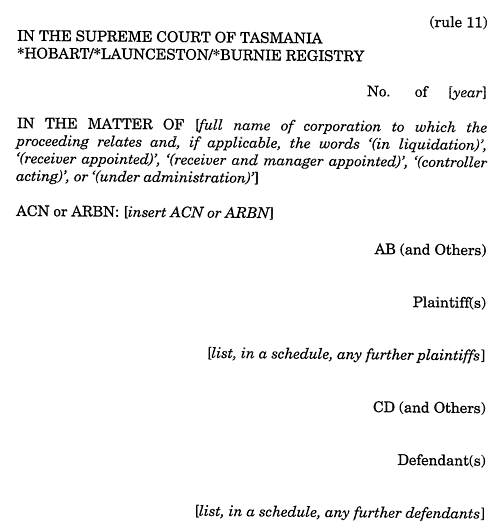
Form 2 - Originating process[Schedule 1 Amended by S.R. 2001, No. 44, Applied:25 Apr 2001] [Schedule 1 Amended by S.R. 2004, No. 55, Applied:21 Jul 2004]
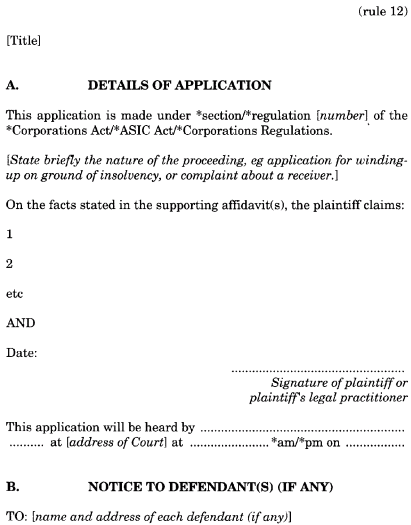
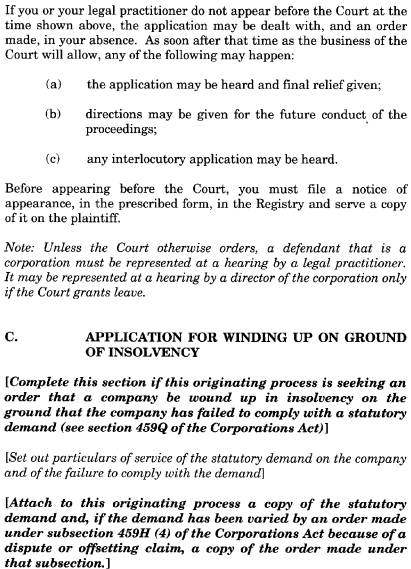
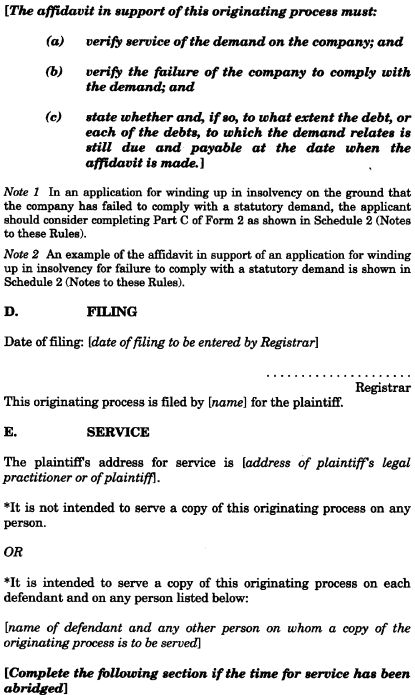
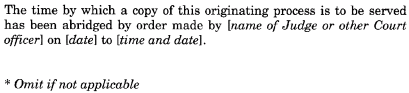
Form 3 - Interlocutory process[Schedule 1 Amended by S.R. 2001, No. 44, Applied:25 Apr 2001] [Schedule 1 Amended by S.R. 2004, No. 55, Applied:21 Jul 2004]
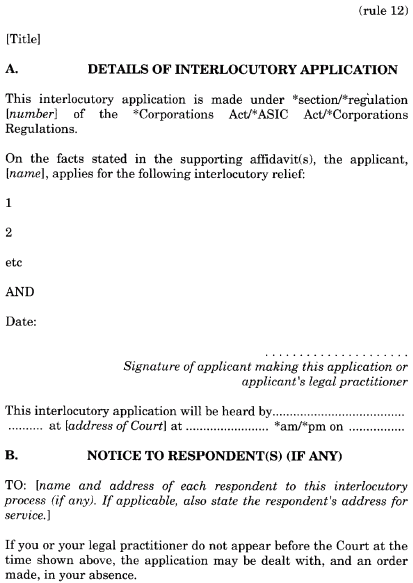
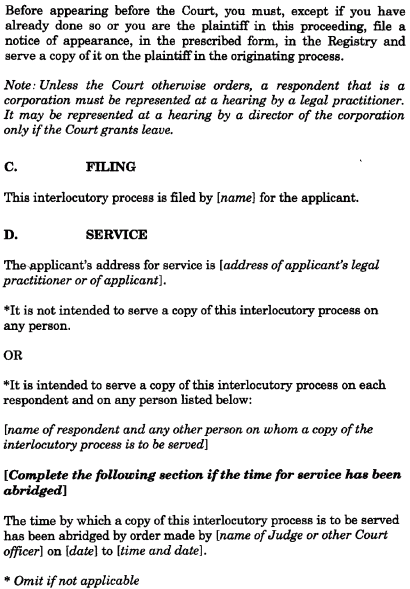
Form 4 - Notice of appearance
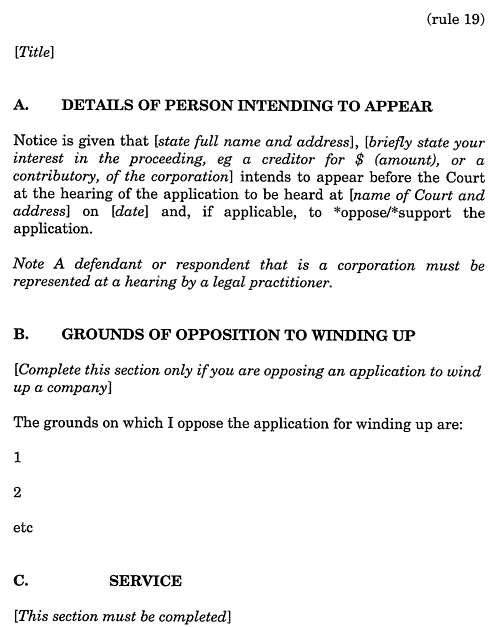
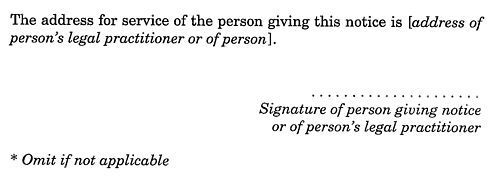
Form 5 - Notice of intervention by the Commission
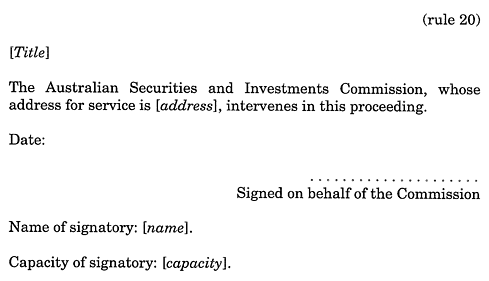
Form 6 - Notice of hearing to approve compromise or arrangement
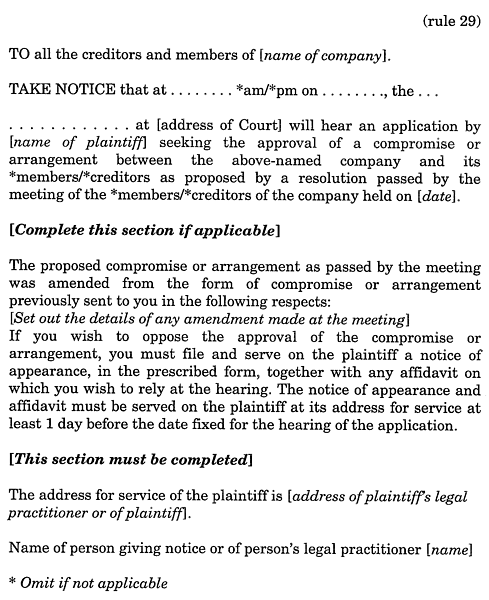
Form 7 - Affidavit accompanying statutory demand[Schedule 1 Amended by S.R. 2001, No. 69, Applied:30 Jun 2001]
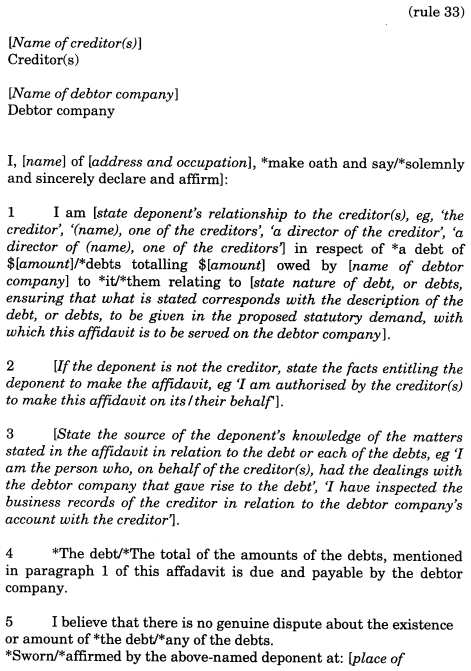

Form 8 - Consent of liquidator/provisional liquidator[Schedule 1 Amended by S.R. 2004, No. 55, Applied:21 Jul 2004]
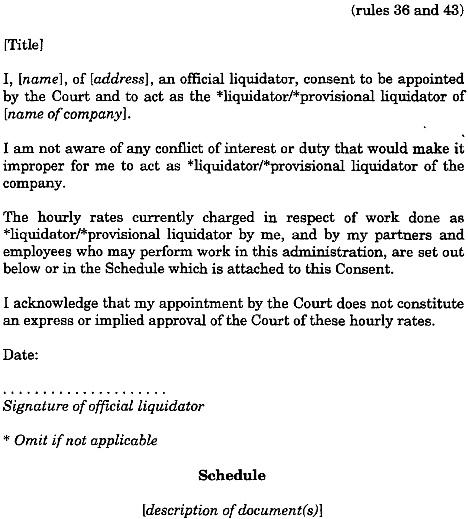
Form 9 - Notice of application for winding up order
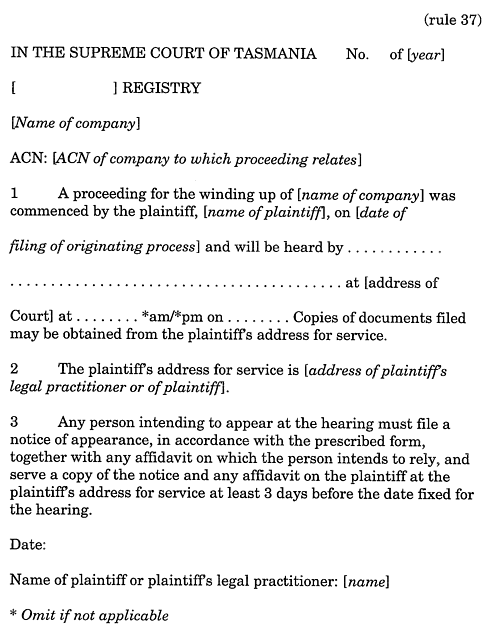
Form 10 - Notice of application for winding up order by substituted plaintiff[Schedule 1 Amended by S.R. 2004, No. 55, Applied:21 Jul 2004]
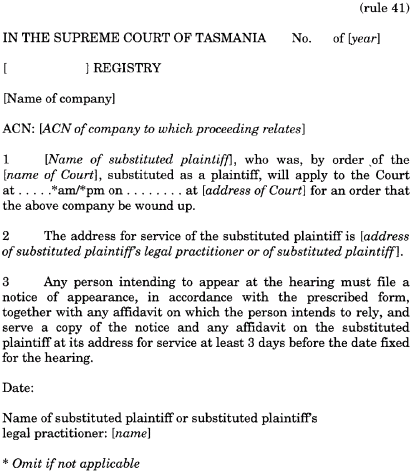
Form 11 - Notice of winding up order and of appointment of liquidator
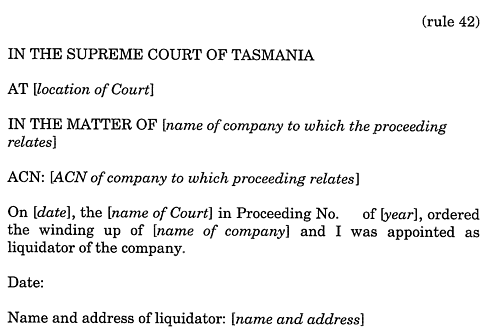
Form 12 - Notice of appointment of provisional liquidator
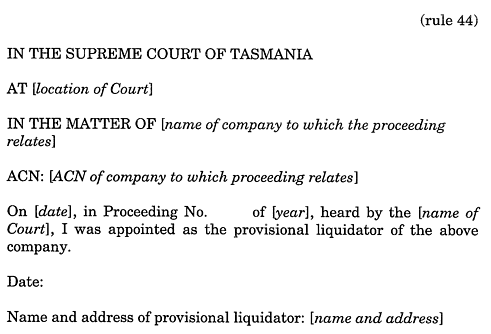
Form 13 - Notice by creditor or contributory of objection to release of liquidator
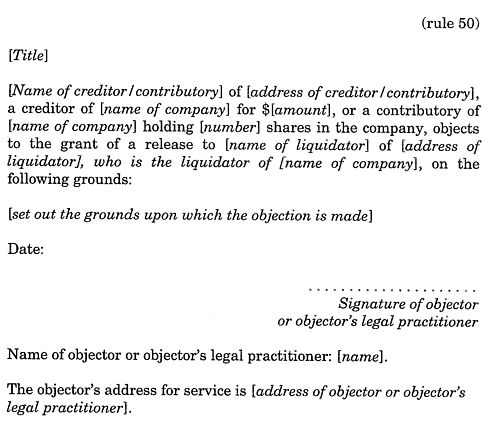
Form 14 - Affidavit in support of application for order for payment of call
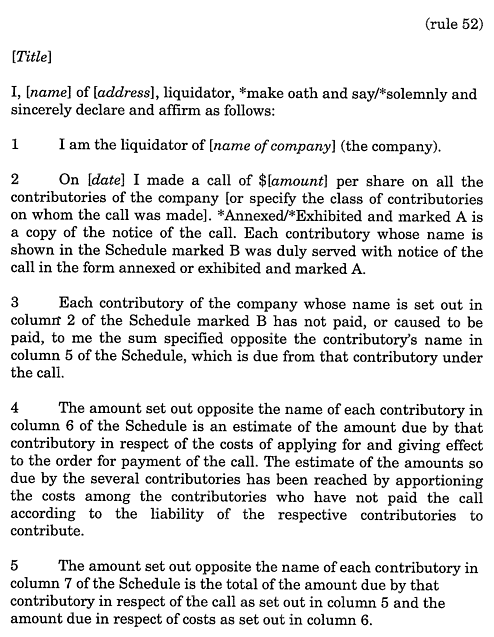
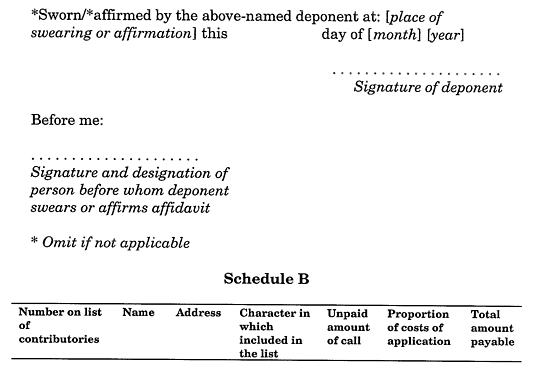
Form 15 - Notice of application for leave to distribute a surplus
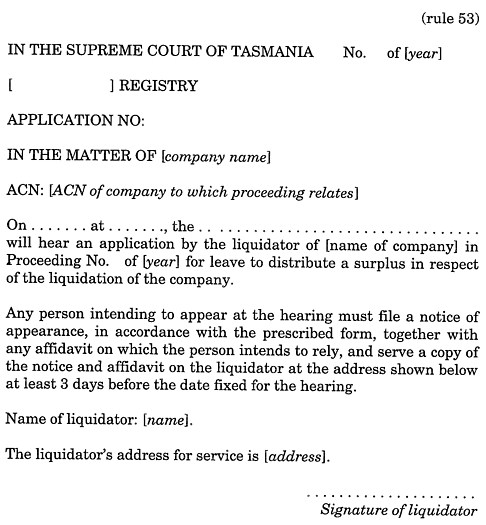
Form 16 - Notice of intention to apply for remuneration
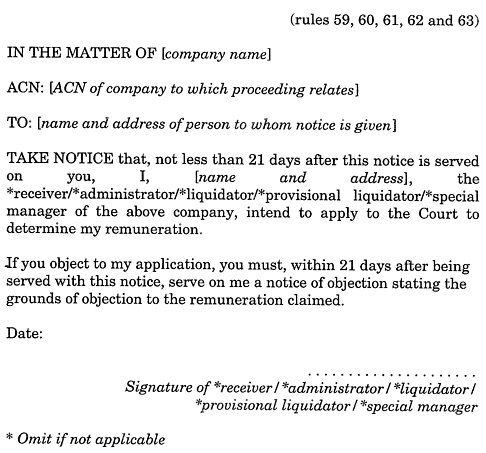
Form 17 - Summons for examination[Schedule 1 Amended by S.R. 2001, No. 44, Applied:25 Apr 2001] [Schedule 1 Amended by S.R. 2004, No. 55, Applied:21 Jul 2004]
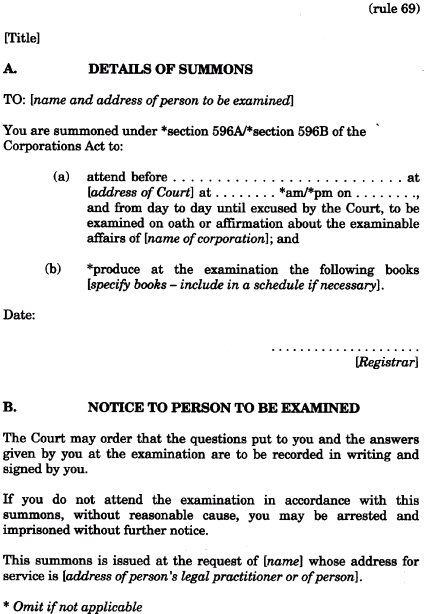
Form 18 - Summons for appearance in relation to registration of transfer of interests
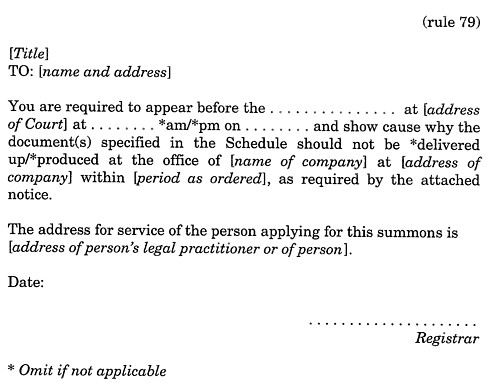
SCHEDULE 2 - Notes to these Rules[Schedule 2 Inserted by S.R. 2004, No. 55, Applied:21 Jul 2004]
Note 1 – see rule 12 (Form 2 Part C) | C. | APPLICATION FOR WINDING UP ON GROUND OF INSOLVENCY | 1. | The plaintiff relies on failure by the defendant to comply with a statutory demand. A copy of the demand, marked A, is attached to this originating process. | 2. | The demand was [or The demand and an accompanying affidavit were] served by X.Y. who delivered it [or them] to the registered office of the defendant at [insert address] on [insert date] [or, if service was by post, who posted *it/*them by ordinary prepaid post to the registered office of the defendant at [insert address] on [insert date]]. [If applicable, A copy of the accompanying affidavit, marked B, is attached to this originating process.] | 3. | The defendant failed to pay the amount of the debt demanded [or the total of the debts demanded] or to secure or compound for that *amount/*total to the plaintiff's reasonable satisfaction within 21 days after the demand was served on the defendant [or within 7 days after [insert date] when an application by the defendant under section 459G of the Corporations Act was finally determined or otherwise disposed of] [or if the period for compliance with the demand was extended by order within the period specified in the order of the [insert name of Court] on [insert date of order or, if more than one order, the date of the last such order] as the period for compliance with the demand. A copy of the order, marked C, is attached to this originating process.] | [If the demand was varied by order under subsection 459H (4) of the Corporations Act] | 4. | The demand was varied by order of the [insert name of Court] on [insert date of order]. A copy of the order, marked D [or as the case may be], is attached to this originating process. | * Omit if not applicable |
Note 2 – see rule 14 and subrule 35 (2) (Affidavit in support) | *AFFIDAVIT IN SUPPORT/*AFFIDAVIT IN SUPPORT OF APPLICATION FOR WINDING UP IN INSOLVENCY | I, [name] of [address and occupation], *say on oath/*affirm [or *make oath and say/*solemnly and sincerely declare and affirm]: | 1. | I am the above-named plaintiff [or if the applicant is a corporation, I am *a/*the director of the above-named plaintiff which is registered or taken to be registered in [specify State or Territory]. I am duly authorised to make this affidavit on its behalf]. Now produced and shown to me and marked A is a copy of the originating process to be filed in the proceedings. | 2. | Annexed to this affidavit is a current and historical extract of the records maintained by the Australian Securities and Investments Commission with respect to the defendant. | 3. | [Where the defendant is registered or taken to be registered in another State or a Territory, state any facts – apart from the defendant's principal place of business – which bear upon jurisdiction being exercised in Tasmania rather than in another State or Territory.] | 4. | The following facts are within my own personal knowledge save as otherwise stated. | 5. | The defendant was on [state date of statutory demand or other relevant date] indebted to the plaintiff in the sum of $ [amount] for [state concisely the consideration, for example, goods sold and delivered etc.] which sum was then due and payable. | 6. | The demand, a copy of which is attached to the originating process, was signed by or on behalf of the plaintiff. I served the demand [or the demand and the accompanying affidavit] as referred to in the originating process [or X. Y. has been instructed to make an affidavit of service of the demand [or the demand and the accompanying affidavit]]. | 7. | The matters stated in the originating process concerning the demand and failure of the defendant to comply with it are true and correct. | 8. | The sum demanded remains due and payable by the defendant to me [or the plaintiff]. | Sworn, etc. | * Omit if not applicable |
W. J. E. COX
Chief Justice
P. G. UNDERWOOD
Puisne Judge
E. C. CRAWFORD
Puisne Judge
P. E. EVANS
Puisne Judge
Countersigned,
I. G. RITCHARD
Registrar
Displayed and numbered in accordance with the Rules Publication Act 1953.
Notified in the Gazette on 12 April 2000
These Rules of Court are administered in the Department of Justice and Industrial Relations.