

Coroners Regulations 1996
I, the Governor in and over the State of Tasmania and its Dependencies in the Commonwealth of Australia, acting with the advice of the Executive Council, make the following regulations under the Coroners Act 1995 .
16 December 1996G. S. M. GREEN
Governor
By His Excellency's Command,
R. J. GROOM
Minister for Justice
PART 1 - Preliminary
These regulations may be cited as the Coroners Regulations 1996 .
These regulations take effect on 31 December 1996.
(1) In these regulations –Act means the Coroners Act 1995 ;authorised person means a person authorised by a coroner for the purposes of section 59(3) of the Act;court means the Magistrates Court (Coronial Division);deposition includes –(a) a written proof of evidence prepared by a witness; and(b) any examination of the witness in relation to that proof;exhumation order means an order under section 39 of the Act for the exhumation of the body of a deceased person;General Conditions of Service Award means the General Conditions of Service Award in force under the Industrial Relations Act 1984 ;oral evidence includes any deposition or affidavit read to the court;transcriber means a person who records or makes a transcript from a recording of any oral evidence given at an inquest.(2) In these regulations a reference to a form is a reference to a form in Schedule 1 .
(1) The fees and expenses specified in Parts 1 and 2 of Schedule 2 are payable in respect of the matters to which they relate.(2) The Chief Magistrate may determine any increase in the fees payable to a professional or expert witness.
PART 2 - Investigation of deaths
(1) A person may report a death by telephone, facsimile or other similar means of communication.(2) Within 24 hours after a person reports a death, the person is to provide the coroner or police officer to whom the death was reported with the particulars required by Form 1 .
Any information that must be given or reported to a coroner under section 20 of the Act is to be given or reported within 28 days after the death is reported.
7. Request for inquest into death
A request by a person under section 27 of the Act is to –(a) be in writing; and(b) specify the reasons for the request.
(1) A request by a person under section 37 of the Act is to be made as soon as practicable after the death.(2) The request may be made by telephone, facsimile or other similar means of communication.(3) Within 24 hours after a person makes the request, the person is to –(a) submit the request in writing to the coroner; and(b) specify, in writing, the reasons for the request.
(1) A request by the senior next of kin of the deceased person under section 38 of the Act is to be made immediately after the death.(2) The request may be made by telephone, facsimile or other similar means of communication.(3) Within 24 hours after the senior next of kin makes the request, the senior next of kin is to –(a) submit the request in writing to the coroner; and(b) specify, in writing, the reasons for the request.
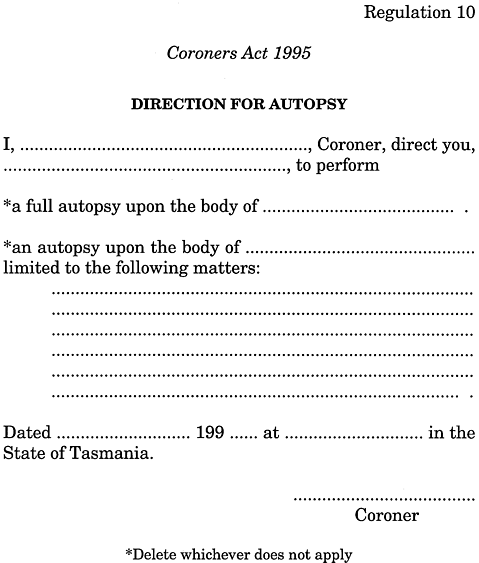
10. Direction that autopsy be performed
A direction by a coroner that an autopsy be performed is to –(a) be in writing; and(b) specify whether a full or limited autopsy is to be performed; and(c) be in accordance with Form 2 .
(1) The State Forensic Pathologist, an approved pathologist or any other medical practitioner directed by a coroner to perform an autopsy is to perform the autopsy as soon as practicable after being so directed.(2) As soon as practicable after completing the autopsy the State Forensic Pathologist, approved pathologist or other medical practitioner is to notify the coroner in writing –(a) of any preliminary findings as to the cause of death; or(b) that the cause of death is still under investigation.(3) The State Forensic Pathologist, approved pathologist or other medical practitioner is to provide the coroner with a written report of any findings in respect of the autopsy –(a) within 28 days after completing the autopsy; or(b) within such further period allowed by the coroner.(4) The State Forensic Pathologist, approved pathologist or other medical practitioner, unless acting with the authority of the coroner, is not to provide any person other than the coroner with a copy of the written report of the findings.
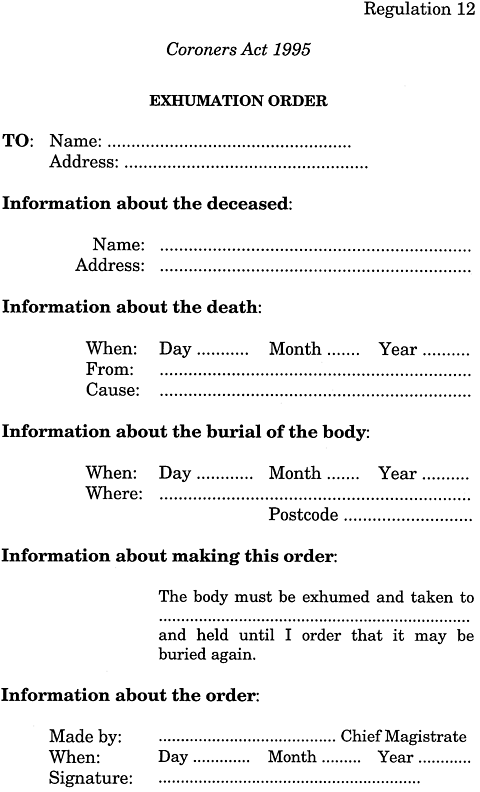
(1) An exhumation order is to be –(a) in writing; and(b) in accordance with Form 3.(2) The Chief Magistrate is to cause a copy of the order to be served on the Minister administering the Local Government Act 1993 .
13. Request that body not be exhumed
(1) A request by the senior next of kin of the deceased person under section 39(3) of the Act is to –(a) be in writing; and(b) specify the reasons for the request.(2) The senior next of kin is to serve the request on the Chief Magistrate within 48 hours after receiving notice of an exhumation order.
14. Record of investigation into death
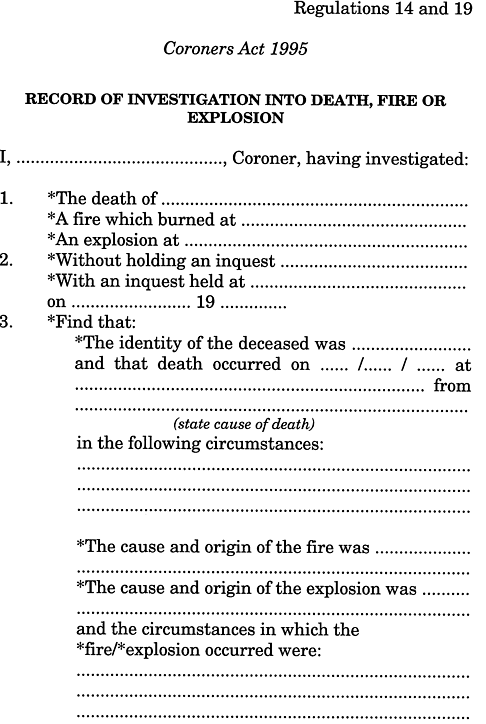
Any record kept under section 29 of the Act is to be in accordance with Form 4.
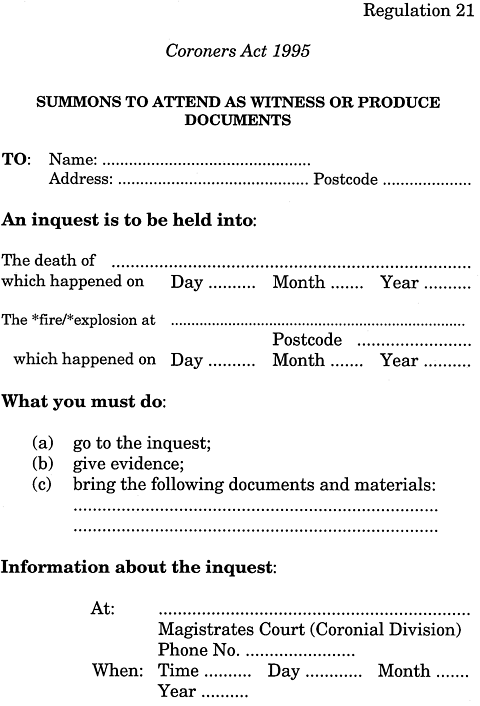
A certificate issued under section 32(1) of the Act is to be in accordance with Form 5 .
16. Restriction of access to place where death occurred
A notice under section 34 of the Act is to be in accordance with Form 6.
PART 3 - Investigation of fire or explosion
17. Request for investigation into fire or explosion
A request under section 42 of the Act is to –(a) be in writing; and(b) specify the reasons for the request.
18. Request for inquest into fire or explosion
A request for a coroner to hold an inquest into a fire or explosion is to –(a) be in writing; and(b) specify the reasons for the request.
19. Record of investigation into fire or explosion
Any record kept under section 46 of the Act is to be in accordance with Form 4.
20. Restriction of access to fire or explosion area
A notice under section 49 of the Act is to be in accordance with Form 7.
PART 4 - Conduct of inquests
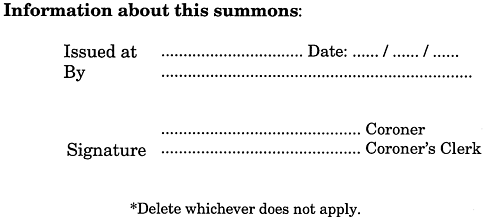
(1) A summons under section 53(1) of the Act requiring a person to attend an inquest as a witness or to produce at an inquest any document or other materials is to be in accordance with Form 8.(2) A summons –(a) is to be served personally; or(b) may be served by leaving it at the person's usual place of abode or business with a person over the age of 18 years.(3) A person serving a summons is to –(a) endorse a copy of the summons with the date and place of service; and(b) sign the endorsement.(4) In any proceeding for a failure to comply with a summons a copy of the summons endorsed in accordance with subregulation (3) is evidence –(a) that the endorsement was signed by the person whose signature it purports to be; and(b) that any statement contained in the endorsement is true.
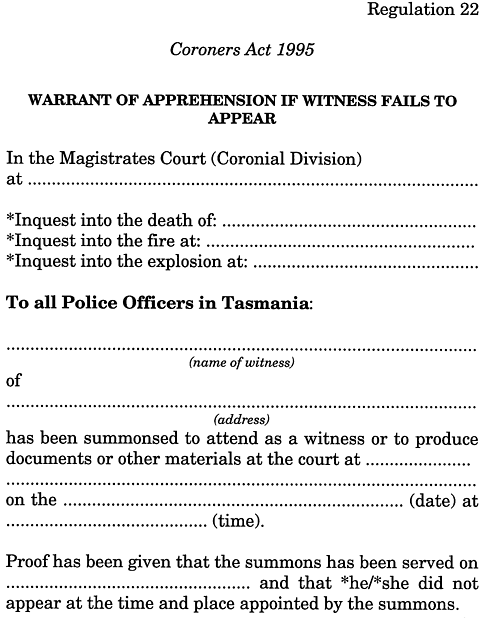
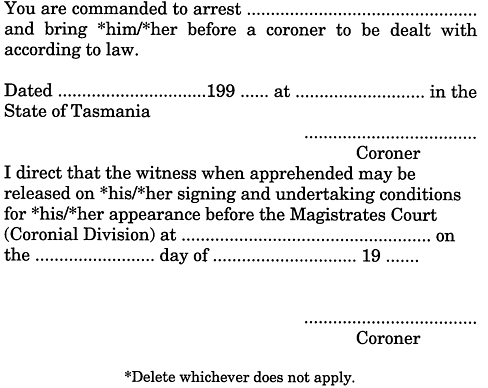
A warrant of apprehension issued under section 53(5) of the Act is to be in accordance with Form 9 .
A coroner may accept evidence given or produced at, or for the purposes of, an inquest in any of the following forms:(a) oral evidence given under oath at the inquest;(b) evidence tendered by deposition or affidavit;(c) documentary or other evidence tendered as an exhibit.
24. Evidence by deposition or affidavit
(1) A witness may give evidence at an inquest by tendering a deposition.(2) If a deposition is tendered as evidence at an inquest, the coroner may –(a) direct the witness, the coroner's clerk or any other person to read the deposition; or(b) read the deposition; or(c) accept the deposition as read.(3) If an affidavit is tendered as evidence at an inquest, the coroner may –(a) if the deponent is summonsed as a witness, direct the deponent to read the affidavit; or(b) if the deponent is not summonsed as a witness, direct the coroner's clerk or any other person to read the affidavit; or(c) read the affidavit; or(d) accept the affidavit as read.
25. Recording and transcribing oral evidence
(1) A coroner holding an inquest must record or cause to be recorded all oral evidence given at the inquest.(2) The coroner is to cause a transcript of oral evidence to be made from the recording if a transcript of evidence is required.(3) A transcript is to contain a certificate by a transcriber stating that the transcript is a true and accurate record of the evidence.
26. Disputing accuracy of transcript
(1) A person may dispute the accuracy of a transcript of oral evidence given at an inquest if, in the opinion of the coroner holding the inquest, the person has a sufficient interest in the inquest.(2) The accuracy of a transcript may be disputed in the course of, or after the conclusion of, an inquest.(3) The coroner may resolve a dispute as to the accuracy of a transcript by verifying the transcript or causing it to be verified –(a) with a recording made under regulation 25(1) ; or(b) by any other means the coroner considers appropriate.
27. Provision of copies of transcript, recordings and file documents to interested persons
(1) Any person who, in the opinion of the coroner holding an inquest or conducting an investigation, has a sufficient interest in the inquest or investigation may request the coroner in writing to provide –(a) a copy of a transcript of any oral evidence given at the inquest; or(b) a copy of a recording made under regulation 25(1) ; or(c) a copy of any document relating to the investigation or inquest.(2) If a person referred to in subregulation (1) requests a copy of a transcript, recording or document the coroner must cause, on the payment by that person of the relevant fee –(a) a transcript of any oral evidence to be made and a copy of that transcript to be provided to the person; or(b) a copy of the recording to be provided to the person; or(c) a copy of the document to be provided to the person.(3) Before a copy of a transcript, recording or document is provided to any person, the coroner may delete any evidence contained in the copy of the transcript or recording or may delete any passage contained in the copy of the document if of the opinion that the evidence or passage is defamatory of any person.(4) A copy of a transcript, recording or document provided to any person for the purposes of medical, sociological or scientific research may be provided subject to any condition on its use that the coroner may impose.(5) A fee for a copy of a transcript, recording or document is not payable if the coroner is satisfied that the copy is required in good faith for the purposes of medical, sociological or scientific research.
28. Access to file for purposes of research
The Chief Magistrate or Attorney-General may make available to any person for the purposes of medical, sociological or scientific research the court file and any other record relating to an investigation or inquest without requiring the payment of any fee.
In the course of, or at the conclusion of, any investigation or inquest, the coroner may restrict access to the court file and any other record relating to the investigation or inquest to any or all of the following persons:(a) parties to the proceedings;(b) members of the family of the deceased person;(c) the senior next of kin of the deceased person;(d) a person nominated by the senior next of kin;(e) a person engaged in medical, sociological or scientific research.
30. Provision of documents to senior next of kin
(1) The coroner is to cause a copy of the coroner's findings to be forwarded to the senior next of kin of the deceased person.(2) The coroner may provide a copy of the post-mortem report to the medical practitioner of the senior next of kin unless otherwise directed by the senior next of kin.
PART 5 - Miscellaneous
31. Delegated power of entry, inspection and possession
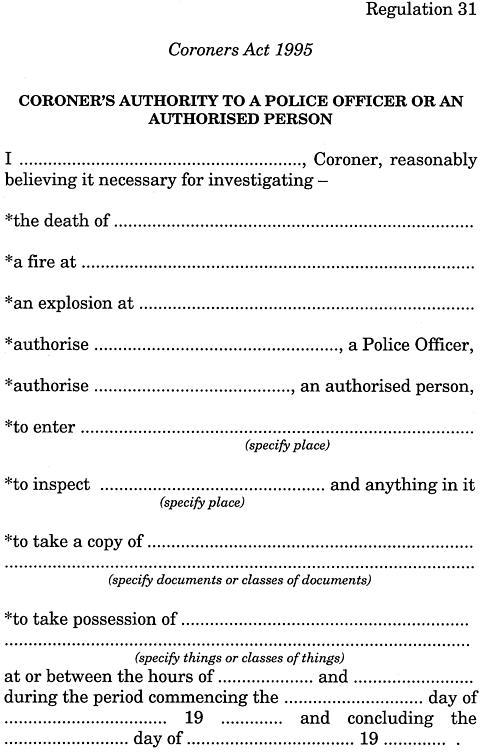
An authority issued by a coroner under section 59(3) of the Act is to be –(a) in writing; and(b) in accordance with Form 10 .
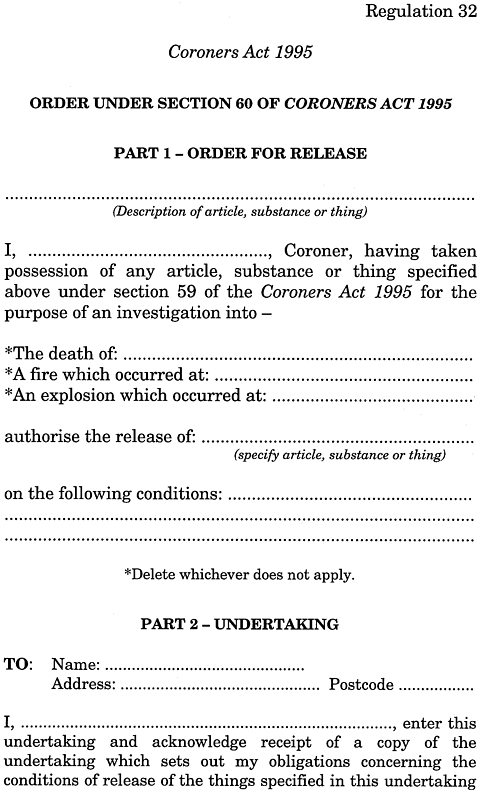
32. Order for care and control of articles in legal custody of coroner
(1) An application for an order under section 60 of the Act is to –(a) be in writing; and(b) specify the reasons the order is sought.(2) An order under section 60 of the Act releasing any article, substance or thing –(a) may be made subject to any condition specified in the order; and(b) is to be made in accordance with Part 1 of Form 11 .(3) Any person who receives any article, substance or thing consequent on an order under section 60 of the Act must undertake to comply with any condition specified in the order.(4) An undertaking is to be –(a) in writing; and(b) in accordance with Part 2 of Form 11 .(5) Any person who fails to comply with a condition specified in an order under section 60 of the Act releasing any article, substance or thing is guilty of an offence.Penalty: Fine not exceeding 10 penalty units.
Any person who records or transcribes any evidence given at, or for the purposes of, an inquest must swear before a coroner the oath specified in Schedule 3 .
Unless the coroner otherwise directs, any record of oral evidence made by sound recording apparatus under regulation 25(1) is to be kept for the following periods:(a) if a transcript of that evidence has been made, for a period of one year after the conclusion of the inquest to which the record relates;(b) if no transcript of that evidence has been made, for a period of 6 years after the conclusion of the inquest to which the record relates.
35. Failure to comply with regulations
(1) Unless the coroner otherwise directs, failure to comply with any of these regulations does not render void any proceedings under the Act.(2) The Chief Magistrate may determine the procedure to apply in the circumstances referred to in subregulation (1) .
36. Coroners fees and allowances
The fees, allowances and expenses payable to a coroner are specified in Schedule 4 .
SCHEDULE 1 - Forms
Form 1
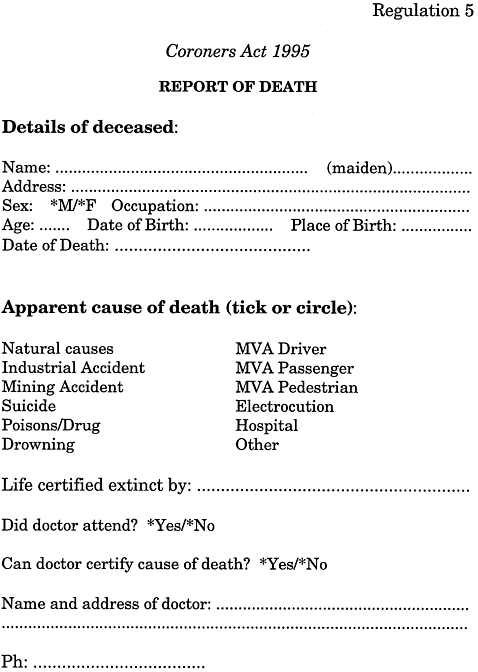
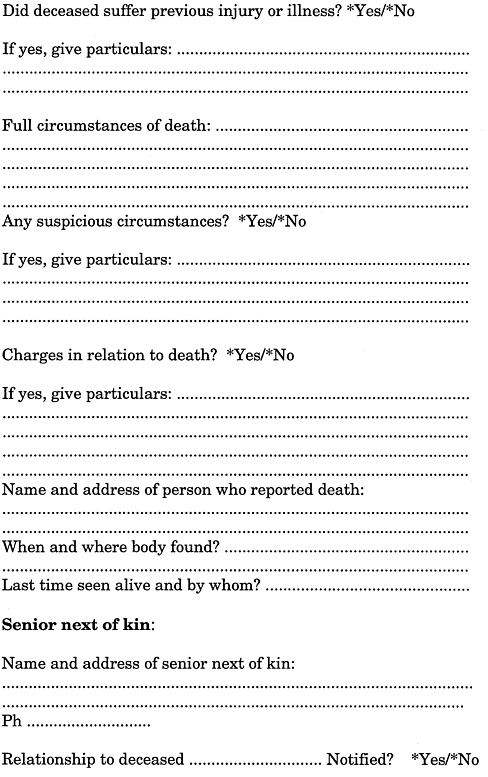
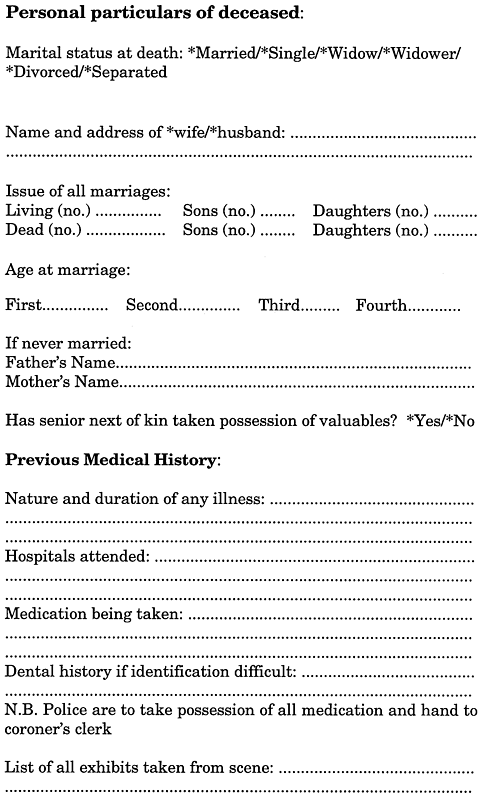
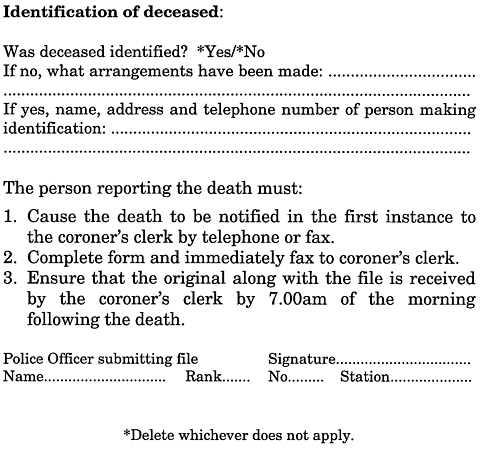
Form 2
Form 3
Form 4
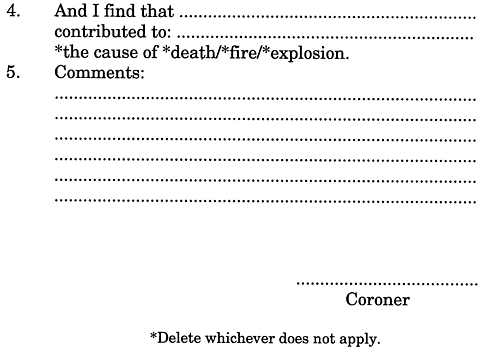
Form 5
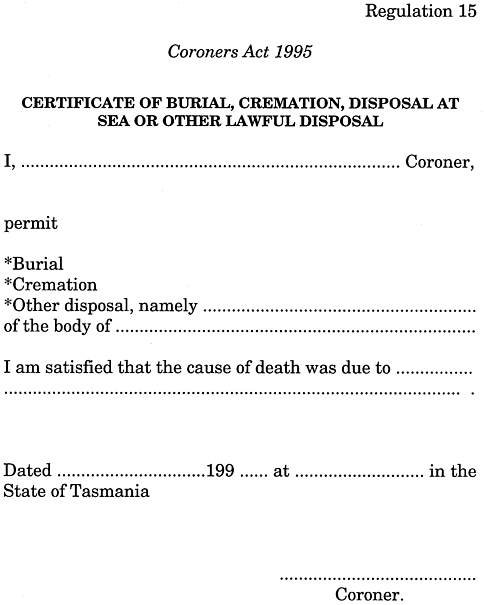
Form 6
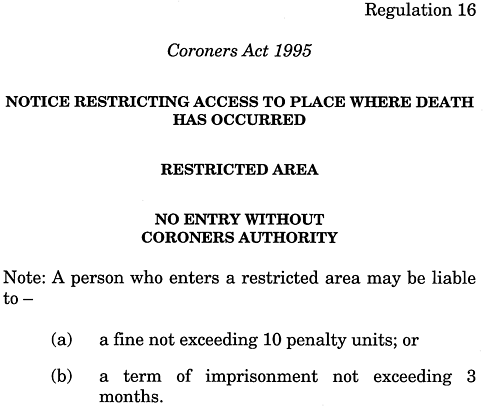
Form 7
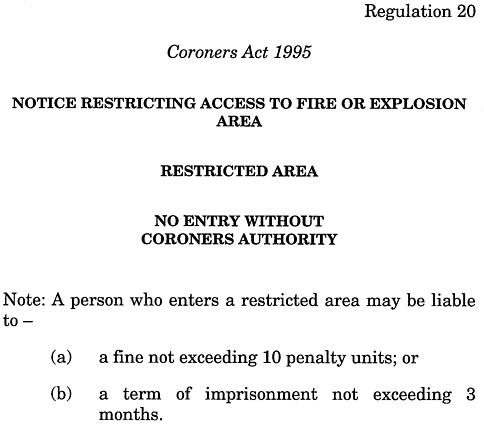
Form 8
Form 9
Form 10
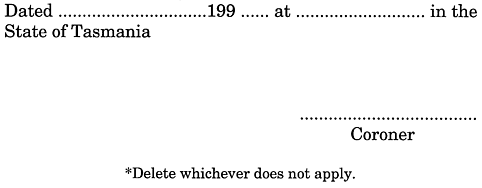
Form 11
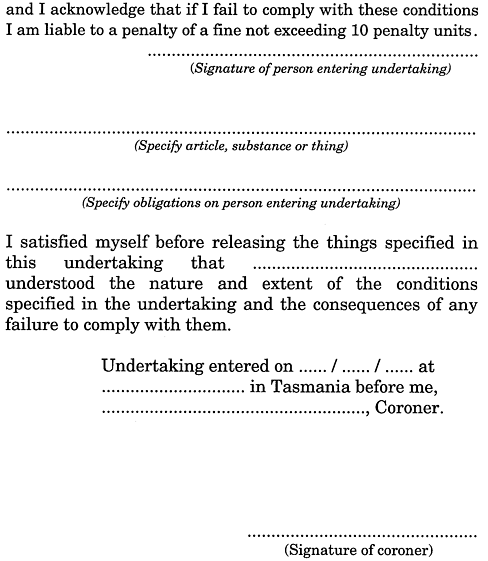
SCHEDULE 2 - Fees and expenses
PART 1 - Fees
1. | Fee for copy of – | each page | (a) coroner's findings | $1 | (b) post-mortem report | $1 | (c) any other document relating to an investigation or inquest | $1 | 2. | Fee for copy of transcript | $1 |
PART 2 - Witness expenses
1. | Professional or expert | (a) maximum each day | $158.80 | (b) 4 hours or less | $79.50 | (c) each additional hour or part hour | $20.60 | (d) travelling – | (i) in own motor vehicle – each kilometre | 23 cents | (ii) otherwise | actual expenses | 2. | Other income producers | (a) each day | $60 | (b) travelling – | (i) in own motor vehicle – each kilometre | 23 cents | (ii) otherwise | actual expenses | 3. | Meal allowances and accommodation as set by the General Conditions of Service Award. |
SCHEDULE 3 - Oath of transcriber
"I swear by Almighty God that I will faithfully record all proceedings that I am required to record, whether in shorthand or by mechanical means, under the Coroners Act 1995 and that I will faithfully transcribe, or cause to be transcribed, all depositions and proceedings recorded under that Act that I am required to transcribe."
SCHEDULE 4 - Fees, allowances and expenses payable to a coroner
1. | For being engaged in, or in connection with, the holding of an inquest – | (a) 2 hours or less | $36 | (b) each additional hour or part of an hour | $18 | 2. | For conducting an investigation to determine whether an inquest should be held, when no inquest is in fact held by the coroner conducting the investigation | $20 | 3. | For travelling in connection with an inquest or investigation – | (a) in own motor vehicle – each kilometre | 23 cents | (b) otherwise | actual expenses | 4. | For sustenance when duties oblige the coroner to be away from home overnight, whichever is the lesser of the following: | (a) the actual expenses incurred; | (b) the travelling allowance rates prescribed by the General Conditions of Service Award. |
Displayed and numbered in accordance with the Rules Publication Act 1953.
Notified in the Gazette on 25 December 1996
These regulations are administered in the Department of Justice.